


Coming a day after the UK experienced one of its hottest days of this year, in July, CIBSE’s seminar on the challenges and limitations of passive strategies for mitigating overheating in heatwaves could not have been more topical
Organised by the CIBSE Natural Ventilation Group, the event explored how buildings can – and must – respond more intelligently to rising summer temperatures (as shown in CIBSE’s new Weather Data).
Among the early critiques raised was the spatial efficiency of natural ventilation in dense urban housing. Designing for cross-ventilation in apartment blocks can compromise layout efficiency, resulting in less usable accommodation space for the same building footprint.
If comfort cooling can be delivered in a sustainable, low carbon way, it raises the question: should we rethink space-planning assumptions to prioritise resilience and comfort? This idea led naturally to a broader provocation – what, ultimately, is the purpose of buildings? When it comes to schools, for example, are we designing purely for regulatory compliance or for optimal cognitive development and long-term outcomes?
Cooling futures
Speakers focused on the impact of poor thermal conditions in classrooms (Grassie), air conditioning in warming climates (Connick) and carbon tradeoffs in adapting façades (Prusicka).
Climate for learning

Dr Duncan Grassie, environmental public health scientist at the UK Health Security Agency, addressed this point in his presentation on the impact of indoor thermal conditions on health and cognition in schools.
Reviewing recent literature, he shared compelling evidence that high classroom temperatures impair alertness and working memory, while low temperatures reduce executive function and increase fatigue.
One notable study found a 20% improvement in performance on psychological tests when classroom temperatures were lowered from 30°C to 20°C, with optimal learning conditions observed at or below 22°C.
While the short-term cognitive impacts are well documented, Dr Grassie acknowledged that the long-term consequences remain uncertain. The risk is clear, however: if children are regularly exposed to poor thermal environments during school hours, this may lead to cumulative deficits in concentration, comprehension and academic performance. In aggregate, these effects could reduce national educational attainment levels, with downstream impacts on workforce productivity and economic output.
No specific quantification of ‘lost learning days’ or cost was presented, but the takeaway was unambiguous: overheating in schools is not simply a matter of comfort – it’s a barrier to learning that must be addressed through better passive design, effective ventilation strategies, and greater thermal resilience. It is also something that will only increase as the climate continues to warm.
Gains that appear marginal today may be justifiable if future embodied impacts are expected to decline
Cooling smarter, not harder
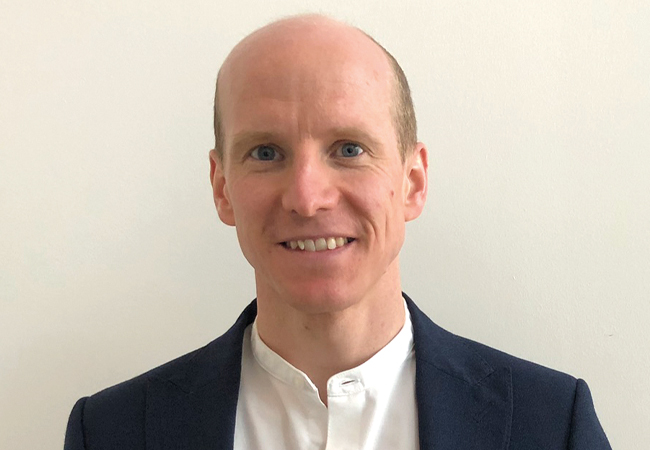
Dr Owen Connick, director of AdvanTEC EMEA at Carrier, offered a compelling vision of how we might remain cool and comfortable in the face of intensifying heatwaves without exacerbating our energy and carbon challenges.
He opened by taking the audience on an imaginative journey to 2050, where homes are cooled using solar-assisted air conditioning (AC) integrated with local battery energy storage. These systems are designed to synchronise cooling demand with available solar supply, enabling smarter and more flexible responses to Grid conditions.
Shifting to the present, Connick highlighted the rising global dependence on air conditioning. Using case studies from Texas, USA, and India, he illustrated how external temperature increases drive sharp spikes in electricity use. Yet, as he pointed out, there are already periods – such as those revealed by dynamic-pricing platforms such as Octopus Agile – when electricity is abundant and extremely cheap. This raises an intriguing possibility: can these low-cost periods be better exploited to provide affordable, demand-responsive cooling?
Connick also drew attention to the inefficiency of many AC systems currently in use. Energy performance, he explained, is often poorest in the most commonly purchased models, with little correlation between cost and efficiency. This disconnect suggests a strong case for regulation. He proposed that legislation could be introduced to ensure only the most efficient units are available on the market, reducing long-term demand and making better use of clean energy when it’s available.
However, he was clear that mechanical solutions alone will not solve the overheating crisis. Passive mitigation strategies – such as high-performance insulation, external shading and natural ventilation – must remain central to our design approach.
These measures can reduce cooling loads significantly and help avoid the need for high-powered systems during peak times. Connick closed with a call for joined-up thinking between policy, technology and design to create built environments that are not only cool and efficient, but also resilient and future-proof.
Façade face-off

Karolina Prusicka, presented a rigorous modelling study on the carbon trade-offs involved in adapting façades to a warming climate. Using a high-rise residential building in London as a case study, her research explored the interaction between operational carbon (OC) and embodied carbon (EC) when mitigating overheating.
Using a multi-objective optimisation method (NSGA-II), Prusicka ran 2,400 simulations to analyse 14,000 façade configurations based on three performance objectives: heating, cooling and total energy use. Her assumptions included domestic occupancy patterns, air source heat pumps with an equal coefficient of performance (COP) of 3.4 for heating and cooling, and setpoints of 21°C for heating (setback 16°C) and 25°C for cooling (setback 30°C). The model accounted for future climate conditions using IPCC medium (A1B) and high (A1FI) emissions scenarios for 2050 and 2080.
The findings were nuanced. Under higher-emission scenarios, operational carbon reduced because of significantly lower heating demands, despite increased cooling loads.
In some simulations, OC savings reached up to 20tCO₂e by 2080. However, several passive mitigation strategies – such as the addition of aluminium-clad box balconies for shading – introduced considerable embodied carbon.
As EC is accounted for at the point of construction, Prusicka highlighted how sensitive results are to the assumed carbon intensity of materials and manufacturing. Yet, with Grid decarbonisation, materials such as aluminium could become nearly carbon-neutral in future, fundamentally reshaping today’s carbon trade-offs.
Her conclusion was clear: decisions about façade design must be informed by long-term thinking. Operational gains that appear marginal today may be justifiable if future embodied impacts are expected to decline. Climate trajectory, electricity decarbonisation and material innovation must all be part of the equation.
The discussion spilled over into informal conversations over drinks and canapés. Attendees debated the implications of regulating AC markets, whether passive-only strategies were realistic in dense urban settings, and what role schools and public buildings should play in safeguarding health and productivity.
The provocative presentations had clearly struck a chord.
The CIBSE Natural Ventilation Group thanks event sponsor Passivent.
For more information on the group, visit bit.ly/CJNVGP