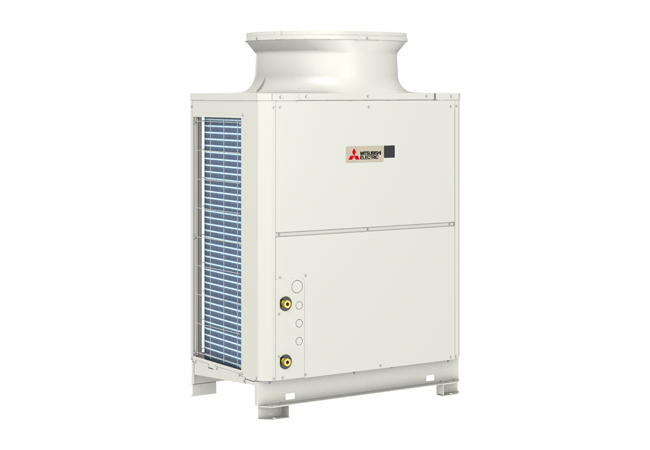


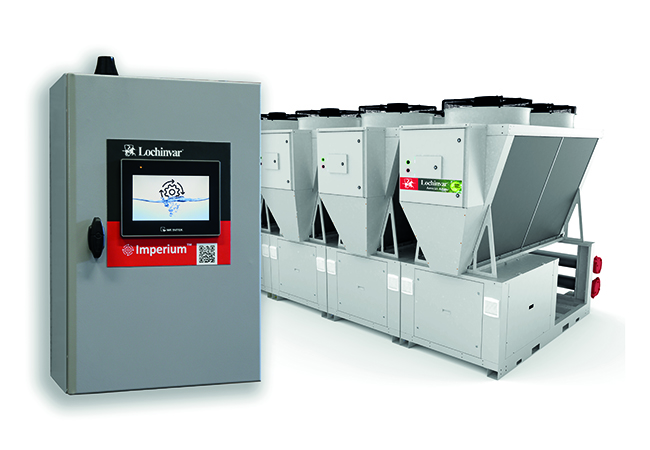
Lochinvar’s Imperium integrated commercial heat pump system
The UK’s transition to low carbon heat has moved rapidly from policy aspiration to engineering reality. Nowhere is this more evident than in the deployment of heat pumps at scale in non-domestic buildings. In recent years, CIBSE has played an important role in identifying why many early systems have underperformed, and in responding with deeper and more detailed guidance through documents such as AM16 and AM17.
What is increasingly clear, however, is that guidance alone cannot close the gap between design intent and operational performance. The industry’s current challenge is less about knowing what to do and more about how reliably it can be delivered.
Against this backdrop, the emergence of integrated heat pump system architectures warrants closer examination. Not as a substitute for sound engineering judgement, but as a means of translating best practice on paper into consistent outcomes on site.
This article explores how system-level integration aligns with the challenges CIBSE has recently articulated and what this might mean for the next phase of low carbon heat delivery.
CIBSE’s recent guidance and professional commentary have been notably candid. The performance issues observed in many heat pump-led buildings are rarely the result of a single design error or an immature technology. Instead, recurring themes continue to surface.
Crucially, CIBSE has framed these as system problems, rather than component failures. Heat pumps, as individual machines, largely perform as expected. It is the way they are selected, integrated, controlled and operated that determines whether the system succeeds or disappoints.
When best practice becomes bespoke risk
The dominant project delivery model remains highly fragmented. Consultant engineers, manufacturers, building management system specialists, installers and commissioning teams each contribute parts of the solution, often under programme and cost pressures. Even with robust guidance, performance intent can be diluted through late-stage changes, value engineering or misunderstood control logic.
AM17 explicitly highlights this risk, noting that underperforming installations are often formally compliant with guidance while being compromised in execution. The result is a growing paradox. Technical guidance becomes more sophisticated, yet outcomes remain inconsistent.
This raises an important question for the profession. How much design freedom can complex low carbon systems tolerate before variability itself becomes a source of risk?
“It is the way heat pumps are selected, integrated, controlled and operated that determines whether the system succeeds or disappoints”
Alongside the development of more detailed guidance, a parallel trend has emerged within the supply chain. Rather than improving individual components in isolation, some manufacturers are developing pre-engineered system architectures that encompass hydraulics, storage, controls and operating logic as a unified whole.
The relevance of this approach lies less in the specific product and more in the principle it represents. Design intent is embedded early and protected through delivery, reducing reliance on bespoke interpretation at later stages.
The growing interest in this type of architecture reflects a wider recognition that consistent performance depends not only on correct design, but also on limiting opportunities for unintentional deviation.
Domestic hot water where integration matters most
Domestic hot water remains one of the most challenging applications for heat pumps and CIBSE has been clear in identifying it as a high-risk area. Peak demand, recovery time, legionella compliance and electrical capacity must all be reconciled within systems that respond more slowly and dynamically than gas-fired plant.
Integrated approaches seek to address these challenges through control of storage behaviour and operating mode, rather than through oversizing alone. By prioritising stratification, aligning heat pump output with demand profiles, and managing the transition between efficiency-led and capacity-led operation, such systems reflect CIBSE’s emphasis on understanding load diversity and system behaviour.
This marks a shift away from treating domestic hot water as an isolated compliance exercise and towards managing it as a dynamic and central design function.
Controls remain one of the most common causes of underperformance, a point repeatedly reinforced in CIBSE guidance and case-study analysis. Over-specified building management system strategies, inherited boiler sequences and compressed commissioning programmes often leave systems operating far from their intended envelope.
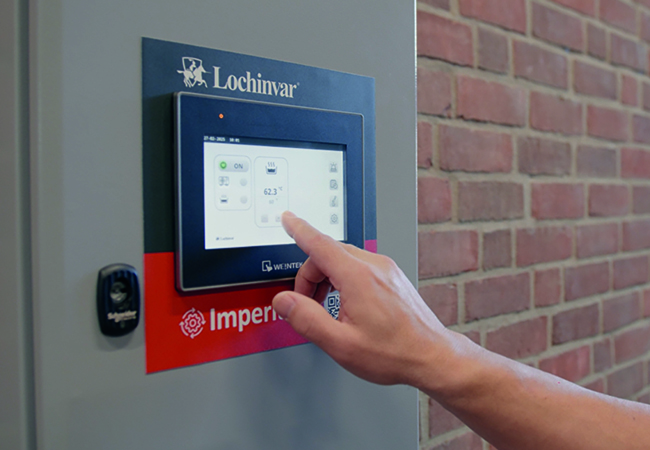
By embedding core sequencing within system-level controls, the role of the building management system can be simplified to supervision, monitoring and integration, rather than detailed thermodynamic control. This reflects an emerging consensus that reliability often improves when control strategies are reduced in complexity and standardised across projects.
As CIBSE has increasingly observed, a control system that is simple enough to be commissioned thoroughly is often more effective than one that is theoretically optimal but practically fragile.
What integration does and does not solve
It is important to be clear about what integrated architectures cannot do. They do not remove the need for early feasibility assessment, electrical infrastructure planning, emitter analysis or informed professional oversight. Nor are they suitable for every building typology or project context.
What they do offer is a means of reducing variability in how well-understood principles are delivered. By locking in proven configurations and sequences, integrated systems can help protect performance intent through construction and into operation, precisely the stages where many heat pump installations currently struggle.
CIBSE’s recent work has performed a vital function in naming the systemic causes of underperformance in heat pump projects. The next stage of the transition requires equal attention to delivery mechanisms that make good outcomes repeatable, not exceptional.
Integrated system architectures deserve consideration within this conversation, not as a replacement for guidance, but as a practical response to the risks that guidance alone cannot fully mitigate. If the industry is serious about closing the performance gap, it must be equally serious about reducing unnecessary complexity and avoidable variability.
In that sense, the evolution of integrated heat pump systems may represent not a departure from CIBSE’s principles, but a pathway through which those principles are more consistently realised in the built environment.
ABOUT THE AUTHOR
Liam Elmore is general manager at Lochinvar