The government has increased Boiler Upgrade Scheme (BUS) grants for some households and outlined a mechanism to weaken the link between gas and electricity prices.
As part of a wide-ranging package of measures, drawn up in response to the increases in energy prices resulting from the ongoing US-Iran conflict, energy Secretary of State Ed Miliband and Chancellor of the Exchequer Rachel Reeves announced an extension of the BUS on 21 April.
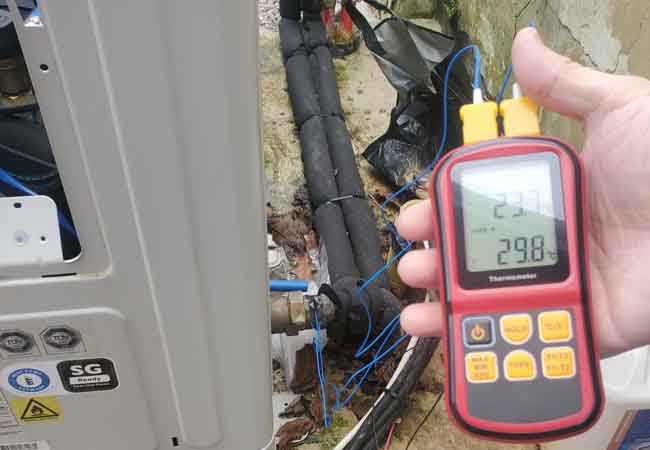
Grants under the scheme will be increased to £9,000 for properties heated by oil and liquefied petroleum gas (LPG), compared with the general ceiling of £7,500 that households are entitled to receive in subsidies.
This move is designed to help those households and small businesses in England and Wales most impacted by rising energy prices – particularly in rural areas that are not connected to the gas grid – to electrify their heating, and provide greater certainty over energy bills.
Miliband also unveiled moves to weaken the link between wholesale gas prices and those for electricity generation.
The government is proposing to move all renewable projects onto long-term fixed-price Contracts for Difference (CfDs), and generators accredited under the legacy Renewables Obligation (RO) would be encouraged to swap these contracts for CfDs.
The RO, which was set up to incentivise the early development of the renewables sector, gives projects a top-up on the wholesale electricity price, which varies and is often set by that of generation by gas plants.
The government has also announced an additional £100m of funding to support solar installations on 57,000 social homes and 100 schools and colleges this financial year.
Charlotte Lee, chief executive of the Heat Pump Association UK, said: ‘The move to begin decoupling electricity prices from gas is a significant step that will help unlock the UK’s transition to electrification, ensuring that low carbon heat is the most cost-effective option, always.’