
Susie Diamond
The inclusion of ceiling fans is perhaps the most eye-catching of the 2026 changes to CIBSE TM59: Overheating risk in dwellings – A design stage methodology.
Ceiling fans are a low-energy mitigation tool capable of curbing the need for cooling by raising thermal comfort thresholds by up to 2.1°C. TM59 lead author Susie Diamond MCIBSE is a champion of the technology. ‘They are quiet, don’t use a lot of energy and can be easily integrated into a light fitting,’ she says.
CIBSE TM59 is the industry’s standard framework for assessing overheating risk in residential buildings using dynamic thermal simulation. By evaluating parameters such as solar gain, air movement and occupant behaviour early in the design process, it enables teams to implement low-energy, passive cooling without resorting to energy-intensive cooling.
The new TM59 introduces a compliance checklist that Diamond says is key to the update. It serves as standardised quality assurance and augments the reporting framework.
‘This picks up some of the common errors that are easy to make, such as using an incorrect north axis on drawings,’ she says. ‘I think it will be quietly influential.’
The checklist makes clear the differences between TM59 and Approved Document Part O, which was introduced in 2022 to mandate that new residential developments in England prevent summer overheating. The government has yet to update AD O to align with TM59:2026.
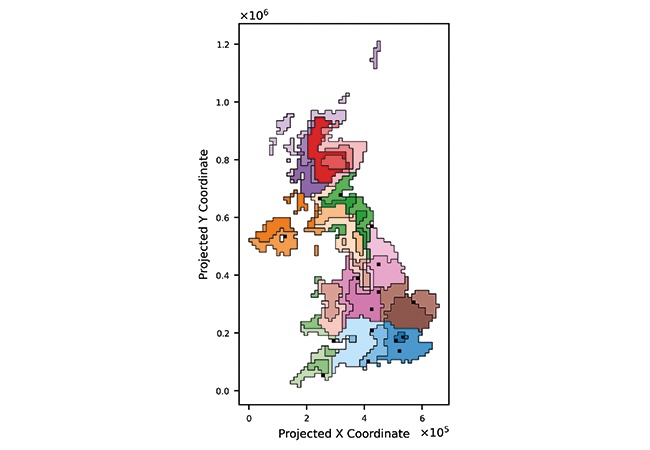
Other updates include the use of 2050s rather than 2020s weather, and the weather file dataset has expanded from 16 to 28 geographical zones.
Modellers must now demonstrate a clear step-by-step design progression to enforce a ‘passive-first’ hierarchy. Diamond notes this should reduce designs with floor-to-ceiling windows, a key cause of solar heat gain.
Stage 1 of the assessment tests the building’s inherent architecture assuming ideal conditions (windows can open freely without acoustic, security or pollution barriers).
Stage 2 applies real-world restrictions – for example, closed windows because of noise or security, or partially constrained 50% window openings – and introduces low-energy mitigations.
Under a Stage 3 cooling assessment, active cooling is allowed as a last resort if the design fails (schemes must pass Stage 1 passively, regardless of whether there is cooling in the design proposal).
What’s next?
There is now a standardised home-office occupancy profile to reflect daytime internal heat gains.
‘The pandemic made working from home more mainstream and home offices are more common in new housing,’ said Diamond.
The update also introduces more realistic window and door controls, with operative temperature now used to trigger windows opening rather than air temperatures.
The bedroom night-time criterion replaces the old hourly exceedance rule (>26°C for >1% of hours) with a mean night-time temperature threshold. The overnight average must stay below 27°C, with no more than four exceedance nights per summer.
Overheating assessments are now mandatory for shared circulation spaces and corridors (accounting for pipe heat loss and internal gains.
Diamond notes that work on TM59 is ongoing, adding that she aims to develop an optional heatwave resilience test using DSY2 or DSY3 files (short intensive heatwave and long sustained heatwave) allowing behavioural changes such as closing windows when it is very warm outside.
She is collaborating on a simplified modelling metric and protocol for trees that would match tree species to basic shapes (triangle, pole or spherical) and foliage permeability to account for passive shading.
The impact of urban heat islands is a focus for future iterations, says Diamond – they can make central city areas up to 6°C warmer overnight.
Finally, a CIBSE guide to ceiling fans will provide technical guidance on integrating low-profile fans in residential developments in response to research on bedroom comfort levels by Loughborough University.
TM59 is available at the CIBSE website
Watch the recent TM59 webinar: www.cibse.org/growyourknowledge
How to keep your cool in a heatwave
Susie Diamond highlights innovative commercial and DIY solutions to help buildings stay cool in hot summers
- Sash window shading: Renter-friendly clip-on shading devices designed specifically for sash windows
- Heatwave toolkit by Tom Greenhill An excellent consumer and industry resource packed with low-cost, doable cooling hacks including painting yogurt on windows, space blankets on inside of glass, and fitted sheets stretched over lanterns
- Shade the UK: The charity arm of Andy Love Design Studios focuses on practical, built-environment changes like shading parks, planting trees, and providing awnings
- Albotherm: Retrofitted passive glass films (“electric yogurt”) that automatically transition to a white, frosted state above 30°C
- British Blinds and Shutters Association (BBSA): The trade association for companies that manufacture, supply and install interior and exterior shading