
Credit: iStock Urban78
An On the wire story
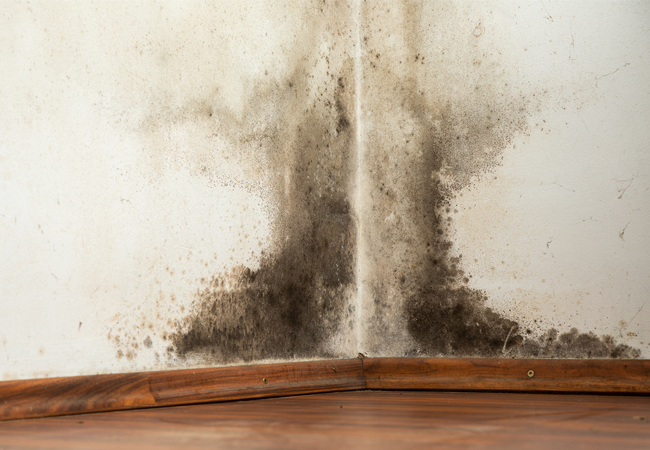
Government data has underlined how stubborn damp and mould remain in England’s homes, with private renters more likely than social tenants or owner-occupiers to live with the problem.
The Department for Levelling Up, Housing and Communities’ local authority housing stock condition modelling for 2024, published on June 25, found damp in 10% of private rented homes, compared with 7% in the social rented sector and 4% of owner-occupied dwellings.
The figures also show clear regional differences. In the private rented sector, damp was most common in Yorkshire and the Humber, the West Midlands, the East Midlands and parts of the South East and North West. In social housing, the highest levels were recorded in London boroughs, while the North East and East of England had the lowest rates.
The report splits damp into externally driven forms, such as penetrating or rising damp, and internally driven damp, including serious condensation. In 2024, 2% of homes experienced externally driven damp only, 2% internally driven damp only and 1% both.
Serious condensation, at 3%, was more common than penetrating damp, at 2%, or rising damp, at 1%. Homes in higher-rainfall areas were also slightly more likely to have damp than those in drier parts of the country, according to the government’s analysis.
The same data show that housing quality problems extend beyond moisture issues. Across both rented tenures, the highest rates of non-decent homes were found in local authorities in the South West, coastal parts of the South East, the Midlands and Yorkshire and the Humber.
Overall, 15% of dwellings were classed as non-decent in 2024, and 9% failed because of Category 1 hazards (an immediate, severe risk to life or health), the most common single reason for failure. The findings come as the government prepares to extend the Decent Homes Standard to both social and private rented homes by 2035.
Ministers have also moved to tighten enforcement under the Housing Health and Safety Rating System, including on-the-spot fines of £7,000 for severe damp and mould, signalling that landlords will face greater pressure to act on poor conditions.
Source Reference Map
Inspired by headline at: Propery 118 [1]
Sources by paragraph:
- – Paragraph 1: [2], [4]
- – Paragraph 2: [3], [4]
- – Paragraph 3: [2], [4]
- – Paragraph 4: [2], [4]
- – Paragraph 5: [5], [6], [7]
Source: Noah Wire Services
• This On the wire article was created using Noahwire AI and reviewed by CIBSE Journal’s editorial team