Credit : iStock – amriphoto
An On the wire story
Electrical industry bodies have warned that plug-in solar panels should not be pushed into widespread retail sale until the UK has a proper safety and regulatory framework in place. In a joint intervention, the Electrical Contractors’ Association, Electrical Safety First, the Institution of Engineering and Technology, NICEIC and the Scottish trade association SELECT said they support broader access to affordable clean energy, but believe the rollout should be handled cautiously.
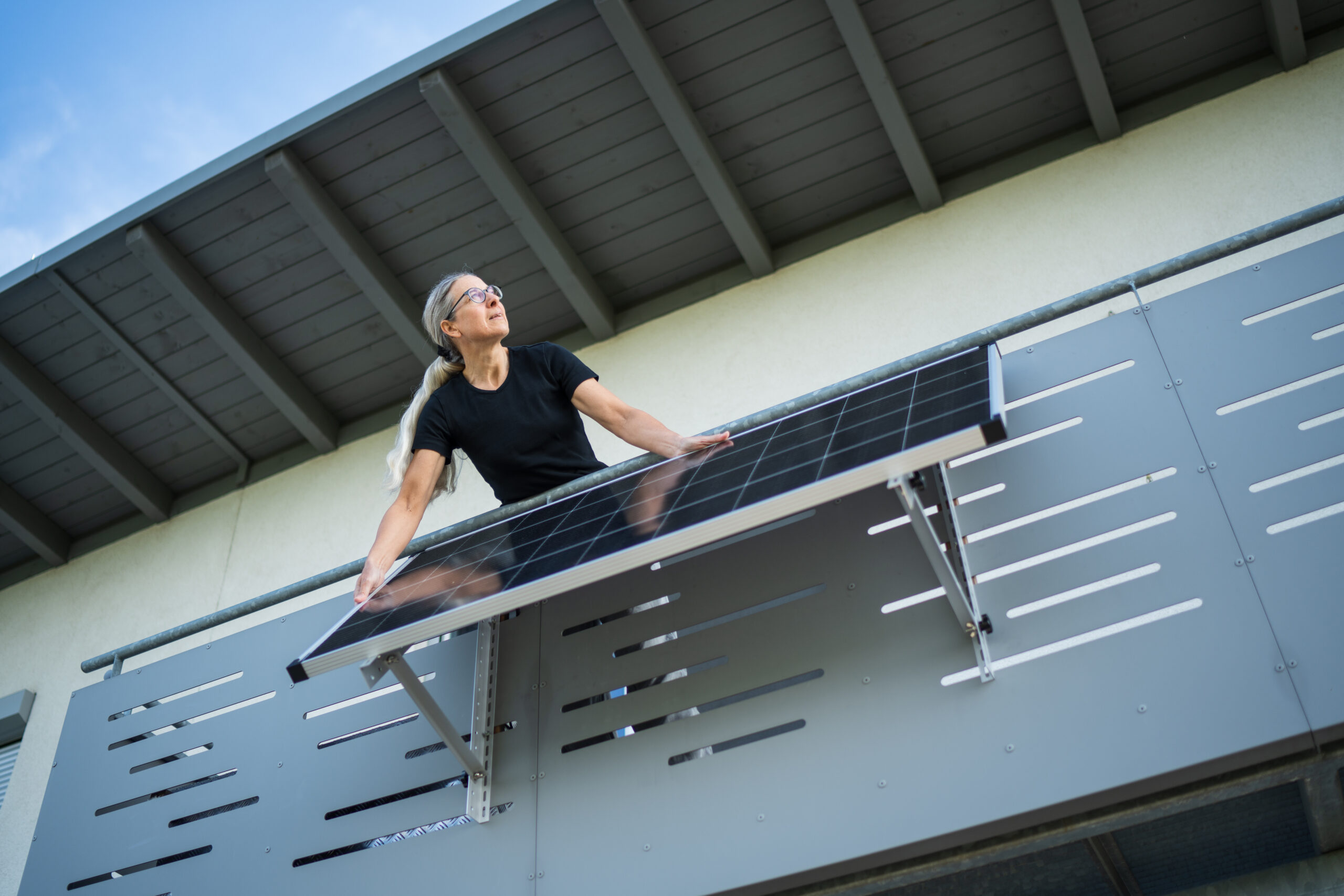
Their warning comes after the government said earlier this year that it wanted to speed up access to plug-in solar products, with ministers saying they were working with retailers and manufacturers to bring the devices to Britain within months. The panels, already sold in parts of continental Europe, are designed to sit on balconies, terraces or other sunny spots and feed electricity into a home through a standard socket.
Supporters say the appeal is obvious: the systems are relatively cheap, simple to install and visible to consumers looking for a way to cut bills. But the trade bodies argue that convenience should not outrun safety. They say the market should only open fully once there are clear product standards, enforceable rules, competent installation routes and consumer guidance that protects both households and the wider electricity network.
Electrical Safety First has separately highlighted risks including uncontrolled current injection, possible interference with residual current devices and the fact that conventional BS 1363 plugs were not designed as a power-generation interface.
The IET has also warned that many homes, especially older ones, may have wiring that has never been checked for this kind of back-fed generation and could be unable to cope safely.
Mark Coles, the IET’s head of technical regulations, said homeowners should not buy a plug-in solar kit without first understanding the condition of their wiring. He said what is safe in one property may be dangerous in another and urged consumers to have an electrician inspect the installation before connecting any off-the-shelf generation product.
The debate also reflects a wider regulatory gap. Commentary on the current UK position has said plug-in solar remains problematic under existing wiring rules, with a product standard for do-it-yourself connection still awaited. Until that framework is published and adopted, the industry bodies argue, a hurried mass-market launch could shift risk on to householders, emergency services, insurers, network operators and, ultimately, the government itself.
• This On the wire article was created using Noahwire AI and reviewed by CIBSE Journal’s editorial team
Source reference: E+T Magazine [1]
Sources by paragraph:
- Paragraph 1: [2], [3]
- Paragraph 2: [1], [7]
- Paragraph 3: [2], [4]
- Paragraph 4: [3], [2]
- Paragraph 5: [3], [4], [5]
Source: Noah Wire Services