
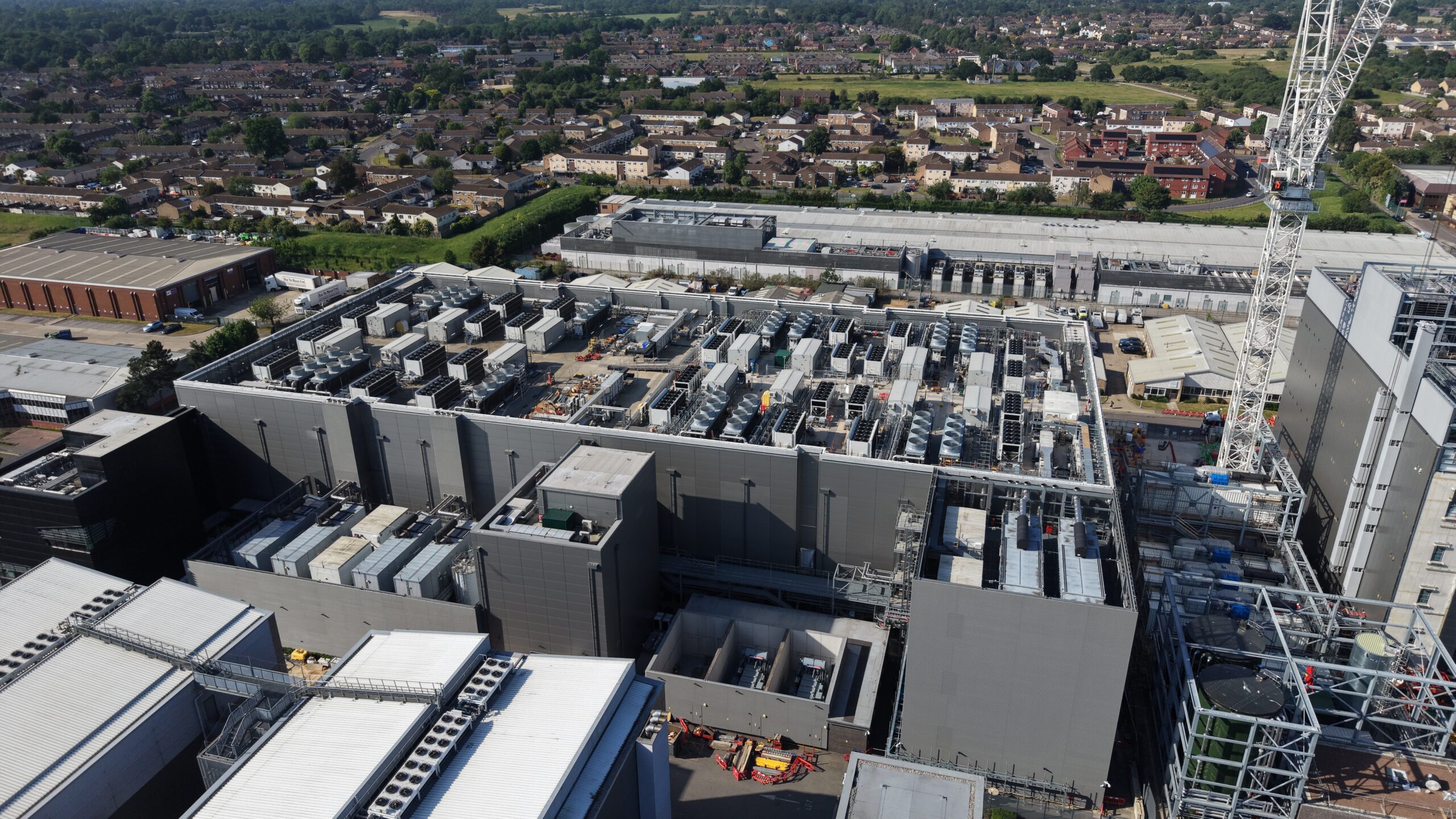
Credit: iStock – Tom Keeble
Data centres powering artificial intelligence will use the same amount of water as the annual domestic water needs of all 1.3bn people in Sub-Saharan Africa by 2030, according to new research from the United Nations University Institute for Water, Environment and Health (UNU-INWEH)
The report Environmental Cost of AI’s Energy Use: Carbon, Water and Land Footprints says that data centres are project to consume 945 TW of electricity – triple the combined annual energy use of Pakistan, Bangladesh, and Nigeria – and have a land footprint of 5,600m2 – which is bigger than East Anglia.
Researchers said that AI’s environmental cost is being ‘systematically mismeasured’ because most existing assessments focus on the carbon emissions associated with AI, but ignore the water footprint from cooling and power generation and the land footprint from infrastructure and supply chains.
The report concludes that low carbon data centres doesn’t always mean ‘low water’ of ‘low land’. It says that measuring sustainability through a single metric can lead to high trade-offs and shift burdens to regions facing water and land issues.
‘If we keep judging AI sustainability by carbon alone, we might think that renewables make AI infrastructure clean – but that is solving one problem while creating other problems, often in places that didn’t ask for it,’ said Dr Miriam Aczel, UNU-INWEH researcher and lead author of the report.
The document says that data centre development should be based on six principles: transparency, efficiency by design; equity and environmental justice; lifecycle responsibility; global co-operation; and sustainable use.
It called for a global standards to reduce the incentive for shifting the burden to other countries and recommended governments should standardise footprint reporting and integrate AI into energy planning and water governance.
The report also added that minimising environmental footprints should determine design and procurement decisions, and that communities should be involved early in the decisions around data centre locations.
‘This report is not a case against artificial intelligence, a technological transformation that is improving the lives of billions of people around the world,’ said Professor Kaveh Madani, director of UNU-INWEH who led the investigation team.
‘It is a call for using it responsibly and addressing its unintended impacts proactively to make it sustainable and equitable.’
The report also warned of a digital divide between those building AI capabilities, adding that poorer nations were likely to bear the environmental burden of minerals extraction and e-waste while ‘strategic benefits flow elsewhere’.
‘We have a narrow window to ensure that the backbone of the technological revolution of our era develops within planetary limits’, says Madani, ‘and that the communities who provide the critical minerals for advancing AI and the ones that host its infrastructure and e-waste are also among those who benefit from it,’