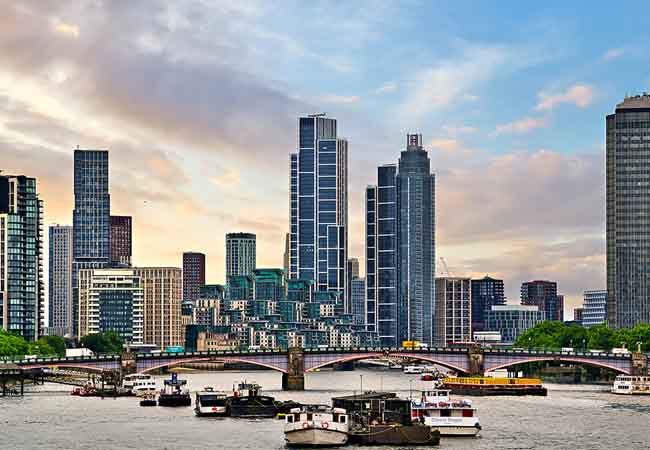
How water could be delivered by electric barges from energy waste plant while heat main is being built. Credit: iStock –Thomas Demarczyk
An On the wire story
The UK government has set aside £90 million for new and upgraded heat networks, in a move ministers say could help more than 750,000 homes cut heating bills while relying less on gas.
The package, announced by the Department for Energy Security and Net Zero, also includes support for schemes that could capture waste heat from data centres and other industrial sources, reflecting growing interest in turning surplus energy into a usable domestic supply.
The most eye-catching element is a £41 million commitment to the London Strategic Heat Main project, which will run under and alongside the River Thames. Officials say that scheme alone could provide clean heat to 650,000 London homes and help unlock around £5 billion of investment in the capital’s local heat networks, while supporting up to 2,000 jobs.
The project will transport low-carbon heat more than 25km into central London from Cory Group’s energy-from-waste facility in Belvedere, Bexley.
While the permanent tunnel is developed, heated water will be delivered along the Thames by electric thermal barges from 2028.
Cory said water would be delivered to large insulated hot water tanks housed in new pontoons. It said it is looking at potential to turn these into floating gardens, with new spaces and greenery.
Beyond the Thames project, the funding is expected to support a range of schemes across the country, including network expansion in Solihull, a project around Marble Arch in central London and a scheme in Bexley and Greenwich that could eventually heat as many as 100,000 homes.
Industry groups and developers are also advancing separate initiatives, from data-centre-linked heating systems to smaller-scale pilots that place computing equipment closer to households. The government’s bet is that, taken together, such projects can make heat networks more commonplace in Britain; the remaining challenge is whether the economics, engineering and delivery can keep pace with the ambition.
Source Reference Map
• This On the wire article was created using Noahwire AI and reviewed by CIBSE Journal’s editorial team