As cities intensify and decarbonisation targets tighten, attention is shifting from new-build solutions towards the reuse and upgrade of existing buildings. From an engineering perspective, revitalisation presents a distinct set of challenges, including constrained floor-to-floor heights, legacy services routes, limited plant space, and systems that were never designed for modern expectations of comfort, flexibility, or energy performance.
Converting industrial buildings to office use presents particular challenges. While their robust structures often suit reuse, integrating building services and achieving effective operational control is typically more complex than on a new-build project.
In this context, the value of a revitalisation project lies not only in fabric upgrades or efficient plant, but in how effectively systems are integrated and operated over time.
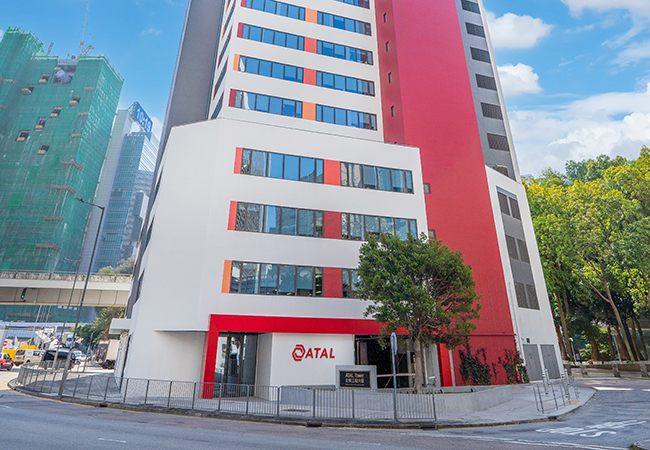
As presented in the paper by C. H. Chan and M. C. Ho*, the revitalisation of of ATAL Tower offers a useful case study because it combines structural reuse with an explicit focus on operational transparency, digital management, and post-occupancy performance.
The project demonstrates how smart technologies can support, rather than obscure, engineering practice when applied with clear intent.
AI delivers most value when augmenting experienced engineers, not when attempting to replace them
ATAL Tower was originally constructed as an industrial building and required extensive upgrading to meet contemporary standards for workplace comfort, energy performance, and flexibility. Rather than pursuing wholesale replacement of systems, the design team set out to work within the constraints of the existing structure, prioritising solutions that could be integrated incrementally and managed effectively in operation.
Key objectives included improving energy efficiency, enabling more responsive control of building services, and providing greater visibility of system performance for facilities managers. Importantly, the project sought to avoid isolated ‘smart’ features in favour of a coordinated approach in which data, control, and operation were aligned.
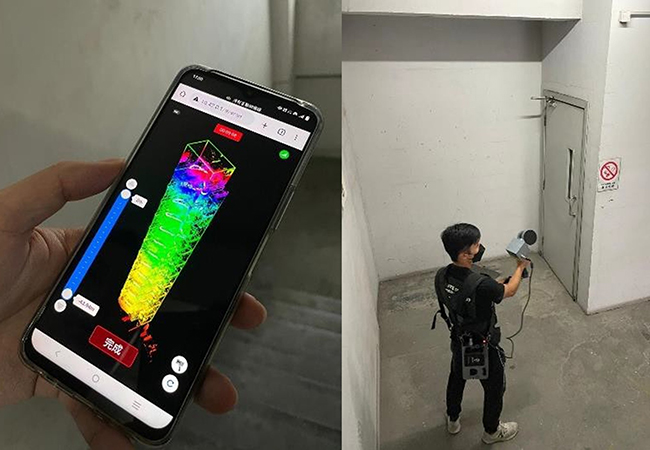
3D Scanner for BIM integration at ATAL Tower
The project was assessed under the BEAM Plus New Buildings V2.0 framework, Hong Kong’s principal green building rating system (broadly comparable in scope to BREEAM and LEED), and it achieved a provisional Platinum rating.
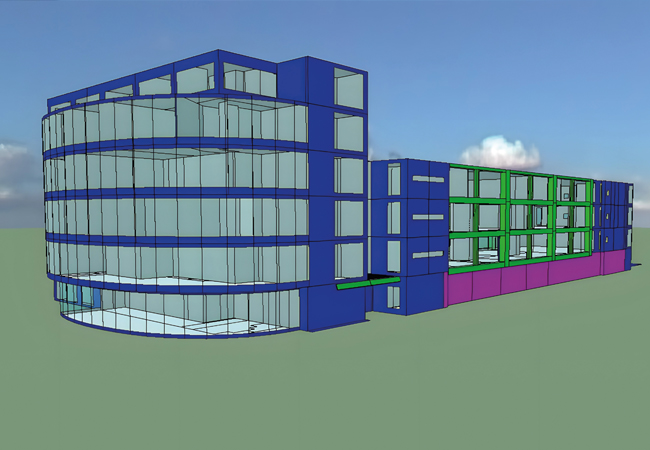
Building information modelling was used early in the project to test layout options, assess energy implications, and coordinate services within tight spatial constraints. This early modelling informed decisions about system selection and distribution but was treated as a foundation rather than an end point. The emphasis throughout was on how the building would perform and be managed once occupied.
The concept of a digital twin is often presented as a visual replica of a building, but its real value lies in supporting operational decision-making. At ATAL Tower, the digital twin is used as an operational tool, enabling facilities teams to interpret live building data in context and move from reactive response towards more proactive, evidence-based management.
A clear distinction was maintained between design-stage BIM and the operational digital twin – the former supporting coordination during delivery, the latter enabling ongoing management in use.
Its success depended less on graphical sophistication than on data reliability, consistency, and relevance to operational workflows. Integrating multiple data sources required careful attention to sensor calibration, data quality, and interoperability, particularly where legacy systems were involved.
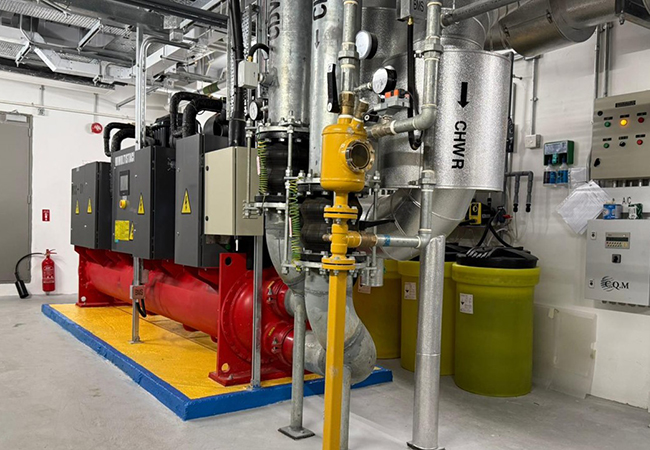
Oil-free magnetic chiller
The project team found that early engagement with facilities managers was essential to ensure that digital outputs aligned with how the building would be operated, rather than becoming an additional layer of complexity.
Artificial intelligence is increasingly promoted as a solution to building energy optimisation, but its practical application requires careful framing. At ATAL Tower, AI was applied primarily to chiller plant optimisation, informed by real-time operational and external data.
A notable aspect of the approach was the use of physics-guided machine learning. By embedding established engineering relationships within the learning process, the system avoids becoming a purely data-driven ‘black box’. This improves transparency and helps ensure that optimisation strategies remain consistent with safe and reliable plant operation.
Importantly, AI-based cooling load prediction was used as decision support rather than autonomous control. The system provides recommendations and optimisation opportunities, but human oversight remains central. This reflects a broader lesson from the project that AI delivers most value when augmenting experienced engineers, not when attempting to replace them.
The limitations of AI were also recognised. Performance is dependent on data quality, commissioning effort, and ongoing tuning. Without these, even sophisticated algorithms can produce misleading outputs. Treating AI as part of a wider control and management strategy, rather than a standalone solution, proved critical.
While detailed performance data will continue to evolve, several operational benefits have already been observed. Greater visibility of system performance has enabled faster identification of faults and abnormal operation, reduced response times, and supported more targeted maintenance.
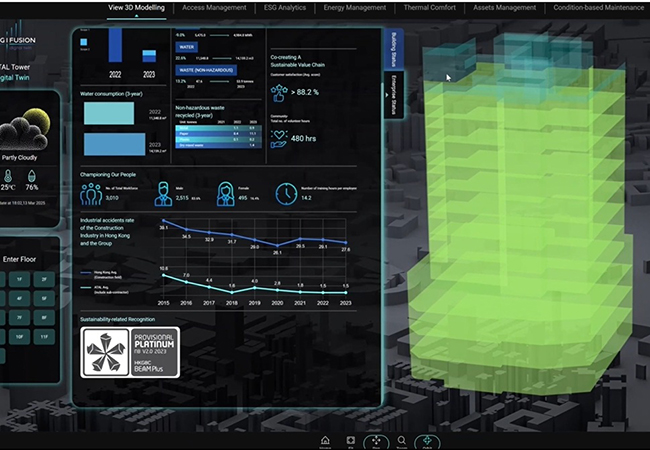
Digital twin interface
The combination of efficient cooling plant, demand-led control, and chilled beam distribution has helped to stabilise internal conditions while reducing unnecessary energy use.
Indoor environmental quality monitoring has provided reassurance that energy savings are not being achieved at the expense of occupant comfort. From a facilities management perspective, integrating data across systems proved as valuable as individual efficiency measures.
Rather than managing HVAC, lighting, and occupancy as separate domains, engineers can assess how changes in one area affect overall performance.
Not all elements delivered equal benefit. As with many smart building projects, the effort required to integrate and commission digital systems was greater than initially anticipated. The project reinforced the importance of allowing sufficient time and resource for commissioning, training, and post-occupancy fine-tuning.
Some lessons from ATAL Tower are directly applicable to retrofit projects in general. Principally, these are that gains often come from integration and operational clarity rather than from individual technologies, and that digital tools are most effective when designed around real operational needs, with facilities teams involved from the outset.
Other aspects are more context-specific, including certification frameworks and local regulatory drivers. Nevertheless, the underlying principles are widely transferable. Engineers considering smart retrofit projects should ask early questions about who will use the data, how performance will be verified, and how systems will be maintained over time.
The revitalisation of ATAL Tower demonstrates how an existing industrial building can be transformed into a low-carbon, high-performance workplace through careful integration of systems and a strong focus on operation.
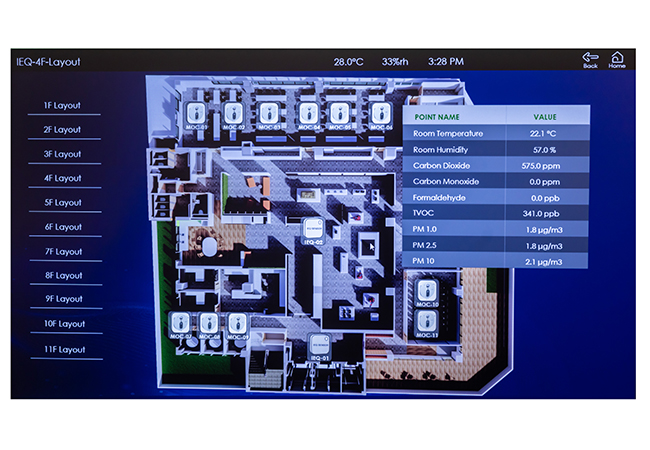
BMS Interface
Smart technologies, including digital twins and AI-assisted optimisation, proved most valuable when applied in support of clear engineering objectives. For building-services engineers facing the twin challenges of retrofit and decarbonisation, the project reinforces a simple message that meaningful performance gains come from integration, not accumulation.
*This article is based on the paper Revitalisation for a Smart and Green Future: ATAL Tower, presented by C. H. Chan and M. C. Ho of ATAL Engineering Group at the HKIE Building Services Division Joint Symposium, 18 November 2025.
Smart monitoring at ATAL Tower
Energy management and analytics
- Power quality management system (PQMS): real-time monitoring of energy use and power quality across MEP systems, supporting early identification of abnormal consumption and structured reporting.
- Fault detection and diagnostics (FDD): continuous analysis of plant data to identify emerging faults and support proactive maintenance.
- AI-assisted chiller optimisation: real-time operational and weather data combines with physics-guided machine learning to improve energy performance while maintaining comfort and reliability.
Digital twin: operational features
- Integrated performance view: combines live data from HVAC, lighting, indoor environmental quality and occupancy systems to provide a consolidated operational overview
- Energy and environmental monitoring: tracking of monthly energy use (including Energy Utilisation Index), real-time system power consumption, indoor air quality compliance and photovoltaic system performance
- Floor-level insight: temperature, energy use and occupancy information by floor, supporting targeted operational adjustments and investigation of performance anomalies
- Decision support for facilities management: contextualised data that supports day-to-day operational decisions, fault investigation and performance review, rather than acting solely as a visual representation.