
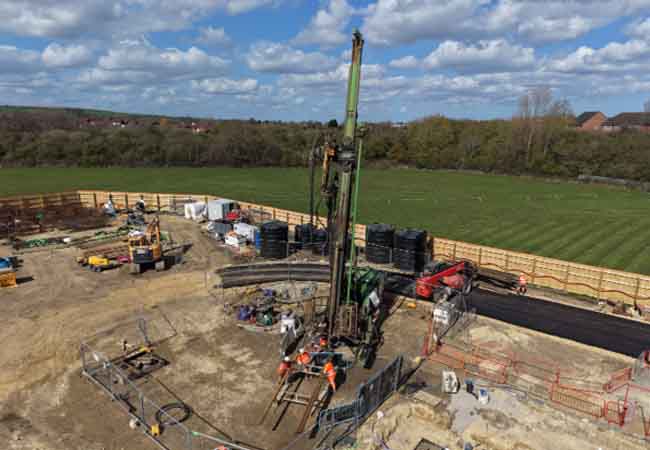
Figure 1: Drilling rig during the installation of Erda | deep at Framwellgate School, Durham
The redevelopment of Framwellgate School in Durham is incorporating Erda Energy’s Erda | deep technology as part of a ground source system for the new educational facilities.
Working alongside principal contractor BAM Construction and licensed delivery partner BMD Renewables, Erda is delivering a bespoke scheme designed around eight Erda | deep boreholes, each at a depth of approximately 205 metres (Figure 1).
Engineering around a challenging site
The project presents several engineering challenges, including restricted surface space, proximity to existing buildings and the area’s historic coal-mining activity.
The array allows multiple Erda | deep to be concentrated alongside the new energy centre, with inclined drilling paths designed to maintain appropriate separation from existing underground structures and foundations. This allows a 99% reduction in surface to sub-surface ratio.
The mining history of the site has also required specialist regulatory co-ordination. Erda worked with the Mining Remediation Authority to establish safe drilling arrangements in accordance with the site’s permit.
Project footage below shows drilling underway on the first of the eight proposed Erda | deep, demonstrating the practical application of Erda’s geo-exchange technology within a constrained school development (Figure 2).
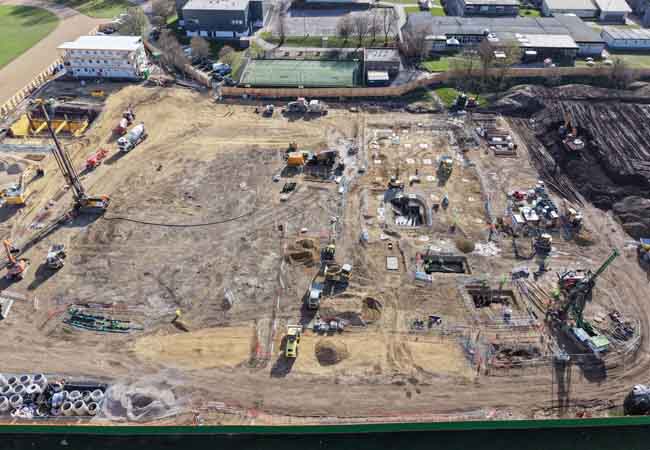
Figure 2: Erda | deep installation shown from an aerial site view
An integrated, resilient energy system
The system has been modelled around an annual heating and hot water requirements through an integrated geo-exchange solution.
Space heating will be provided by three heat pumps with a combined capacity of approximately 480 kW. This exceeds the expected peak heating demand, providing spare capacity to accommodate variations in demand and support efficient system operation.
A dedicated domestic hot water heat pump will provide hot water for the school, supported by 1,000 litres of hot water storage to ensure sufficient capacity to meet demand.
The system also includes provision for up to 200 kW of free cooling, enabling heat exchange with the ground during suitable operating conditions.
An external prefabricated Energy Control Module will house the main heating plant, while a separate internal module will provide domestic hot water services.
The installation will be managed through Erda | smart™, providing remote monitoring and energy performance analysis to support efficient long-term operation.
Environmental and educational benefits
By using electrically driven ground-source heat pumps instead of conventional gas heating, the development is expected to significantly reduce operational carbon emissions. An illustrative comparison based on the school’s design heating demand suggests potential annual heating-related carbon savings of approximately 70-80%, subject to confirmation through detailed energy modelling.
With potential for future integration into a wider low-carbon energy network, Framwellgate demonstrates how geo-exchange technology can contribute to the long-term decarbonisation of educational buildings.
As installation and commissioning progress, performance monitoring will enable the project’s energy efficiency and carbon-saving benefits to be assessed against the original design expectations.
The Framwellgate project demonstrates how Erda | deep technology can overcome challenging site constraints to deliver efficient, low-carbon heating and cooling, providing a model for more sustainable school developments across the UK and the cf25 scheme.
Visit www.Erdaenergy.com for more information