

Sponsor: Daikin
As buildings become more energy efficient and electricity supplies decarbonise, the embodied carbon of heating, ventilation and air conditioning (HVAC) equipment is becoming an increasingly important part of a building’s whole life carbon. Heat pumps, chillers and air handling units (AHUs) contain metals, plastics, electronics and, in many cases, refrigerants. Unlike structural elements, much of this equipment may also be replaced during the building’s life.
Reducing operational energy remains essential. But choosing HVAC equipment on efficiency alone risks overlooking the emissions associated with manufacturing, installing, maintaining and replacing it. Environmental Product Declarations (EPDs) can help engineers understand these impacts and use them in design decisions. The challenge is to interpret product-level information and understand how it can inform the assessment of a complete HVAC system. This CPD uses a heat-pump EPD to illustrate how environmental data can support equipment selection and contribute to a wider whole life carbon assessment.
From TM65 estimates to EPDs
While EPDs provide product-specific environmental data, they are not yet available for all building services equipment. To address this gap, CIBSE developed TM65, Embodied carbon in building services: A calculation methodology,1 to provide a standardised approach for estimating the embodied carbon of MEP products where an EPD is unavailable.
CIBSE TM65 offers two calculation methods: a basic method, which uses relatively limited information; and a mid-level method, which incorporates further manufacturing information, including factory energy consumption and assembly location.
TM65 deliberately produces a conservative estimate, using allowances and assumptions to address gaps in the available data. It therefore provides a practical means of including building services equipment in a whole life carbon assessment. However, it should not be confused with a product-specific life-cycle assessment.
An EPD communicates environmental impacts calculated through a life-cycle assessment (LCA), following defined product category rules (PCRs) to produce a Type III environmental declaration. This is independently verified in accordance with standards such as ISO 14025 and BS EN 15804, which establish the reporting framework and help make assessment assumptions and boundaries transparent.2,3
An EPD is not automatically more accurate in every respect; its usefulness depends on the quality of the underlying information and the relevance of its scenarios to the proposed installation. Nor does independent verification mean that products with different assessment periods or PCRs can be compared directly.
Reading a heat-pump EPD
Consider the Daikin VRV 5 heat-recovery outdoor unit declaration (DAIK-00056-V01.01-EN),4 prepared under the PEP ecopassport programme. Its reference product, termed ‘declared unit’, is the REYA12A outdoor unit, rated at 33.5kW, operating on R-32 refrigerant with a stated reference lifetime of 22 years and manufactured in Belgium.
The first thing to note is that this declaration concerns an outdoor unit alone, rather than a complete installed variable refrigerant volume/variable refrigerant flow (VRV/VRF) system.
An EPD may express results per product or against a functional unit – for example, 1kW of heating or 1kW of cooling capacity according to the reference scenario during a reference service life. Engineers should establish whether the EPD reports carbon emissions per product or per unit of heating or cooling capacity (kgCO₂e·kW·¹), and apply the appropriate scaling factors when assessing different equipment sizes or configurations.
The Daikin EPD also provides extrapolation factors for other models within the declared product family, allowing a single declaration to cover multiple equipment sizes and configurations. In this example, the EPD covers the REYA and REMA series, with extrapolation tables (Tables 5 and 6) providing coefficients for different capacities and combinations, from 8hp to 28hp. The coefficients vary by model and life-cycle stage, rather than increasing in direct proportion to capacity. Engineers must therefore select the appropriate coefficients, distinguishing between values reported per kW and per product, when calculating the embodied carbon of different equipment configurations. As the accompanying example illustrates, these differences can influence equipment selection (see box overleaf, ‘How equipment configuration can affect upfront carbon’).
Next, examine the life-cycle modules. Environmental impacts are reported across standardised modular stages: A1-A3 cover material supply, transport to manufacture and production; A4-A5 cover transport to site and installation. B1-B7 modules address use-stage impacts, including maintenance, refrigerant leakage, replacements and operational energy. C1-C4 cover end-of-life activities. Module D separately reports potential benefits or loads beyond the assessment boundary, such as material recovery. Engineers should check which life-cycle modules are reported in an EPD, together with the assumptions and exclusions, before using its results in a whole life carbon assessment.
In the Daikin example, the EPD provides a breakdown of the materials used in the outdoor unit, including steel, copper, aluminium, brass, plastics, electronic components and refrigerant. These materials are used in the equipment’s construction, including its casing, compressor, heat exchangers and internal pipework.
Material information can reveal impacts not obvious from weight alone: relatively light electronic components may have a substantial carbon intensity. The declaration also includes stated assumptions about transport, servicing, electricity use and refrigerant recovery.
A crucial distinction is between embodied carbon and operational energy. The Daikin EPD includes the electricity consumed during the heat pump’s assumed 22-year service life (Module B6), alongside other use-stage impacts such as refrigerant leakage and maintenance. These are reported together under modules B1-B7 and account for most of the product’s declared life-cycle carbon impact. However, the building’s operational carbon assessment will normally account separately for the heat pump’s electricity consumption and associated emissions. Adding the EPD’s complete life-cycle carbon figure could therefore result in double-counting. Engineers should therefore use the EPD’s separately reported manufacturing, installation and end-of-life impacts, and establish how to account for maintenance, refrigerant emissions and replacements in accordance with the building’s whole life carbon assessment methodology.
Refrigerant: a significant omission risk
Refrigerants require particular attention because their direct emissions can be substantial even where the mass involved is small. The assessment must distinguish the factory charge covered by a product declaration from any additional charge required for site-installed pipework. It must also establish how the EPD accounts for manufacturing, leakage during operation, servicing and end-of-life recovery.
The climate impact of leaked refrigerant depends on the mass released and its global warming potential (GWP).5 For example, for a heat pump running on R-410A, a loss of 1kg at a GWP of 2,088 corresponds to 2,088kgCO₂e, whereas, for a heat pump running on R-32, a loss of 1kg at a GWP of 675 corresponds to 675kgCO₂e. The figures demonstrate why refrigerant choice, total system charge and leakage assumptions matter, particularly when comparing modern equipment with legacy high-GWP systems.
Different assessment methods can adopt different leakage and recovery scenarios. The Daikin VRV 5 EPD accounts for refrigerant leakage during operation and maintenance, together with refrigerant recovery and disposal at the end of the unit’s assumed 22-year service life. It assumes four partial refrigerant refills during this period and a 90% recovery rate at end of life.
TM65 uses its own default assumptions. Mixing these uncritically, or applying product-level leakage impacts to the entire field charge without checking the boundary, can distort the result. Designers should document the selected scenario and ensure that any additional site charge is assessed without double-counting emissions already included in the EPD.
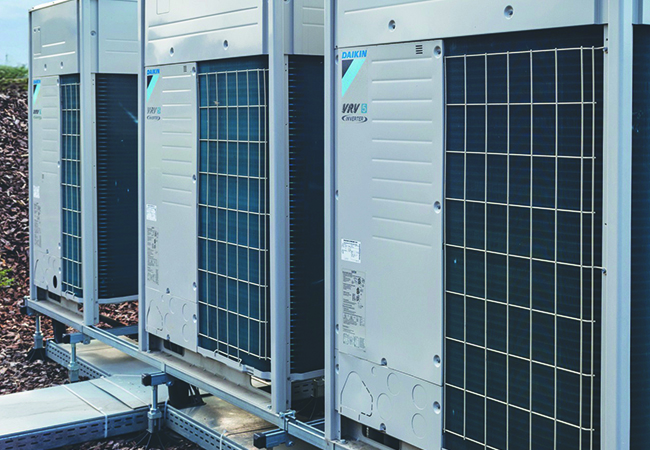
Figure 1: Daikin VRV 5 heat-recovery outdoor unit
Building a system-level assessment
The outdoor unit EPD does not describe an installed HVAC system. A VRV/VRF installation also requires indoor units, branch selector boxes, refrigerant pipework, insulation, controls and electrical connections. In contrast, an air-to-water heat pump installation might instead require circulation pumps, buffer vessels, valves, water distribution and heat emitters. Support structures and other project-specific ancillaries may add further impacts. The engineer therefore needs a system bill of quantities, identifying the equipment, quantities, materials and the assessment source for each item.
A practical sequence begins with the specified equipment schedule. In the case of a heat pump, for each outdoor unit, select the correct EPD model or permitted extrapolation factor and extract the relevant modules. Add indoor units, branch controllers or hydronic equipment, then pipework, insulation, controls, electrical distribution and supports according to the agreed system boundary.
Where product EPDs are unavailable, calculate appropriate TM65 estimates or use documented material quantities and carbon factors. Next, account for additional refrigerant and the applicable leakage and recovery assumptions. Finally, extend the assessment over the building reference study period, including maintenance and replacements where required.
This final step can materially alter the result. The Daikin EPD assumes a 22-year reference service life for assessment purposes, rather than necessarily predicting the equipment’s actual lifespan. If this assumption is adopted, a heat pump may need two replacements within a 60-year building assessment, whereas parts of the distribution network may last longer. Replacement impacts must be treated in the correct life-cycle module and should reflect the selected methodology; it is not sufficient to multiply every original EPD total by three, particularly if that total already includes 22 years of operational electricity.
The output should be a transparent schedule showing each component, quantity, data source, included modules and calculated impact. Totals may be expressed per installed kW for equipment comparisons or per square metre of gross internal area when incorporated into the building assessment. Both metrics require consistent boundaries to be meaningful.
A product EPD is therefore a starting point, not a system carbon figure. An apparently low carbon heat pump may form part of a comparatively material-intensive installation once distribution, controls and repeated replacements are included.
Using the information to improve HVAC design
The purpose of this exercise is not simply to produce a carbon total. It is to identify where design choices can reduce impacts without compromising comfort, health, resilience or operational performance.
Accurate load calculations can avoid unnecessarily large equipment and associated material and refrigerant charges. However, capacity decisions must still allow for genuine peak loads, redundancy and operating flexibility. Similarly, a single large chassis heat pump may use fewer materials than a modular arrangement, but the latter could offer benefits for part-load performance, maintenance or resilience. Embodied carbon is one criterion rather than an automatic deciding factor.
System simplification offers further opportunities: unnecessary valves, pipework and duplicated equipment all add material impacts. Distribution routes, refrigerant charge and selection of lower-GWP refrigerants can also make a difference. The suitability of alternative materials should be assessed alongside technical performance and expected service life.
Longer-lasting, repairable equipment may justify greater initial embodied carbon if it avoids wholesale replacement. Conversely, a design that minimises upfront materials but requires frequent equipment replacement could perform poorly over the building’s assessment period.
Above all, embodied and operational carbon must be considered together. A more efficient heat pump may need larger heat exchangers or additional electronics, increasing its manufacturing impact while reducing electricity use. Whether that trade-off is worthwhile depends on the scale of the efficiency improvement, operating hours, service life and the carbon intensity of electricity over the assessment period.
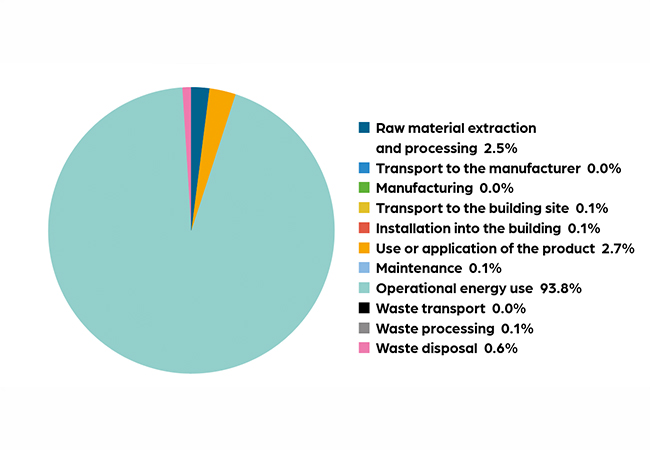
Figure 2: Global warming potential fossil kgCO2e – life-cycle stages
From HVAC system to whole-building carbon
The system assessment feeds into the building’s whole life carbon calculation alongside structure, envelope, finishes and other services. The building team must agree the reference study period, service-life assumptions, carbon factors, treatment of replacements and reporting boundaries. The RICS whole life carbon methodology and relevant building assessment requirements provide the wider framework.6
Consistency is especially important when product EPDs use different reference lifetimes or include B6 operational energy. Building-level energy calculations, rather than incompatible product scenarios, should govern the project’s operational assessment. Potential carbon savings from recycling, reuse or recovery of materials at the end of the equipment’s life (Module D) should be reported separately, rather than deducted from the building’s calculated whole life carbon emissions.
As designs develop, estimates should be updated with the actual specified products and quantities. Changes during procurement can alter embodied impacts even if nominal heating and cooling capacities remain unchanged. A traceable record of EPDs, TM65 assumptions and substitutions therefore supports design decisions and later verification.
Increasing expectations for carbon evidence
France’s RE2020 approach illustrates how product environmental data can feed into regulated building carbon calculations, with default data used where product-specific declarations are unavailable.7 It provides a useful comparison with the UK, although the French rules and thresholds should not be presented as directly transferable to UK projects.
In London, Policy SI 2 of the London Plan requires whole life-cycle carbon assessments for referable developments, supported by Greater London Authority guidance and reporting at relevant project stages.8 The UK Net Zero Carbon Buildings Standard is also strengthening expectations around measured, consistently reported building carbon.9 For projects seeking alignment with the UK Net Zero Carbon Buildings Standard, engineers must ensure that their carbon assessments meet the requirements of the applicable version of the Standard, including its reporting and independent verification requirements.
Meanwhile, CIBSE’s TM65 verification initiative offers a route to greater confidence in estimated building services product impacts where a full EPD is not available.10 Taken together, these developments increase the value of reliable, traceable product data.
How equipment configuration can affect upfront carbon
The example Daikin VRV 5 heat-recovery outdoor unit EPD uses the 12hp REYA12A as its reference model. Table 8 gives this a manufacturing impact (A1-A3 ) of 2,460kgCO₂e.
Table 6 gives a manufacturing impact (A1-A3) extrapolation coefficient of 1.38 for a single 16hp REYA16A unit, compared with 2.00 for a REYA16A (8+8) configuration comprising two 8hp modules.
This calculates as:
Single chassis: 2,460 × 1.38 = 3,395kgCO₂e (rounded).
Two-module configuration: 2,460 × 2.00 = 4,920kgCO₂e.
On these EPD assumptions, the modular configuration has approximately 1,525kgCO₂e (45%) more manufacturing carbon. This is not a complete system or whole life comparison: operational efficiency, resilience, refrigerant charge, other modules and the actual design duty must also be considered.
Better data, better decisions
TM65 provides a means of estimating embodied carbon when product declarations are absent. EPDs offer independently verified information about defined products and life-cycle scenarios. Neither, by itself, describes the carbon consequences of a complete HVAC design. Engineers must understand the boundaries, add omitted components, account for refrigerants and replacements, and test embodied impacts against operational performance. Used in this way, EPDs become more than product documentation – they help inform better system design and specification. l
© Andrew Pearson, 2026.
References:
1CIBSE. Embodied carbon in building services: a calculation methodology (TM65). London: CIBSE; 2021
2 ISO. ISO 14025:2006. Environmental labels and declarations — Type III environmental declarations — Principles and procedures. Geneva: ISO; 2006.
3BSI. BS EN 15804:2012+A2:2019. Sustainability of construction works — Environmental Product Declarations — Core rules for the product category of construction products. London: BSI; 2019.
4 Daikin Europe NV. Environmental product declaration: VRV 5 Heat Recovery Outdoor Unit (Air to Air), REYA12A; PEP ecopassport DAIK-00056-V01.01-EN. Issued November 2023
5 Defra and Environment Agency. Fluorinated gases (F-gases). London: GOV.UK; 2019 [updated 7 Feb 2024; cited 12 Oct 2026]
6 RICS. Whole life carbon assessment for the built environment. 2nd ed. London: RICS; 2023 (version 3 issued August 2024)
7 Ministère de la Transition écologique. Réglementation environnementale RE2020
8 Greater London Authority. Whole life-cycle carbon assessments: London Plan guidance. London: GLA; 2022
9 UK Net Zero Carbon Buildings Standard. UK Net Zero Carbon Buildings Standard, Version 1. 2026
10 CIBSE Certification.Embodied Carbon Verification (ECV)