
Credit: iStock – Tom Keeble
An On the wire story
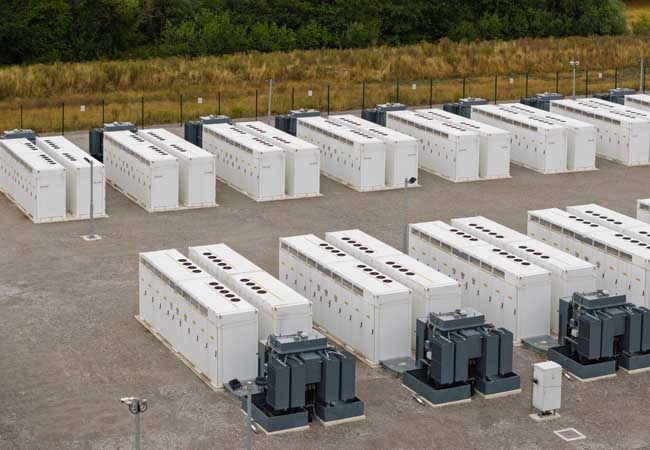
A cyber attack on a large slice of Britain’s battery energy storage fleet could be enough to bring down the wider grid, according to a new report from cybersecurity firm Centrii. The company’s modelling says that compromising about 29% of the UK’s battery energy storage systems, or roughly 400 units, could trigger a nationwide blackout, with disruption affecting tens of millions of people and potentially inflicting economic losses of between £2bn and £10bn.
Centrii’s analysis centres on what it calls a ‘gridlock’ scenario: a coordinated assault on cloud-managed battery systems that would not aim to destroy equipment, but instead to upset the delicate balance of electricity supply and demand.
In the company’s telling, attackers could force batteries to charge or discharge in synchrony, or delay their response to grid signals, creating instability that spreads across the network in under two minutes. The report said recent academic work shows that even a relatively small number of compromised large batteries can destabilise regional grids.
The risk, Centrii argues, is amplified by the scale and structure of Britain’s battery fleet. Under the company’s UK case study, the grid has about 6.8GW of battery storage capacity across roughly 1,400 units, with most of it concentrated in England.
Another summary of the study said there is a 93% chance of a major attack on battery storage infrastructure within five years, while Centrii’s own Monte Carlo simulations put the probability at 92% by 2031 under current conditions, falling to 61% if security standards are tightened significantly.
The warning lands at a time when energy security and cyber resilience are already under scrutiny. A government spokesperson told New Civil Engineer that the UK energy system remains highly resilient and that ministers are pushing legislation to strengthen national security powers.
John Southern, operations and strategy director at the Energy Storage Association UK, said the report underlined the importance of cyber resilience, but added that industry, government and the Smart Secure Electricity Systems programme are already working on safeguards.
Centrii said the financial case for stronger protection is straightforward: in its view, operational technology spending is often undervalued because its benefits are measured in disasters avoided rather than losses incurred.
REFERENCES
Inspired by headline at: New Civil Engineer [1]
• This On the wire article was created using Noahwire AI and reviewed by CIBSE Journal’s editorial team