Credit: iStock – typhoonski
An On the wire story
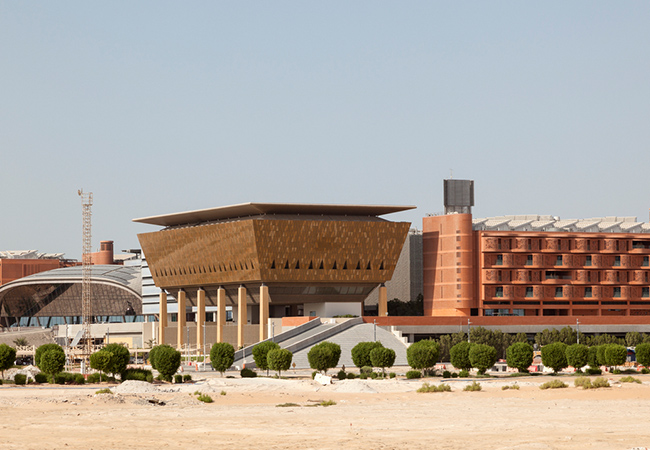
Abu Dhabi’s clean energy ambitions have taken a major step forward after Masdar said it had reached financial close on what it describes as the world’s first gigascale renewable project designed to deliver power continuously, day and night. The scheme combines a 5.2 gigawatt solar photovoltaic plant with 19 gigawatt hours of battery storage and is intended to supply 1 gigawatt of uninterrupted clean electricity. Masdar said the initiative was developed with Emirates Water and Electricity Company.
The project is meant to tackle one of the long-standing weaknesses of solar power: its dependence on daylight. By generating far more electricity than is needed during peak sun hours, the plant can charge the battery system and then release stored energy after dark, creating a round-the-clock output profile that resembles baseload power. Masdar said construction began in October 2025 and that commercial operations are scheduled for 2027.
Industry reports described the scheme as one of the largest solar-plus-storage investments yet announced and said the project has already moved from planning into construction. PV Magazine reported earlier this year that Masdar and EWEC had outlined the 5.2 gigawatt and 19 gigawatt hour design, while ESS News later said the development would cost more than AED 22 billion and create more than 10,000 jobs.
The project also fits into Masdar’s wider expansion strategy. The company says it now oversees more than 65 gigawatts of renewable capacity globally and aims to reach 100 gigawatts by 2030. If the Abu Dhabi plant performs as planned, it could become a reference point for future utility-scale systems seeking to combine solar generation with storage to provide continuous low-carbon power.
The financing package is worth $6.1 billion, including $1 billion in equity and $5.1 billion in debt, according to Masdar.
Source Reference Map
Inspired by headline at: Energies Media [1]
• This On the wire article was created using Noahwire AI and reviewed by CIBSE Journal’s editorial team