
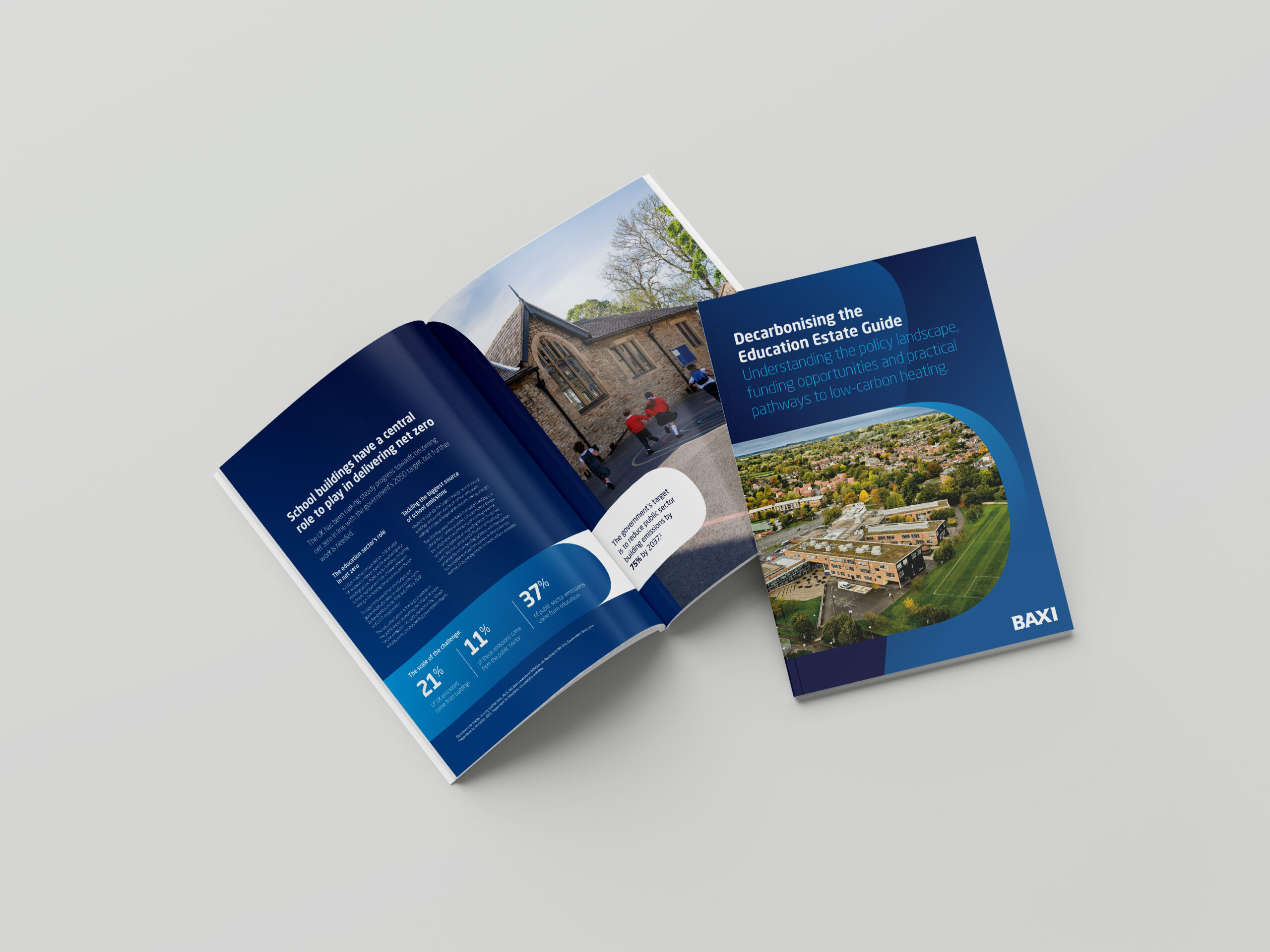
Schools across the UK are facing growing pressure to decarbonise heating systems as policy expectations evolve, funding routes shift and ageing estates continue to compete for limited investment.
Decarbonising the Education Estate – Policy and Regulatory Landscape, a new report commissioned by heating and hot water solutions provider Baxi and prepared by Talan UK and Ireland, maps the regulations, funding opportunities and practical considerations shaping the move to low-carbon heating across the UK education estate.

The education sector is responsible for 37% of all public sector emissions, making school estates a significant part of the UK’s journey to net zero. Much of that challenge sits within the buildings themselves, as heating and powering school buildings account for 27% of emissions.(See footnote).
As 87% of schools continue to rely on gas as their primary heating source, improving energy efficiency and planning for lower-carbon heat will be central to reducing emissions across the education estate.
The guide explores the overarching policy frameworks and the funding and regulatory levers designed to help schools decarbonise, including:
- The Department for Education’s Education Estates Strategy
- The Future Buildings Standard
- The Public Sector Decarbonisation Scheme
- The Condition Improvement Fund
- School Condition Allocations
- Great British Energy initiatives
Cost and condition pressures add to the constraints caused by emissions alone, with ageing buildings and competing investment priorities restricting schools from modernising their heating systems.
Jeff House, director of policy and external affairs at Baxi, said: “Schools are being asked to cut emissions while managing rising energy costs, ageing buildings and intense pressure on capital budgets. Heating is one of the most practical places to start, but it is also one of the areas where schools need the clearest advice.

“Policy is moving in the right direction, and new funding routes are beginning to emerge. What schools need now is practical guidance that helps them understand which options are available, what is likely to work for their estate and how to plan upgrades in a way that supports carbon, cost and comfort goals.”
According to the report, heat pumps can reduce carbon emissions by between 55% and 65% compared with an A-rated boiler. Hybrid heating solutions, which combine gas boilers and heat pumps, are another stepping stone for schools striving to reduce emissions amid tightened budgets.
Jeff said: “We’ve been in this business for 160 years – we’ve seen it all. Read the report. If you have questions, get in touch. We stand ready to support your school to cut carbon, reduce costs and improve pupil and teacher comfort.”
Download Decarbonising the Education Estate – Policy and Regulatory Landscape.