
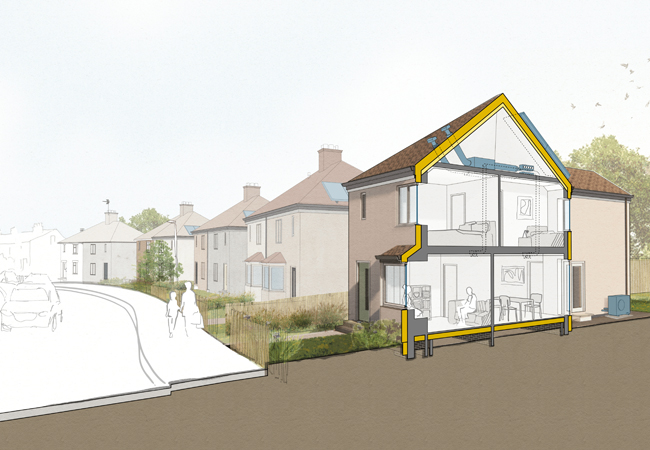
This retrofit project in Cambridge, by ECD Architects, took part in the pilot and will feature in the February edition of the CIBSE Journal
Feedback from the UK Net Zero Carbon Buildings Standard (UK NZCBS) pilot has provided a huge vote of confidence for the framework, which is set to transform the way buildings in the UK are designed, built and operated.
Evidence from more than 200 projects found that the limits for embodied carbon and operational energy use in the pilot version of the Standard were achievable.
‘Generally, there was a positive response – many participants felt the limits were ambitious yet achievable,’ NZCBS CEO Katie Clemence-Jackson tells CIBSE Journal.
However, as expected with pilot testing, there were also less favourable comments, she adds: ‘We’re using this to inform a review of our limits, with particular attention paid to those where concerns were raised, to make sure we are striking the right balance.’
Responses from 134 project owners have helped shape the first version of the Standard, which is due to be published in early 2026. The substantial level of feedback is giving the UK NZCBS confidence that the appropriate limits have been created, says Clemence-Jackson. ‘We were only going to set limits once we had sufficient data to provide us with the right level of assurance.’
The UK NZCBS is a voluntary standard applicable across new-build and existing buildings (whether retrofitted or not). It sets out metrics by which net zero carbon-aligned performance is evaluated, and projects must meet mandatory limits and targets. Among other things, the mandatory criteria cover operational energy use, embodied carbon, onsite renewable electricity, and refrigerants, as well as the need to avoid fossil fuel use on site.
Feedback on limits
The pilot testing programme uncovered broad support for the limits for operational energy use and upfront carbon across all building sectors.
For upfront carbon limits in new works, 76% of respondents thought the limits were at the right level or not ambitious enough. For operational energy limits in new buildings, respondents were more cautious, with 69% saying they were at the right level or not ambitious enough. However, these results were heavily skewed by the science and technology sector, in which 80% said the limits were too ambitious.
For retrofit projects, respondents were also positive, with 85% saying the operational limits for one-go and stepped retrofits were at the right level or not ambitious enough, and 83% saying the same for the embodied carbon limits.
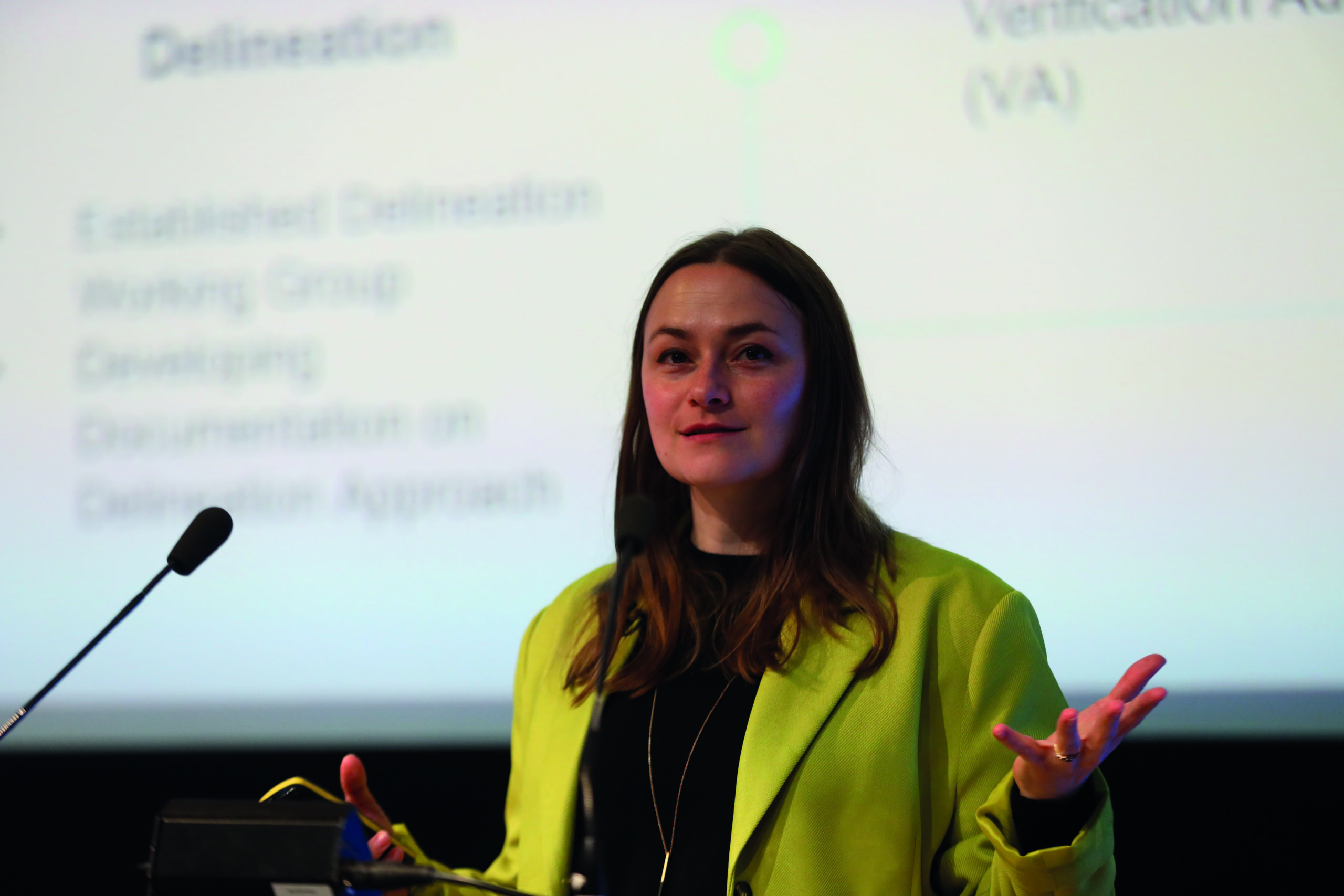
Katie Clemence-Jackson
A significant proportion of respondents, however, thought certain targets were too ambitious – 31%, for example, said this about the limit for upfront embodied carbon associated with onsite renewables. The renewable electricity generation targets were also cited as being too ambitious by 56% of respondents.
Clemence-Jackson says the responses make it clear that further clarification is needed, but that many buildings would have met the target with permitted exemptions applied.
Among the clarifications being made to Version 1 in light of the pilot feedback is a detailed explanation of the circumstances in which the renewable generation target can be reduced. These include planning or legal constraints, available space, overshadowed roofs, Grid-connectivity constraints, access, and structural capacity. A graphic illustrating these factors in more detail was published in the December update (see Figure 1).
Delineation
The pilot revealed the need for clear separation of tenants and landlords’ responsibilities, and a delineation working group has developed separate routes to conformity for each in certain sectors. This includes delineation requirements for the office sector, which will be available in Version 1 of the Standard.
A large proportion of respondents reported difficulty in gathering tenant data – for example, 73% said that, for buildings with multiple tenants, they would not be able to conduct separate embodied carbon assessments for reportable works for each tenant.
‘Anyone following this method will still use the Standard’s methodology, but there will be certain areas where it’s different if your responsibilities are as a landlord or tenant,’ explains Clemence-Jackson.
The Standard’s approach will enable landlords to obtain verification independently of tenants, and vice versa.
Deemed to satisfy
Version 1 will set out how existing schemes can be used towards verification against the Standard. It will contain new annexes to cover where projects that are pursuing other certification schemes can use this as evidence of equivalence – now known as ‘deeming to satisfy’ – for specific mandatory criteria within the UK NZCBS
For example, Clemence-Jackson confirms that offices with a high NABERS UK rating will be deemed to satisfy the energy use requirements of the Standard. ‘It should make life easier, because you won’t need to demonstrate the operational energy evidence twice,’ she says.
Integration of the Standard with other operational standards, such as Breeam and Passivhaus, is ongoing and will be published as soon as collaboration with these organisations has concluded.
In one pilot project, Glyn-coch Primary School in Wales, the Passivhaus design ‘took care of the operational limits’, according to Doug Drewniak, principal building performance manager at Willmott Dixon. ‘We see Passivhaus as a fantastic way to meet the requirements of the Standard,’ he added.
Clemence-Jackson is urging other assessment bodies to come forward. ‘We are open to speaking to any other scheme that has relevant metrics deemed to satisfy the Standard. Essentially, we want to reduce the amount of work that people have to do,’ she says.
Future developments
Data centres have some different evaluation metrics in the Standard. For example, while other buildings must adhere to energy use intensity limits, data centres are assessed using power usage effectiveness, which measures the efficiency of cooling and power infrastructure relative to the IT load. Similar to some other sectors, data centres can apply certain exemptions related to fossil fuels and space heating.
The UK NZCBS has a dedicated data centre sector group, and is planning to talk with members of the CIBSE Data Centres Group to explore future developments for this sector, such as in-use embodied carbon limits and the possible evolution of energy use limits with intensity of use.
As with all development of the Standard, new aspects will only be introduced if they are supported by evidence, says Clemence-Jackson. Once Version 1 is launched, performance data gathered through the verification process will be used to inform future iterations, she adds.
‘We want to work together to gather that additional data and think about what could be introduced in later versions of the Standard to support data centres on their net zero carbon pathway,’ she says.
The UK NZCBS is keen to support other countries in developing their own versions of the Standard, and has already spoken with the Dutch Green Building Council.
‘They told us they were inspired by our Standard. We had a call to talk through the technical aspects; they have seen what we’re doing and are learning from it,’ Clemence-Jackson says.
The Standard’s limits are also already starting to influence design approaches in the UK. ‘We heard at our conference in November that teams are looking at the refrigeration limits and incorporating them into their future designs – it’s really positive to see,’ says Clemence-Jackson.
‘Constraints are what set the playing field for creativity. We’ve set the limits that need to be considered when designing a building. People can be creative in how they meet them.’