
Adaptive reuse is widely recognised as one of the most effective strategies for reducing whole life carbon in the built environment, primarily by retaining existing structures and avoiding the significant embodied carbon associated with demolition and new construction.
The redevelopment of the University of Auckland’s Building 201 (B201) demonstrates what is possible when a project team treats an ageing asset not as a demolition candidate, but as an opportunity.
The transformation of the 1970s social sciences building into a world-leading low carbon academic facility has delivered a 26,500m² building operating with dramatically lower energy use and carbon emissions, while extending its life by another half century.
Equally impressively, the project has achieved a 6 Green Star rating with 93 points – the highest score ever awarded in the New Zealand Green Building Council’s rating system.
These achievements were recognised in the 2026 CIBSE Building Performance Awards, which named it Project of the Year – Workplace and Building Performance Champion. The judges said it was an ‘exemplary demonstration of every category in building performance’.
Constructed in stages during the 1970s, B201 was typical of university buildings of the era: a concrete, nine-storey brutalist structure with compartmentalised spaces, outdated mechanical systems and deteriorating envelope elements. By the mid-2010s, it had become an inefficient workplace with carbon-intensive building services and structural vulnerabilities in a seismically active region.
The University of Auckland initially considered two conventional options: a light refurbishment, followed in 10 to 15 years by eventual demolition; or instant demolition and full rebuild. Instead, the client challenged the design team to explore whether the building could be transformed through adaptive reuse to deliver world-leading sustainability outcomes. What emerged was a comprehensive reinvention.
Retaining the existing structural frame and foundations, the NZ$200m project avoided the significant carbon and cost associated with demolition and reconstruction, while reducing the overall construction programme.
The structural assessment identified the building’s heavy precast concrete façade panels as a key opportunity to transform the seismic rating. Advanced non-linear structural analysis showed that replacing these deteriorating panels with a lightweight curtain-wall system would unlock the building’s structural transformation. Removing 500 concrete façade panels reduced structural loads dramatically and allowed the existing frame to be strengthened more efficiently.
The lightweight façade system incorporates aluminium extrusions manufactured in New Zealand with high recycled content, reducing embodied carbon while enabling slimmer profiles and less material use.
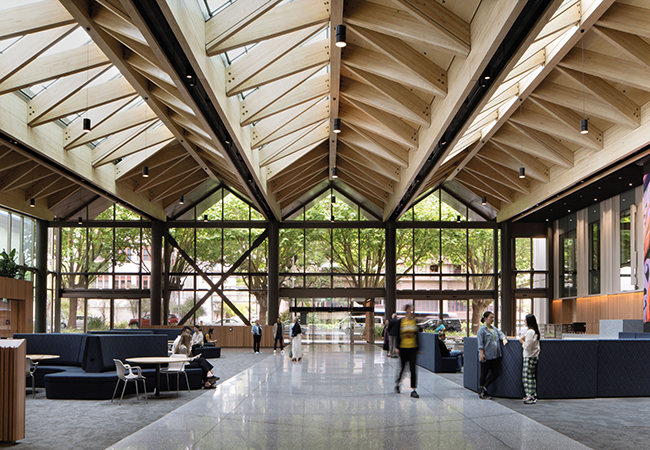
This change also created new architectural opportunities. The reduced structural loading enabled modifications to the internal layout, including new circulation routes and a new central atrium, improving connectivity between the campus and the surrounding city. The atrium, topped by a distinctive glulam timber roof, now forms the social heart of the building.
Perhaps the project’s most innovative aspect is its services design. Combining high-performance glazing, improved airtightness and an optimised glazing-to-wall ratio reduces heating and cooling loads significantly compared with the 1970s design. This new lightweight façade enabled Beca, the project’s building services engineers, to eliminate fossil fuel combustion for B201, replacing the gas-based heating system with a fully electric solution using a two-stage heat pump system.
Heat pump system design
A two-stage heat pump system – a first for a project of this type in New Zealand – was installed to maintain the heating hot-water service for the neighbouring campus buildings, which historically relied on the same district heating network for their heating hot water.
The system generates 1,500kW of low-temperature heat using three electric reverse-cycle air source R454b refrigerant heat pumps and 600kW of higher-temperature R1234ze refrigerant heat pumps to boost temperatures for the adjacent buildings.
The low-temperature stage supplies heat at 45/39°C to the new building, while the high-temperature stage boosts the water temperature to 80/70°C for the adjacent buildings’ existing radiators, air handling units and VAV reheat coils. This approach allowed those buildings to transition to electric heating without requiring extensive modifications to their internal distribution systems, helping to further decarbonise the campus.
‘A lot of engineering went into the design of the new façade and thermal envelope,’ Timothy Howarth, senior associate, Beca, explains. ‘We had to balance access to views and daylight with thermal comfort, overheating risk, heat loss and gain, acoustics and airtightness. Getting that right makes a huge difference to the atmosphere and comfort of people in the building.’
The building also includes a 150kW chiller operating 24/7 to maintain the temperature and humidity levels in the social sciences laboratories for biological anthropology and conservation.
Energy modelling was used to support design decisions relating to the specification of the façade performance and to compare the building services options. It informed a whole of life-cycle cost study, which recommended chilled beams for the faculty office levels and variable air volume (VAV) systems for the high-density learning spaces. The building’s main air handling units are equipped with heat recovery wheels and demand-control ventilation to further optimise energy. In the naturally ventilated new atrium, heat is delivered through underfloor heating.
Separate electric CO2 heat pumps are installed to supply domestic hot water from central storage tanks, delivered around the building through a 60°C circulation loop.
This electrification strategy is particularly effective in New Zealand, where approximately 85% of Grid electricity is generated from renewable sources.
A climate change adaptation assessment evaluated potential impacts from temperature increases, extreme rainfall and storm events under multiple climate scenarios for 2040 and 2065. Key risks identified included increased flooding potential, higher ambient temperatures and possible strain on cooling systems.
In response, the design includes: increased stormwater design capacity; oversized chilled water infrastructure to accommodate future cooling demand; and flexible heat pump systems. This enables the building services to respond to future climatic conditions without major retrofit.
Performance in operation
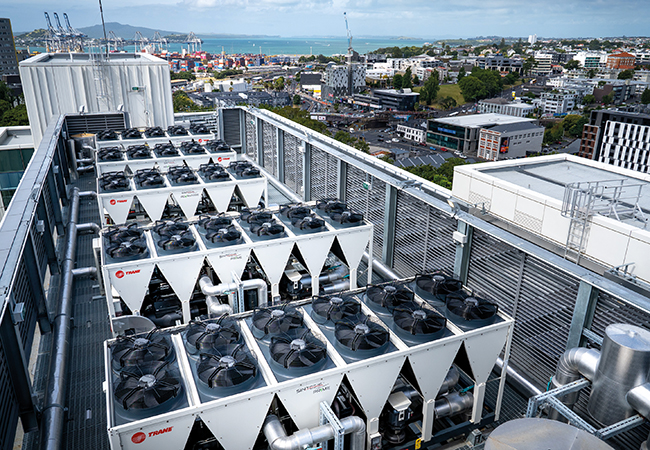
B201’s heat pump system allowed it and adjacent buildings to transition easily to electric heating
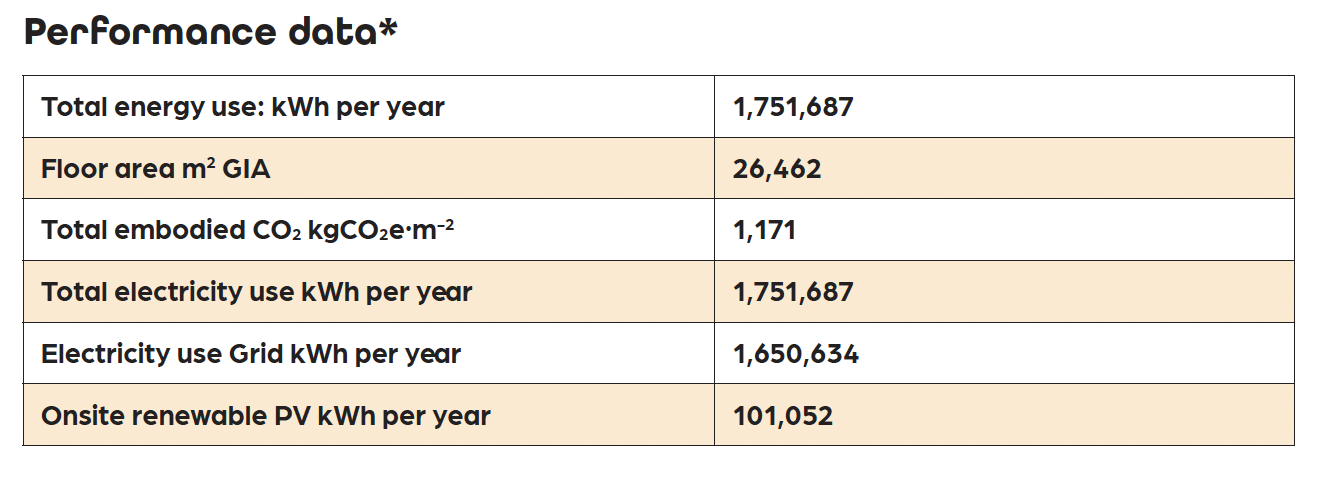
Energy modelling established operational energy targets of approximately 1,660MWh per year, equivalent to 8.1 kgCO2e.m-2 annually.
The project team placed significant emphasis on ensuring performance targets would translate into real operational outcomes. Although the project did not formally adopt a soft landings framework, many of its principles were implemented throughout design and delivery.
Clear performance metrics were defined and an independent commissioning agent was appointed early. Commissioning planning began during design, and included detailed reviews of operability, maintainability and controllability. The commissioning agent coordinated plans across various trades and oversaw verification of system performance. The facilities management team was involved in the handover process, reviewing the building logbook, user guides and operational manuals. Early contractor engagement also helped refine the design.
The approach worked. Since February 2024, the start of the building’s first academic year in operation, it recorded energy use of 1,750MWh and operational carbon emissions of 8.5 kgCO2e.m-2 – within 5% of the design target.
At around 66kWh.m-2 per year, the building’s energy use intensity already sits below the 2050 target of the UK Net Zero Carbon Buildings Standard (NZCBS) for higher education retrofits.
Post-handover tuning is scheduled to continue for two years, with quarterly meetings between the project team and facilities staff to review energy and environmental performance, and optimise system operation.
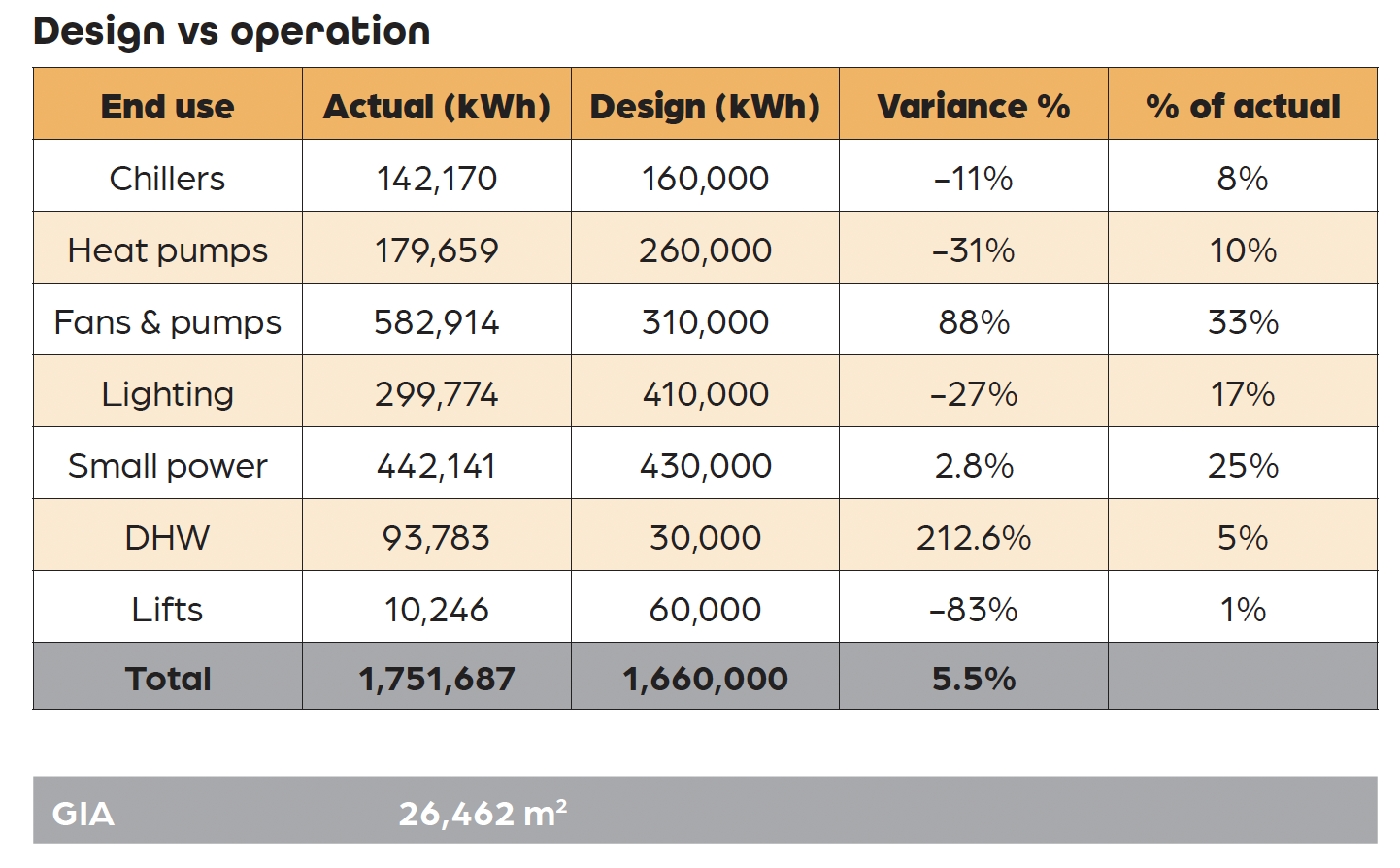
‘To have the energy use intensity land so closely to our design target was great. It proved a carefully considered building services design that is well built and properly commissioned can eliminate the performance gap,’ says Howarth.
The redevelopment was driven not only by sustainability goals, but also by the desire to create a healthier, more attractive environment.
Prior to redevelopment, the building performed poorly. A Building Use Study (BUS) methodology survey conducted in the original building placed it in the seventh percentile of the New Zealand benchmark dataset.
After redevelopment, a post-occupancy survey conducted in 2025 scored the new building in the 72nd percentile of the benchmark dataset for overall comfort satisfaction. This can be attributed to various features, including:
- The new façade allowing daylight to penetrate deeper into the building, giving regularly occupied spaces access to external views (this also enabled smart LED lighting to use daylight harvesting)
- Indoor air quality, with ventilation rates delivering 50% more outdoor air than NZ code requirements, and demand-controlled ventilation adjusting supply according to occupancy, keeping CO2 levels below 800ppm
- Thermal comfort modelled against ASHRAE Standard 55, with system controls designed to maintain target conditions for more than 95% of occupied hours
- Acoustic comfort, including testing during commissioning to confirm compliance with the university’s and Green Star design criteria.
The building also incorporates a variety of workspaces supporting different working styles and learning modes. Feature staircases encourage movement between floors and reduce reliance on lifts, which may explain why lift energy consumption is lower than predicted.
Beyond environmental performance, the project sought to strengthen the building’s connection to its cultural and urban context.
Whole life carbon and seismic resilience
In seismically active regions such as New Zealand, the risk of earthquake damage can significantly influence life-cycle carbon outcomes. Extensive structural strengthening can increase embodied carbon, while insufficient resilience risks future demolition and reconstruction. The design therefore aimed to find a ‘sweet spot’ between improved seismic performance and material efficiency.
The resulting building exceeds 67% of New Building Standard (Importance Level 3) seismic performance. Low-damage design principles were incorporated where feasible to reduce the likelihood of major structural repairs following an earthquake. Repurposing the structure also shortened construction by a year and saved an estimated 25% cost compared with replacement.
The approach cut upfront embodied carbon emissions by more than 50% compared with a new building. Overall, the project achieved an embodied carbon intensity of approximately 353 kgCO2e.m-2, meeting the 2030 target for higher education buildings under the UK NZCBS.
By choosing adaptive reuse rather than demolition, the B201 redevelopment shows how ageing university buildings can become powerful tools in the transition to net zero.
The transformation has changed attitudes to a building once considered ugly. ‘We’re delighted,’ Howarth says. ‘This proves the most sustainable building is the one you didn’t need to build.’
The project delivers significant carbon reductions across embodied and operational emissions. Decarbonisation of B201 and the surrounding buildings is expected to reduce operational emissions by 700-900 tonnes of CO₂ annually, equivalent to 14,000-18,000 tonnes over the life of the plant. This represents a reduction of roughly 5-8% of the University of Auckland’s natural gas emissions relative to its 2019 baseline. Perhaps more importantly, the project provides a replicable model for other institutions.
Winning Building Performance Champion is great, but Howarth sees it as part of a longer journey. ‘There’s more room in the trophy cabinet, but, more importantly, our focus is on delivering net zero carbon buildings. This recognition confirms we’re on the right path.’
For more on the CIBSE Building Performance Awards see here.