
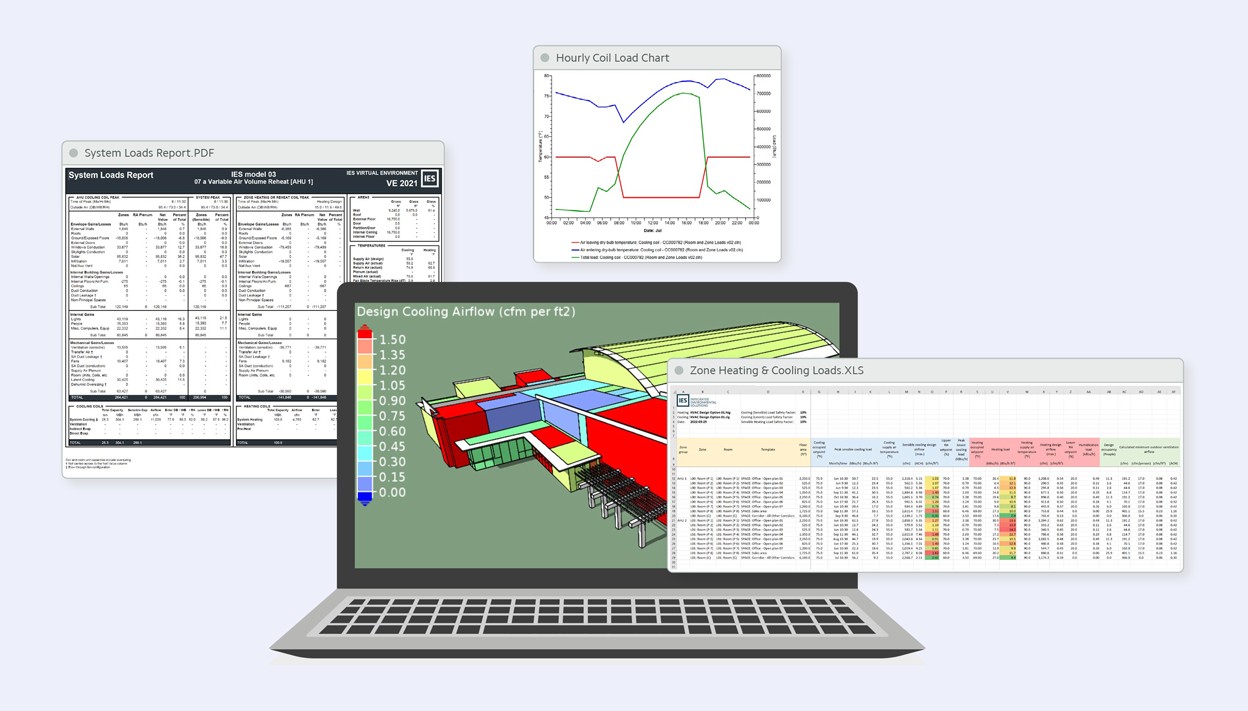
Heating and cooling load calculations might not be the flashiest part of building design, but they are among the most crucial. Whether it’s a new development or a retrofit, accurate loads calculations underpin everything from occupant comfort to system sizing, cost and carbon performance.
However, as buildings become more complex and sustainability targets more demanding, the traditional steady-state approach to loads calculations can only take us so far. While this remains a valuable starting point, it captures just a snapshot in time. To design truly efficient, resilient buildings, engineers need to go beyond static assumptions and explore how loads fluctuate dynamically throughout the day and across the seasons.
At IES, we see daily how loads calculations done right can unlock significant efficiencies across a building, helping to reduce both capital and operational expenditure, support the successful integration of new and emerging technologies, such as heat pumps, and ensure that systems perform optimally year-round.
Choosing the right method for the job
In the UK, CIBSE Guide A provides the most commonly used methodology for load assessments, and within the IESVE software there are multiple ways to follow its principles. The CIBSE Loads application – which uses steady state heat loss calculations to predict the heating requirements for the building, and a heat gain calculation, based on the CIBSE Admittance technique, to predict the building cooling requirements – offers fast peak load estimates, ideal for early-stage sizing and comparison. It considers infiltration, ventilation, and internal and fabric gains or losses, producing a clear snapshot of demand at a given point in time.
For projects that require a deeper dive, the dynamic simulation approach, using ApacheSim, provides a far richer picture – running sub-hourly simulations across an entire year to reveal how loads fluctuate in response to weather, occupancy, and solar gains. The result is a more complete understanding of the building’s true energy profile.
Those looking for practical guidance on using these methods can explore further resources on the IES website, including our CIBSE Heating and Cooling Load Calculations Tech Tips, which explores features such as custom variables, data pre-sets, and results visualisation in greater depth.
Choosing between methods isn’t about right or wrong, but matching the tool to the task. Increasingly, we find that designers will often use both, leveraging steady-state calculations for initial system sizing, and progressing to dynamic simulation for more detailed analysis, validation and fine-tuning.
The importance of accurate zoning
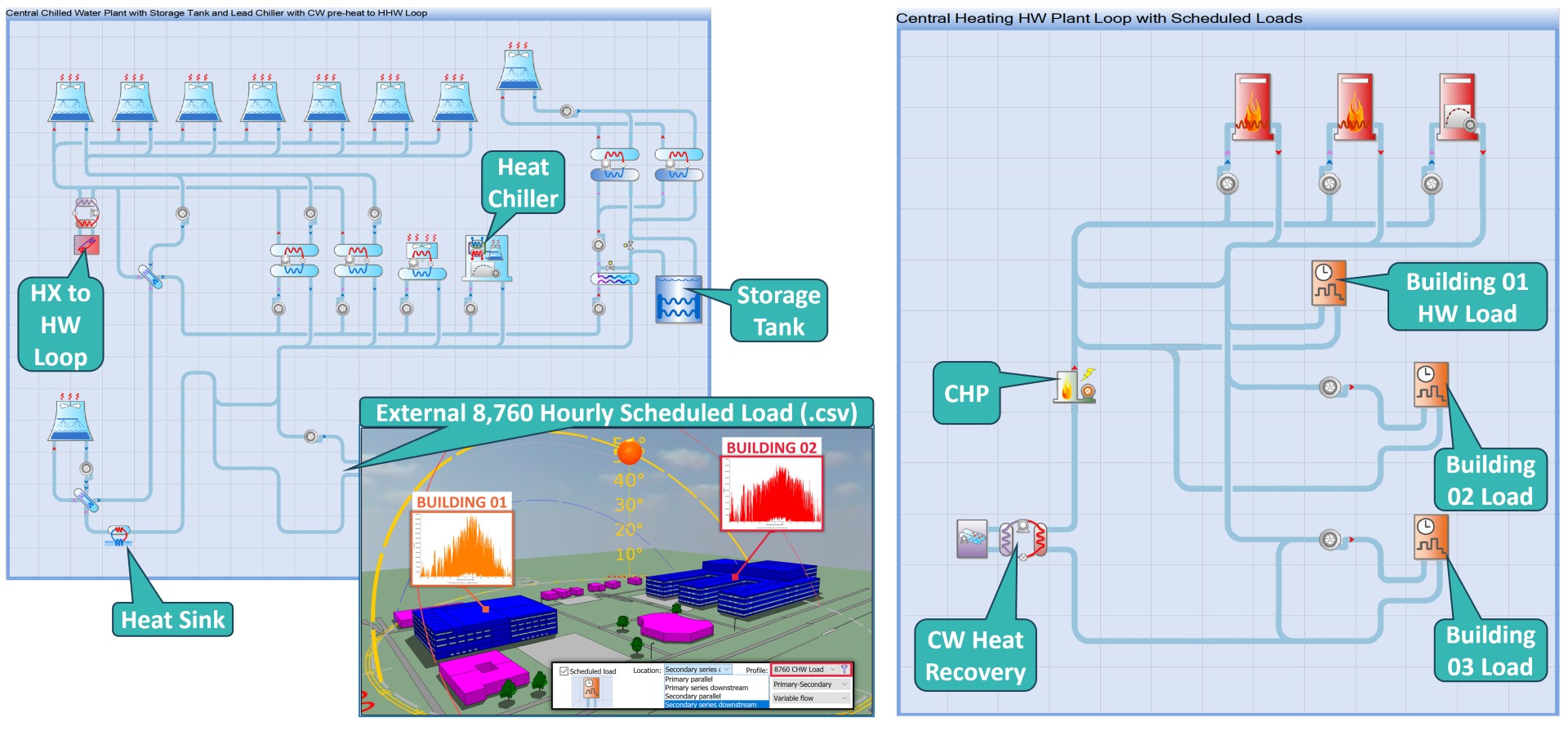
Accurate zoning remains one of the simplest ways to improve results. For example, spaces that differ in glazing, occupancy, or setpoint should be modelled separately to avoid distorted peaks. IESVE makes it easy to visualise these thermal zones, view results directly in the model, and generate detailed room-by-room reports for quick review.
Meanwhile, features like custom variables and data pre-sets mean users can tailor the analysis to their project, focusing on the results that really matter and enabling a faster workflow.
With the industry moving rapidly toward net-zero, and energy resilience and cost pressures on the rise, the precision of load calculations is becoming even more important. Accurate assessments not
only help ensure compliance and carbon reduction, but also play a vital role in optimising plant sizing, improving system performance, and lowering operational costs. Tools such as ApacheHVAC’s system design wizard now allows engineers to generate a loads report from their energy model in as few as four clicks, leveraging detailed dynamic results to right-size systems and ensure optimum building performance is achieved. If you’re ready to refine your approach to loads analyses, join IES for a free webinar on Mastering Heating & Cooling Loads Calculations with IESVE on 23 October at 1pm BST. Guided by IES’s expert consultants, the session will walk through practical examples, real-world case studies, and best practices drawn from years of hands-on experience.
Register your free place here.