
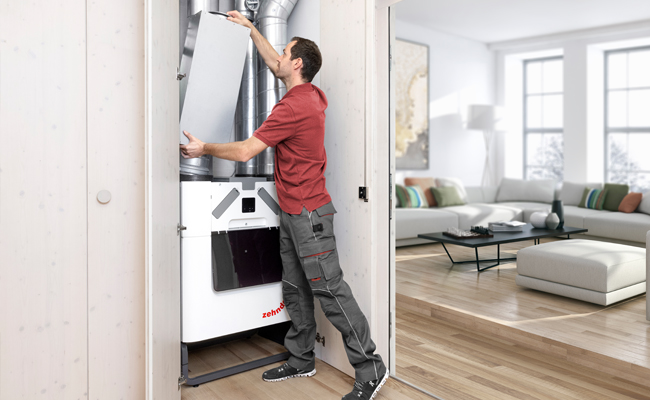
There is an old building services problem that sounds almost like a joke: what happens when you try to fit compliant ventilation, heat recovery, acoustic performance, ductwork, controls and maintenance access into a space where every millimetre is already spoken for?
The answer: A headache!
For many engineers, the punchline has been a challenge when it comes to MVHR specification for years in small, compact spaces.
Yet as buildings become increasingly airtight and energy efficient, the role of mechanical ventilation with heat recovery is more critical than ever so cannot be overlooked.
The headache in question, however, is not simply whether MVHR can deliver effective ventilation in principle but often whether it can be successfully designed, coordinated, installed, commissioned and maintained within the parameters of the building regulations – and within the physical realities of modern buildings. The task becomes a complex game of Tetris.
Historically, MVHR hasn’t been easy to specify in these compact environments. Traditional units can require significant cupboard or ceiling space within the thermal envelope.
Ductwork routes need to be carefully managed to limit pressure loss, avoid excessive bends and maintain balanced airflow. Ceiling voids may be shallow, risers may already be congested, and available wall or cupboard space can be compromised by other services.
By the time structure, fire protection, sprinklers, lighting, drainage, acoustics and finishes have all been coordinated, ventilation can become one of the first systems to be squeezed. Yet it is critical in protecting the building from dangerous risks of indoor air pollution, mould and condensation as well as a key component in helping to regulate indoor climate.
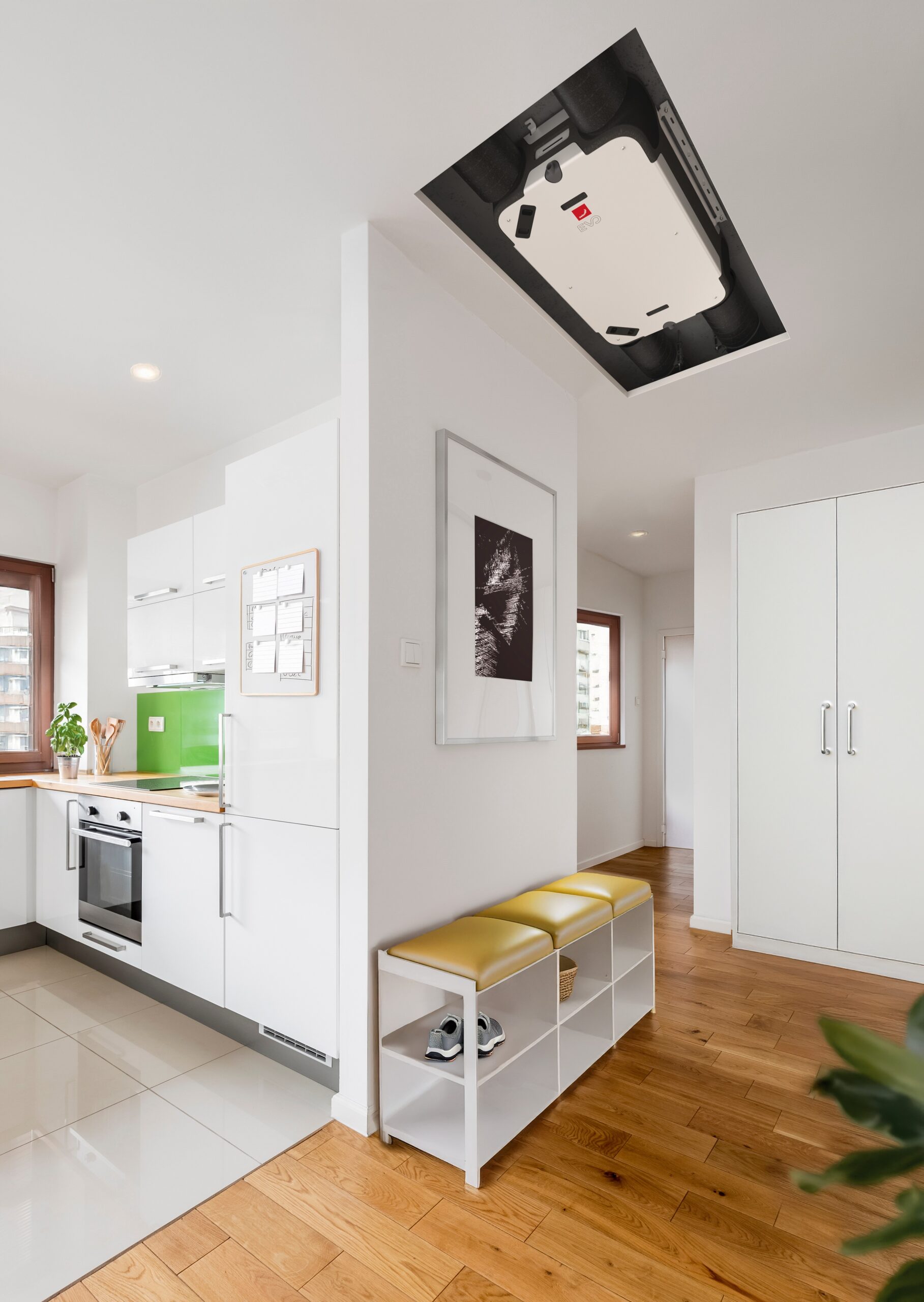
The Zehnder EVO installed in an apartment
Ventilation performance is highly dependent on the system being installed as designed, so compromises onsite when it comes to installation can often result in a drop in performance or long-term problems for the occupant.
A unit may perform well on paper, but if duct routes are extended, compressed or repeatedly reconfigured on site, the outcome can be higher resistance, increased fan energy, noise and reduced airflow. This is why any design changes are now required to be signed off by the designer, else the installer making the changes accepts liability.
In compact buildings, even small dimensional changes can have a disproportionate effect. A few millimetres lost in a ceiling void can alter a duct route. A poorly placed access panel can make filter replacement impractical or impossible. Every millimetre matters because it has the potential to influence performance, compliance and future maintenance.
For engineers, key issues revolve around unit size and system viability. The question is whether the selected MVHR solution allows the required airflows to be achieved without creating unacceptable compromises elsewhere.
This requires early consideration of duct geometry, fan performance, heat recovery efficiency, noise, access, condensate drainage, controls and commissioning. It also requires close coordination with the architectural and structural design from the outset, rather than treating ventilation as a late-stage fit-out issue.
In residential schemes, the challenge is often repeated at scale. Apartments may have compact kitchens, bathrooms and utility spaces, with limited options for locating the unit. Student accommodation brings additional pressures: small rooms, high occupancy density, moisture generation, noise sensitivity and the need for repeatable installation across multiple identical or near-identical pods.
In care homes, there is the added responsibility of supporting vulnerable occupants. In all of these settings, the engineering challenge is to deliver reliable ventilation without sacrificing usable space or creating maintenance problems for the building operator.
This is where advances in compact MVHR design are beginning to change the specification conversation and give designers greater freedom when integrating ventilation.
Smaller, ultra-slim units, such as the Zehnder EVO, can make MVHR viable where traditional systems may previously have been impractical, with flexible mounting options for ceiling voids, slimline cupboards and pitched roofs.
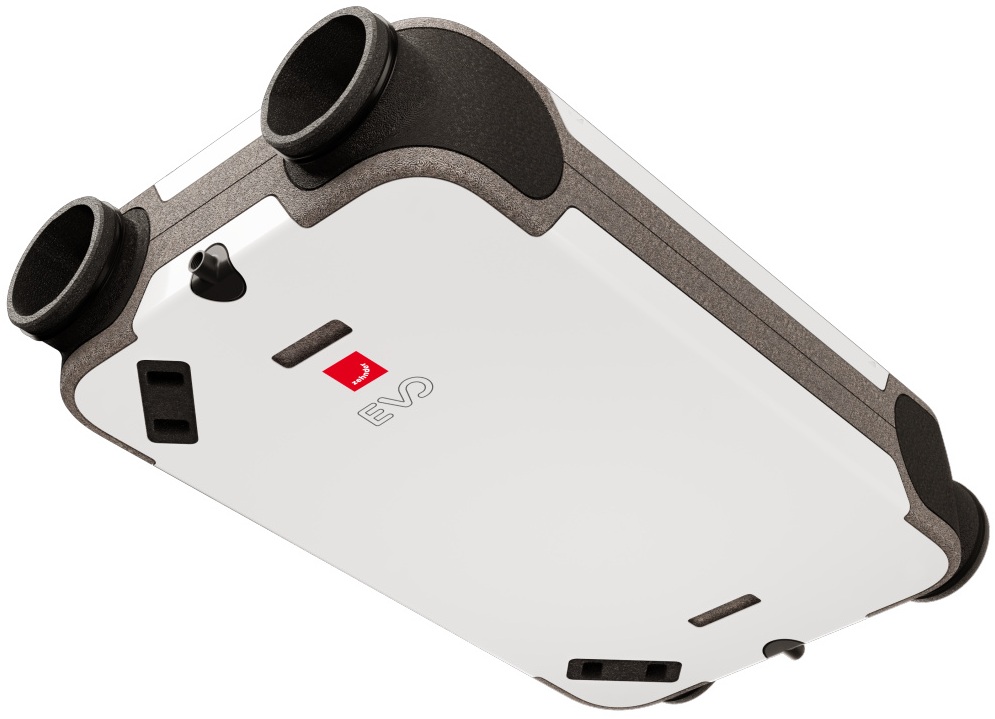
Compact HMVR designs such as the Zehnder EVO help overcome space challenges
Bi-directional spigot configurations help reduce bends and maintain smooth airflow in different orientations, while rotating condensate drains simplify installation by removing the need for inclination. Integrated acoustic insulation, anti-vibration mounts and efficient fan performance also help limit the noise and energy penalties often associated with constrained layouts.
Constant flow motors provide an additional performance benefit by maintaining the commissioned flow rate, automatically increasing motor speed during periods of higher pressure, such as filter degradation or condensation within the exchanger. This helps prevent the gradual reduction in airflow often seen with fixed-RPM units as filters become dirty over time.
However, a smaller unit does not remove the need for proper airflow calculations, pressure loss assessment, acoustic review, fire and compartmentation coordination, and clear access strategy.
Nor does it remove the importance of commissioning. In fact, compact installations arguably increase the need for design discipline, because there is less tolerance for error.
This compact MVHR design is now making it possible to deliver effective ventilation and up to 90% heat recovery in developments where space constraints once made this difficult. The headache is somewhat relieved. But sizing down isn’t the only answer.
The most successful compact MVHR applications will be those where ventilation is integrated early and treated as a core part of the building services strategy – understanding the spatial requirements before the design is fixed so that it performs to real, installed conditions and can be tested, balanced and maintained long after handover.
About the author
Stuart Smith is the commercial director at Zehnder Group UK
For more information visit: Zehnder indoor ventilation