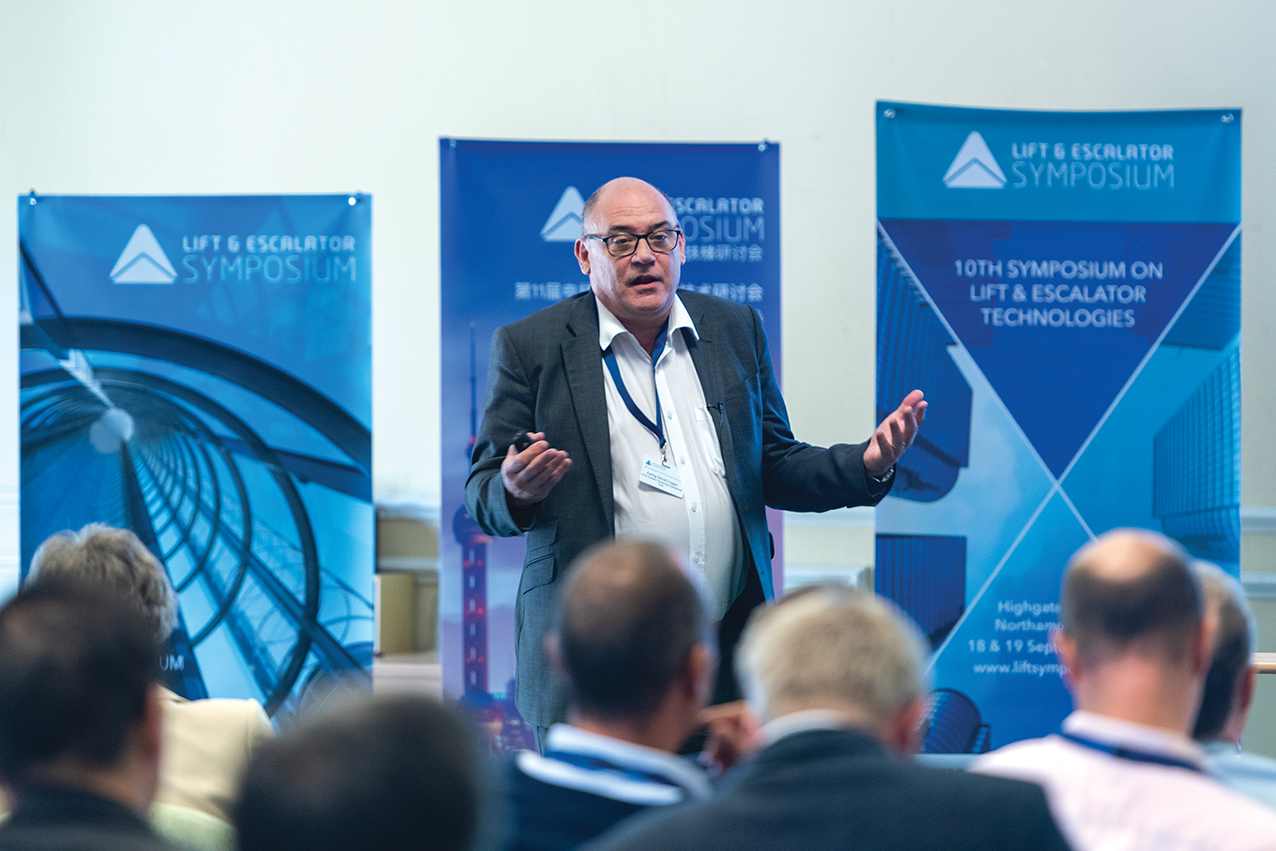
Dave Cooper
The Lisbon funicular’s counterbalancing system was not operating correctly when the popular attraction crashed, resulting in 16 deaths, CIBSE’s President Elect, Dave Cooper MBE, has said.
The Glória Funicular uses a system in which two cars counterbalance each other, meaning they always mirror each other’s position and pass each other at the halfway point. The cars, which carry around three million passengers a year, are attached to opposite ends of a haulage cable, with electric motors on the vehicles providing traction.
On 3 September, however, one of the cars derailed at a bend in the street and crashed into a building, leaving 16 people dead and 21 injured.
In an interview with New Civil Engineer, Cooper, who is chief executive of The Lift & Escalator Consultancy, said the fact that the unaffected carriage was at the bottom while the other was on the slope when it lost control indicates that something had happened to the counterbalancing system. ‘Clearly the relationship between the cars has been lost,’ he said.
‘The obvious main point of failure is the suspension ropes, as seems to be the case with Glória,’ added Cooper, who is also a visiting professor at the University of Northampton.
Lisbon transport operator Carris said maintenance had been carried out as usual ahead of the accident.