
In association with: 
Thursday 9 July
CIBSE Journal Live: Engineering resilient data centre infrastructure, is a virtual event brought to you by the Chartered Institution of Building Services Engineers (CIBSE).
The event will contain a mix of online CPD sessions examining the challenge of designing sustainable data centres in the face of the huge increase in computing power driven by the exponential growth of AI.
Sponsored by:

CIBSE Journal Live 26 Programme
Confirmed sessions:
12:00-12:05 – Welcome and housekeeping
12:05-12:25 – Data centres – challenges and priorities for the industry/ and Power systems
Speakers:
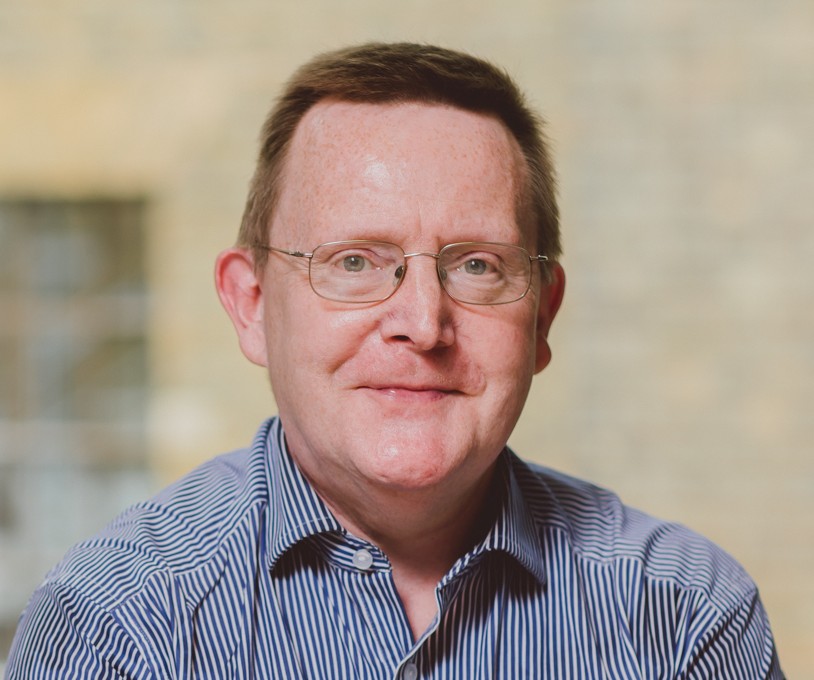
Austin Williamson, Technical Director, Foreman Roberts, and CIBSE Data Centre Group Chair

Shabna Hayes, Project Director, HDR
Session overview: CIBSE Data Centre Group Chair, Austin Williamson will provide an overview of the work of the Group, and the challenges and priorities for the industry. He will then discuss his focused area of power systems.
Power systems design is undergoing a fundamental shift as engineers move beyond traditional, steady-state models to address the dynamic demands of AI and large language models (LLMs). Future infrastructure must align with increased power densities without compromising the resilience of critical cooling and power systems. This must include evaluating embodied energy of the systems, designing to optimum of power network performance and distribution, and maintaining resilience to control system level and to chip level.
12:35-13:05: Tate, sponsor session: Integrating modular liquid cooling in the white space

Speaker: Aonghus (Gus) O’Rourke, Business Development Director, Tate
Session overview: As data centre demands intensify, driven by AI workloads and ever-increasing rack densities, traditional air cooling is reaching its limits. This session explores the growing role of liquid cooling as the necessary solution for modern data centre environments.
The session will introduce the fundamentals of liquid cooling, examining how rising rack densities are reshaping infrastructure design. it will cover manifold systems and integrated manifold solutions, exploring how these components distribute coolant efficiently at scale. Material selection will be addressed in the context of long-term reliability, leak prevention, and compatibility with existing infrastructure. Practical design considerations will be discussed, equipping engineers with the knowledge to evaluate and specify liquid cooling systems confidently.
This session will also seek to cover the modularisation and integration of these liquid cooling pathways in today’s data centres. This is of critical importance to engineers today, due to Hyperscaler customers increasing desire for speed of deployment.
13:15-13:35 – CIBSE TM65 for data centres
 Speaker: Mohammad Royapoor, Head of R&D, Red Engineering
Session overview: The CIBSE Datacentre working group is developing a specialised TM65 for data centres, to provide a standardised methodology for calculating the embodied carbon of MEP equipment in data centres when Environmental Product Declarations are unavailable. Mohammad Royapoor provides an overview and outlines the key priorities for the guidance.
13:45-14:05 – Crane sponsored session: Improving data centre cooling efficiency with intelligent valve control solutions
 Speaker: Neil Gibson, Technical Director, Crane
Session overview: As data centres transition to higher power densities and increased use of liquid cooling, achieving precise and reliable hydronic control is essential for both efficiency and resilience. This session explores how intelligent valve and actuator solutions can enhance the performance of chilled water and liquid cooling systems. By integrating pressure independent control valves with smart actuator technology, systems can achieve accurate flow regulation, improved commissioning, and real-time performance monitoring.
The presentation will demonstrate how dynamic control strategies enable better part-load efficiency, minimise system instability, and provide actionable operational insight.
14:15-14:35 – Data centre commissioning
Speaker: Tony Anderson, Chief Technical Officer, Commissioning Specialists Association
Session overview: CIBSE’s data centre group is working towards writing a definitive standard for the commissioning of data centres. This code can be used to help standardise DC commissioning and define the typical roles and responsibilities of various stakeholders on a nominal DC project. It will include a full workflow (following standard RIBA Stages) with a detailed description of every activity along the way. The intention is that this can be easily scaled to all project sizes, highlight where strategic decisions must be made, and identify a list of add-on and value-add options.
15:00-15:20 – Liquid Cooling
Sponsored by IMI

Speaker: Seddik Daoud, Associate Director, FoundDigital DS

Session overview: Historically, data centres have adopted air-cooled solutions. However, a move to liquid cooling is being driven by a combination of factors, such as high-density AI machinery, space optimisation, easier heat reuse, and better efficiency at the compute and data-hall levels.
Most current designs rely on manufacturer-led consultations. CIBSE is addressing this by developing a technical memorandum to provide a holistic, product-agnostic approach. This guidance will allow designers to create scalable, flexible solutions that are adoptable across various rack densities, without manufacturer bias or risk of future compliance failure. Seddik Daoud provides an overview of this work.
15:30-15:50 – Computational Fluid Dynamics (CFD)

Speaker: Nzube Igwume, Associate Director – Building Physics, Sustainability and Applied R&D, Deerns
Session overview: Computational fluid dynamics (CFD)is a critical tool for visualising the behaviour of air (or a liquid) through a space before building the facility. It can predict and resolve problems such as the removal of hot spots in data halls and entrainment with external heat-rejection assets. Space planning and building form optimisation can also be supported by CFD.
The densification of DCs resulting from AI and high-density compute, as well as rising climatic temperatures, make CFD a key solution. Nzube Igwume, will detail the benefits of CFD.
16:00-16:20 – Heat recovery
Speaker: Iain MacDougall, Head of Sustainability, Red Engineering
Session overview to come.
For further details and to register: CIBSE Journal Live 26