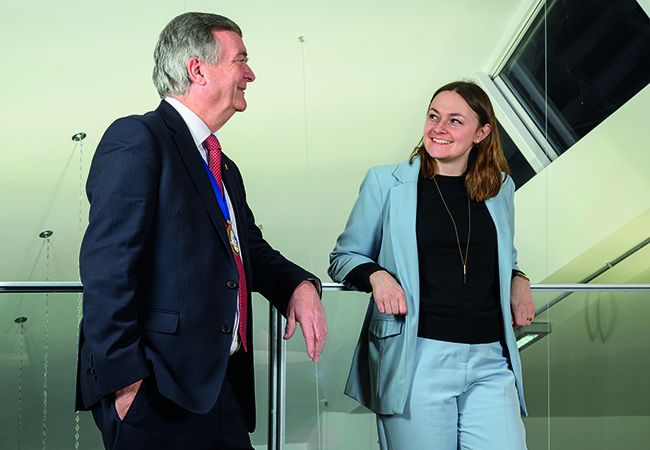
CIBSE President Vince Arnold with Katie Clemence-Jackson MCIBSE

The new year has started with a fresh look for CIBSE’s famous icon, the 129-year-old hawk. The bird of prey in the logo has been given a makeover that brings it firmly into the 21st century. Its feathers are no longer ruffled, and it now sits alongside a sharper, cleaner CIBSE font that speaks of an institution that is confident, forward-looking and accessible.
The new strapline ‘Inspiring people. Transforming places’ encapsulates CIBSE’s role in developing and supporting people, and in improving the built environment.
CIBSE CEO Ruth Carter says: ‘The refreshed visual identity marks an important step in ensuring the brand reflects the modern, forward-thinking institution we are today’.

Ruth Carter
‘The updated logo, visual style and strapline make CIBSE more accessible and relevant, strengthening how we present ourselves to our international communities.’
To mark the rebrand, CIBSE Journal has asked five key CIBSE figures (right) how they would inspire the next generation and transform the built environment.
The Panellists
- Vince Arnold, CIBSE President
- Aishwarya Chengappa, CIBSE YEN Global chair and senior sustainability consultant at Egis
- Katie Clemence-Jackson MCIBSE, CEO at UK NZCBS
- Hannah Gray, CIBSE ASHRAE Graduate of the Year and mechanical engineer at Foster + Partners
- Ethan Poon MCIBSE, chair of CIBSE Hong Kong region, and chief engineering manager and section head at MTR
What one ‘bold transformation’ would you like to see in building services?
Vince Arnold: I believe we should bring back that feeling of pride in everything we do. Pride in our work and completed projects helps cement the quality and finish for many years to come.
Katie Clemence-Jackson: I’d like to see the UK built environment industry make significant progress towards its decarbonisation goals through uptake of the UK Net Zero Carbon Buildings Standard when it launches early this year.

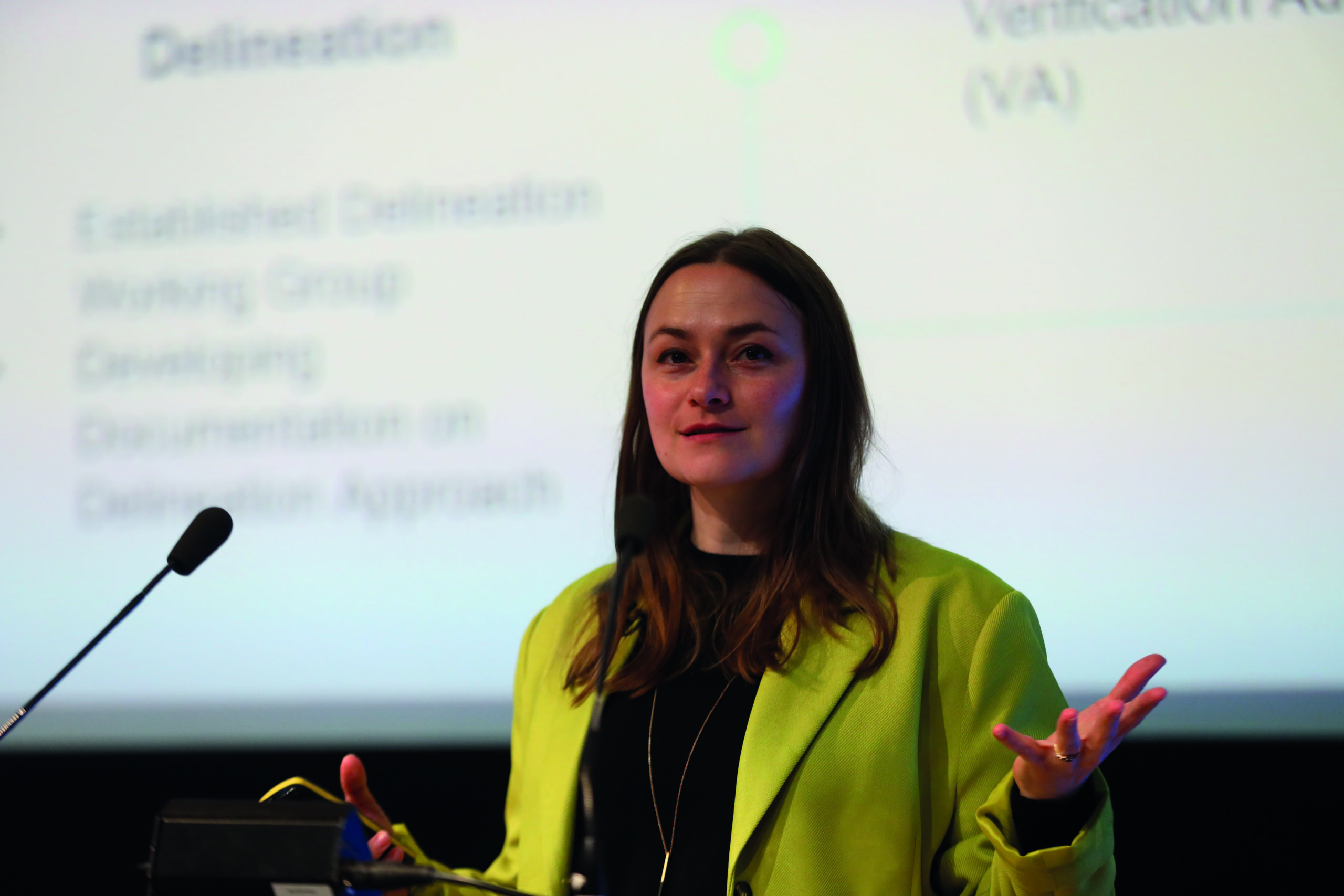
Hannah Gray
Hannah Gray: I would like to see engineers shift beyond compliance-driven efficiency towards genuinely regenerative systems that improve environmental and human outcomes over time.
Ethan Poon: I would like to see building services systems and facilities become truly intelligent and responsive, able to sense, learn from and adapt to indoor environmental conditions and the external climate in real time. Systems should optimise performance continuously, to enhance occupant comfort, health and productivity, while being sustainable.
Aishwarya Chengappa: The transformation that I see is the integration of sustainability into the very essence of the design, and the normalising of carbon assessments at the inception stage of a project.
How can CIBSE bridge the gap between local challenges and global standards?
Arnold: The fundamental principles of engineering are, of course, the same the world over. One of the best ways to promote our voice is by continuing to ensure our standards and guidance remain relevant, up to date and transferable.

Aishwarya Chengappa
Chengappa: Key to bridging the gap is CIBSE developing versions of standards for different regions, catering to the different climate conditions and their constraints. In the Middle East and North Africa, using guides that cater for the region’s harsh conditions has really been beneficial.
Clemence-Jackson: All people need access to safe, comfortable buildings that meet their needs. CIBSE’s guidance allows these buildings to be tailored to their context, and the impact they have on the environment to be understood and managed.
Gray: CIBSE excels at translating global climate ambition into practical, credible guidance that works at project level. It’s evidence-based approach to standards and guidance allows engineers to respond to local constraints while remaining aligned with international performance expectations.
Poon: CIBSE’s strength lies in its global membership and its ability to translate international best practice into locally relevant solutions. Its extensive body of standards, guidance documents and technical memoranda is widely referenced across the industry.
‘CIBSE’s refreshed visual identity marks an important step in ensuring our brand reflects the modern, forward-thinking institution we are today” – Ruth Carter
How do you spark a sense of wonder in the next generation of building services engineers?
Arnold: I chose a career in engineering because it represented a different challenge every day, with wide-reaching scope, and the opportunity to solve problems and make people’s lives safer and more comfortable.
Clemence-Jackson: There is a joy in knowing about the hidden world of engineering behind everyday things such as lights or plumbing. I would encourage the next generation of engineers to be curious about the built environment, how it has been shaped by engineers and how they could one day shape it themselves.
Gray: By highlighting the real-world impact engineers can have through good design. Whether it’s improving the experience of building occupants or delivering positive outcomes for the surrounding environment, focusing on the purpose behind our calculations helps my generation see building services engineering as a career with clear meaning that is creative and rewarding.
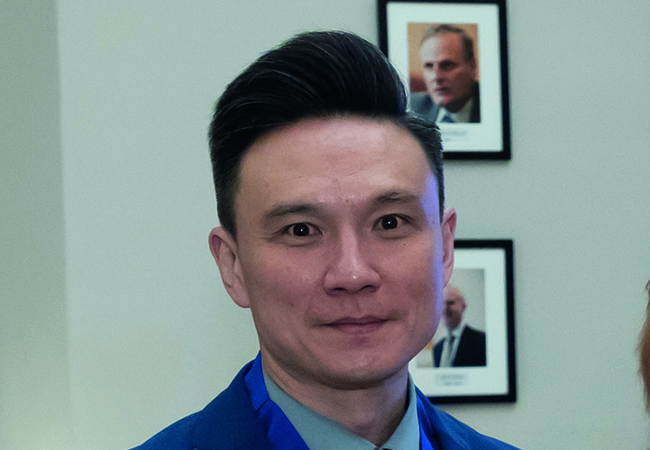
Ethan Poon
Poon: I want to inspire the next generation by emphasising the meaningful impact our profession can have on people’s lives and on the planet. I encourage young engineers to look beyond compliance and calculations, and to see buildings as living systems that support health, comfort and social wellbeing.
Chengappa: In my experience, putting yourself out there brings out the best in yourself – and being part of CIBSE YEN really helped me find a community with which I could resonate.
What’s the most transformative, but overlooked, building service?
Arnold: Ventilation is key. We must ensure there is sufficient ventilation in all buildings, including dwellings. It has been shown that poorly ventilated places of work can lead to employee fatigue and has a direct effect on efficiency, productivity and job satisfaction.
Clemence-Jackson: Ventilation – the potential risks of damp and humid buildings are significant and must be mitigated for safe buildings. When done right, a well-ventilated space supports alertness and concentration, keeps things smelling fresh, and lets people be happy and comfortable.
Gray: Ventilation. I may be biased as a mechanical engineer! Its influence on wellbeing, focus and health is significant, but, often, it is reduced to a box-ticking exercise. When designed well, ventilation quietly transforms how people experience a space, making it one of the most powerful systems in any building.
Poon: Lighting plays a critical role in visual comfort, safety, productivity, and even people’s natural sleep- wake patterns and overall wellbeing. Many current control strategies remain relatively basic and fail to fully integrate daylight harvesting, adaptive dimming and advanced energy-efficient control methodologies.
Chengappa: Building management systems are often underestimated, especially in older buildings. When combined with smart metering, they give owners, facility managers and occupants a clear picture of how much energy and water are being used on a daily basis.