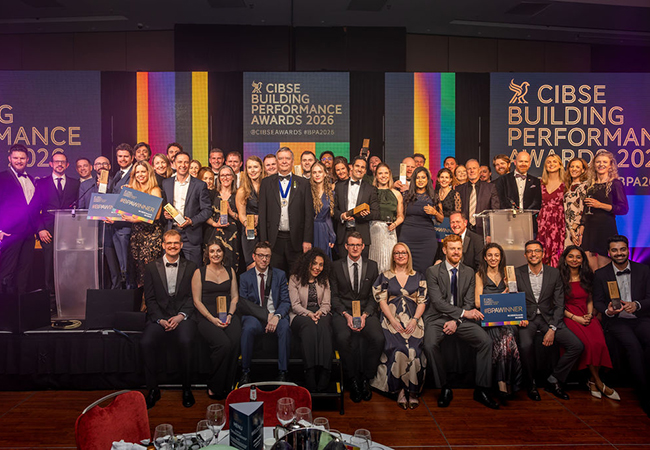
Building Performance Champion and Project of the Year – Workplace – International
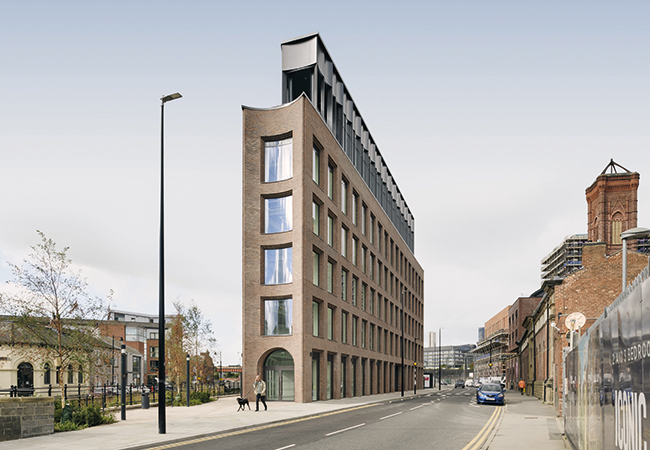
Winner: B201 redevelopment – Beca
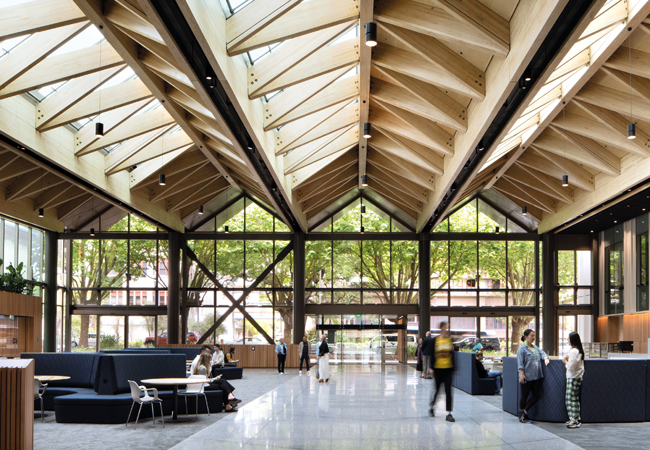
The retrofit of the University of Auckland’s B201 Building has transformed an outdated human sciences building into a state-of-the-art home for the faculties of Education and Social Work, Arts, and Creative Arts and Industries.
Repurposing the existing structure means B201 has half the embodied carbon of an equivalent new building, while low carbon design strategies mean it only uses a third of the energy used by an equivalent new building.
At 66kWh.m-2 per year, the energy use intensity is already well below the 2050 UK Net Zero Carbon Buildings Standard limit of 75kWh.m-2 per year for higher education buildings with one-go retrofit.
The carbon intensity of the building is 8.5kgCO2e/m2, within 5% of the design target. Judges described the project as a ‘greatest hits of benchmarks’ that had taken a comprehensive, honest and holistic approach.
As part of the retrofit, the façade’s heavy concrete spandrels were replaced by an airtight, lightweight curtain wall that reduced services demand. A new, naturally ventilated atrium, accessible to the public, was created, and feature stairs were punched through the walls to improve the campus’s connectivity.
A two-stage heat pump system provides heating to B201 and three adjacent buildings, while CO2 heat pumps provide domestic hot water. A 150kW chiller maintains temperature and humidity in the PC1 laboratories, and energy-saving features include air handling unit heat recovery and CO2-based demand-controlled ventilation.
Sponsor: Crane Fluid Systems
Engineer of the Year
Winner: Miriam Ozanne, independent building performance consultant

‘Listening to people, the building and the data’ won Miriam Ozanne the coveted title of Engineer of the Year, said the judges.
Ozanne leads the way in promoting and teaching the importance of building performance, helping clients to decarbonise their estates, reduce energy and deliver net zero strategies. Clients value her method of combining deep technical design knowledge with a practical approach, to develop realistic and actionable plans for improving building performance.
Highly commended – Sean Harlow, head of engineering, Savills; Jessica Glynn, associate, Atelier Ten
Sponsor: Ideal Heating – Commercial Products
Building Performance Consultancy (up to 50 employees)
Winner: RCDC

‘It’s clear RCDC lives its mission: to make a positive difference through the work we deliver,’ said the judges, who praised the consultancy’s ‘diverse workforce and commitment to innovation’, which ‘aligns with the culture of collaboration and team development’.
The company stood out with its drive to improve building performance, demonstrated by its internet of things heat-metering platform enabling the optimisation of heat pump retrofits, and its SmartWindows product, which provides autonomous window control to reduce exposure to CO2, mould, pollution, noise and heat loss.
Highly commended – Lawler Group
Sponsor: Mitsubishi Electric
Building Performance Consultancy (51-300 employees)
Winner: XCO2

XCO2 continued its winning habit by landing a CIBSE Building Performance Consultancy Award for the fifth year in a row.
The judges praised the company for its ‘very
forward-thinking approach – the submission proved that building performance was integral to the building culture’.
Now in its 18th year, XCO2 continues to deliver high-performance, low carbon buildings across housing, education, culture and hospitality, with a mission to act as a catalyst for change in the built environment.
Sponsor: Airflow
Building Performance Consultancy (over 300 employees)
Winner: Buro Happold
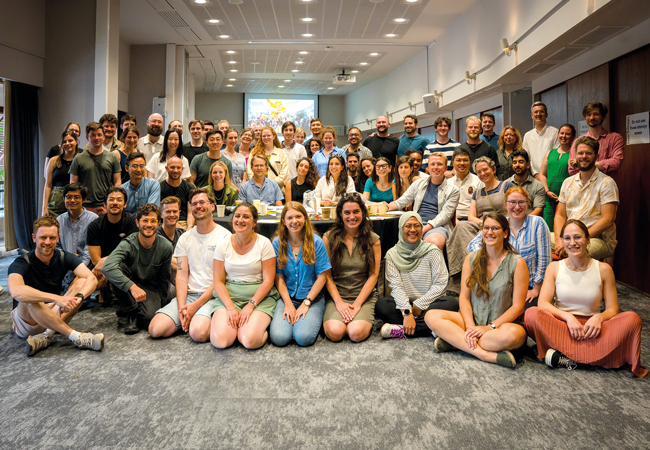
Buro Happold was recognised for its outstanding support, not just for clients, but also for its staff. The judges praised the company’s pro bono work for projects across the world, and its organised international field trips with clients and collaborators.
The panel was especially impressed by Buro Happold’s ‘standout’ attitude towards its staff, noting the company’s ‘inclusion and great working environments, plus career development and cohesive teams’.
It also welcomes employee ideas, with an internal innovation fund of £100,000, inviting staff to apply for a £10,000 budget to develop a concept.
Sponsor: ABB
Client of the Year Winner:
BBC Workplace
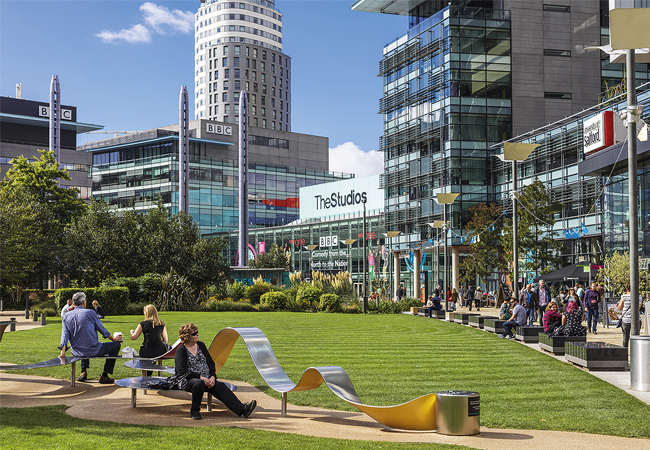
Setting clear targets and defining processes from the outset helped BBC Workplace to win in the Client of the Year category.
With a large portfolio of different building types and uses, understanding performance is key to meeting its commitments to reduce Scope 1 and 2 greenhouse gas emissions by 46% by 2030/31, from a 2019/20 baseline.
The panel of judges commended the organisation’s heat decarbonisation efforts. ‘In particular, works at Pacific Quay included the replacement of gas-fired boilers and conventional water chillers with4-pipe air source heat pumps and cascade water source heat pumps for hot water generation,’ they said.
Leadership
Winner: Hong Kong Science and Technology Parks Corporation
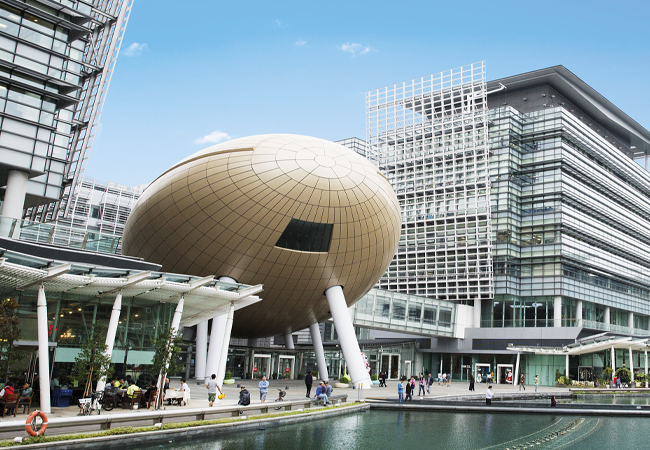
By piloting a wide range of new technologies, Hong Kong Science and Technology Parks Corporation (HKSTP) is providing real-world test beds that give start-ups the support needed to scale innovation.
With more than 7,000 PV panels generating 1.5 million kWh in 2024, HKSTP hosts one of Hong Kong’s largest onsite renewable energy networks. Other initiatives include hydrogen-powered electric vehicle charging and AI optimisation. The judges said HKSTP provides ‘valuable learning at a national level’.
Highly commended: Shade the UK
Sponsor: Hays
Collaboration
Winner: One Creative Environments
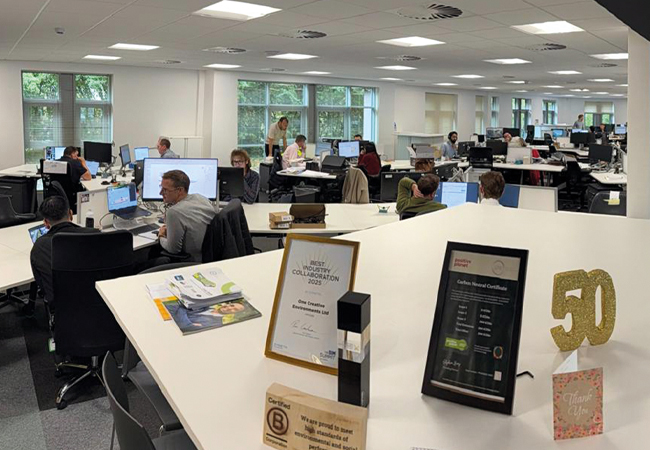
In response to rising energy costs and growing environmental responsibility, One Creative Environments partnered with its landlord, Prime, to transform its shared HQ into a high-performance, low carbon workplace.
An inventive funding model allowed One to encourage the landlord to invest in energy efficiency improvements. The works were financed through the service charge, offset by the resulting savings on energy bills.
Judges praised the joint approach. ‘In a market where capital constraints often stall retrofit and renovation efforts, this model provides a powerful demonstration of how aligned incentives and collaborative thinking can unlock progress,’ they said.
Sponsor: CIBSE Life-cycle Carbon Assessment Training
Project of the Year – Public
Winner: Locomotion New Hall – Buro Happold
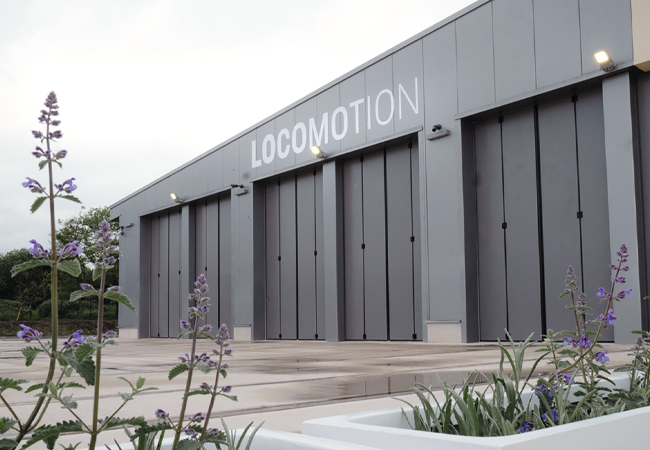
Buro Happold has balanced conservation, accessibility and sustainability at the National Railway Museum’s new facility for 47 historic railway vehicles in County Durham.
The building features a steel portal frame supporting a wide mono-pitch roof, enclosed in a remarkably airtight envelope. Alongside effective commissioning and building management system tuning, this has helped the building achieve an impressive energy use intensity of just 50kWh.m-2 per year.
Judges called Buro Happold’s fabric-first strategy – balancing the needs of visitors and conservation – ‘simple and robust’.
Sponsor: Crane Fluid Systems
Project of the Year – Workplace – Existing and Retrofit
Winner: Decarbonisation of York House – British Land
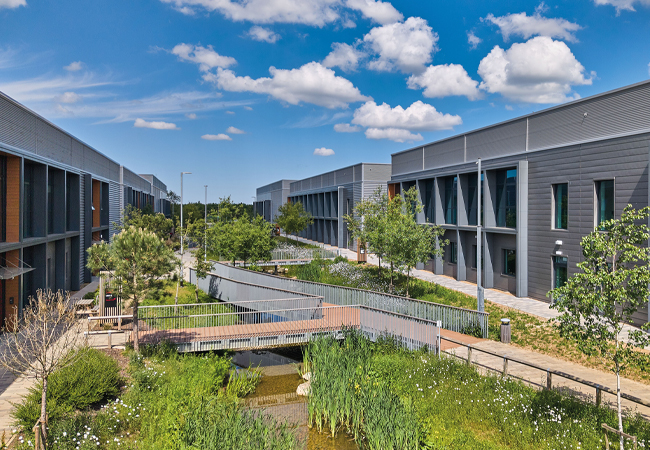
York House is a five-floor, multi-occupied office building that is a decarbonsiation test bed for British Land.
Interventions included replacing four gas boilers and chillers with two air source heat pump chillers and one water-to-water heat pump.
The strategy has improved whole building energy efficiency by 31% vs 2019, exceeding British Land’s 2030 portfolio reduction target of 25%.
Judges said the project will bring about wider change as a blueprint for the developer’s wider commercial portfolio and other similar buildings.
Sponsor: Crane Fluid Systems
Project of the Year – Portfolio
Winner: Bourn Quarter – SRE
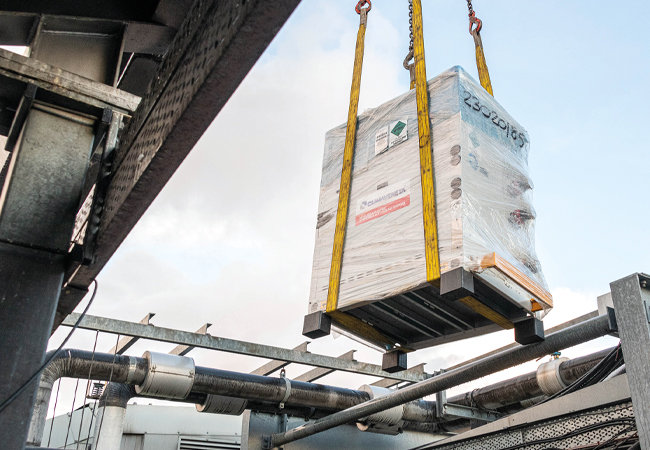
Judges praised this ‘future ready’ industrial development for the impressive work being done with multiple tenants to reduce emissions during fit-out and operation.
Building objectives at Bourn Quarter included minimising operational energy demand, reducing embodied carbon, and meeting the diverse occupier needs across the 10 commercial and light-industrial units.
All units are equipped with live energy monitoring systems, which provide real-time consumption data and report faults in building services and metering equipment.
Feedback from periodic energy audits enables tenants to intervene to maintain energy intensity within agreed benchmarks.
Sponsor: Crane Fluid Systems
Project of the Year – Education
Winner: Riverside Primary School – Architype
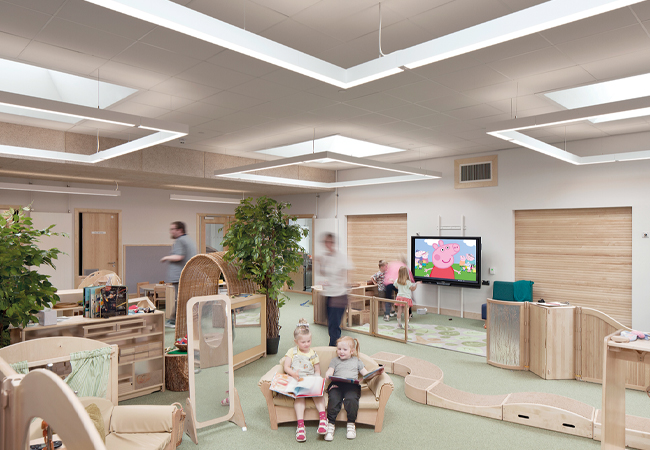
Riverside Primary School, in Perth, is the first certified Passivhaus school in Scotland. The project included a super-insulated envelope, exceptionally high airtightness, triple-glazed windows and doors, and MVHR ventilation – all working in tandem to achieve an effective and efficient low-energy building fit for 21st-century teaching.
Designed to reduce energy costs by around 70% compared with a typical benchmark school, Riverside performs even better than predicted and closes the performance gap prevalent in today’s schools.
The judges praised Architype’s collaborative approach and described it as a ‘standout winner in terms of overall building performance’.
Project of the Year – New-build Workplace
Winner: 11 & 12 Wellington Place – Ove Arup and Partners
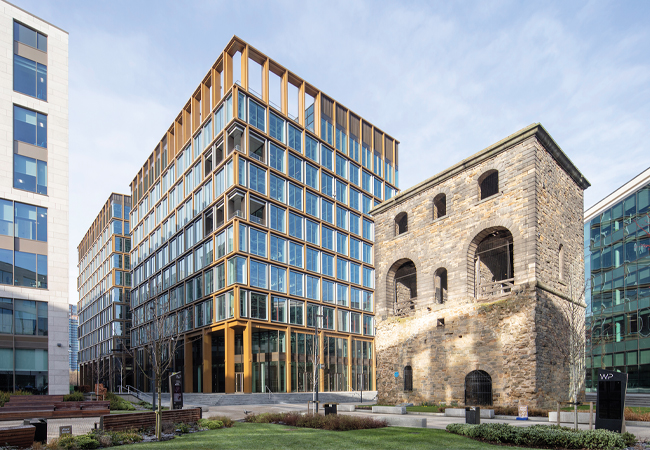
Designed with the highest level of sustainable performance in mind, 11 & 12 Wellington Place became the first building outside of London to achieve a NABERS Design for Performance rating of 5* or above, certifying it as one of the most efficient commercial buildings in the country. A reversible air source heat pump system replaced gas-fired boilers and air-cooled chillers to eliminate onsite fossil fuels, and 700m2 of PVs save 407 tonnes of carbon annually.
Highly commended: Project Featherstone – Buro Happold
Sponsor: Crane Fluid Systems
Project of the Year – Residential
Winner: Bluebird Project, Southend-on-Sea – Max Fordham
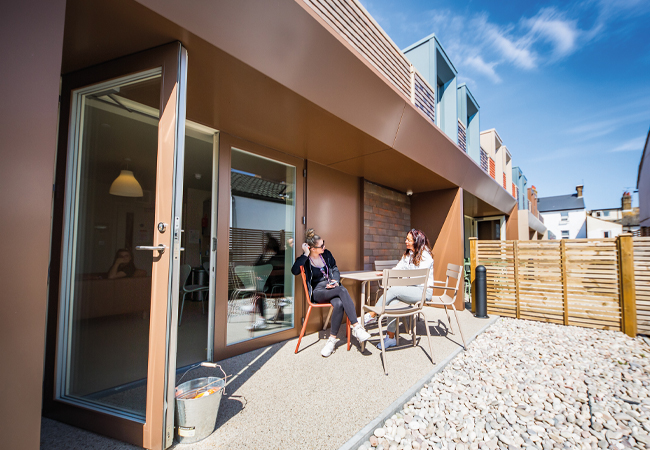
Bluebird is a Passivhaus scheme that helps homeless people get back to independent living. The judges described the project as ‘a quietly outstanding example of how purposeful, well-informed collaboration can deliver lasting social and environmental value’.
Bluebird provides 50 bed spaces within the renovated terraced housing, and has created a high-quality, safe and comfortable environment for residents.
The housing uses air source heat pumps for heating and hot water, and recycled and recyclable materials wherever possible.
Sponsor: Crane Fluid Systems
Building Performance Evaluation – Practice and CIBSE Next Generation of Building Performance Award
Winner: Willmott Dixon
Willmott Dixon was honoured with two awards for its ‘long-standing commitment to building performance’ with its Energy Synergy building performance service, which is designed to monitor operational energy and close the performance gap between design and in use.
The system actively monitors projects, providing customer facilities teams with AI-supported dashboard data and technical support from building performance experts. By combining automated monitoring, expert analysis and benchmarking, Willmott Dixon’s Energy Synergy service offers a scalable model for industry-wide improvement, and points the way to the next generation of building performance.
Information from an AI-driven global dashboard allows subsequent learning to be systematically integrated into future design and commissioning processes, improving TM54 modelling accuracy and informing consultant assumptions.
Buildings with 12 or more months of monitoring demonstrate an average 15% better-than-predicted performance compared with TM54 projections.
Judges said: ‘This is a scheme that is showing best practice for building performance in a reliable, replicable and scalable way.
Facilities Management (FM)
Winner: Hong Kong Children’s Hospital – Hospital Authority
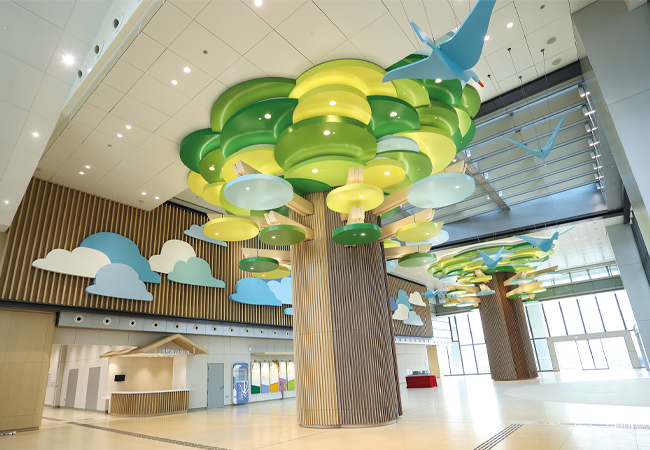
Innovative energy management and infrastructure upgrades have reduced the carbon footprint of Hong Kong Children’s Hospital significantly.
Hot-water supply was switched from gas to heat pumps and the FM team uses an energy management dashboard to identify energy-saving opportunities.
BIM asset management provides technicians with animated repair manuals for efficient equipment repair.
Judges said: ‘The winner delivered evidenced improvements using excellent feedback, knowledge sharing and extensive stakeholder engagement.’
Highly commended: Landsec – BGIS Global Integrated Solutions
Learning and Development
Winner: Data Academy apprenticeship –Hoare Lea
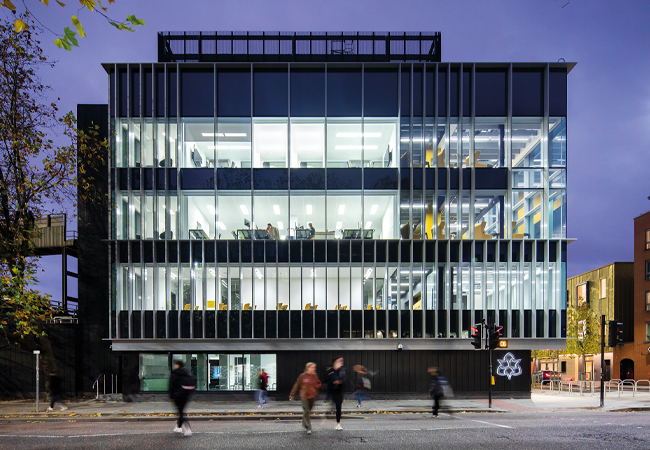
Hoare Lea’s Data Academy was launched in 2023 to ensure engineers and consultants have the data, AI and digital skills needed to drive effective project delivery.
Participants have reported increased confidence in applying data to design, and feedback has demonstrated the strong application of skills in live projects.
Measurable efficiency savings have included £150,000 to £250,000 annually from design software analysis, and a reported 75% time saving.
Judges said: ‘Hoare Lea showed that it put in a huge amount of effort to create, produce, maintain and manage its initiative effectively.’
Sponsor: CIBSE Patrons
CIBSE Embodied Carbon Award – Products and Systems: for Manufacturers and Suppliers
Winner: Swegon
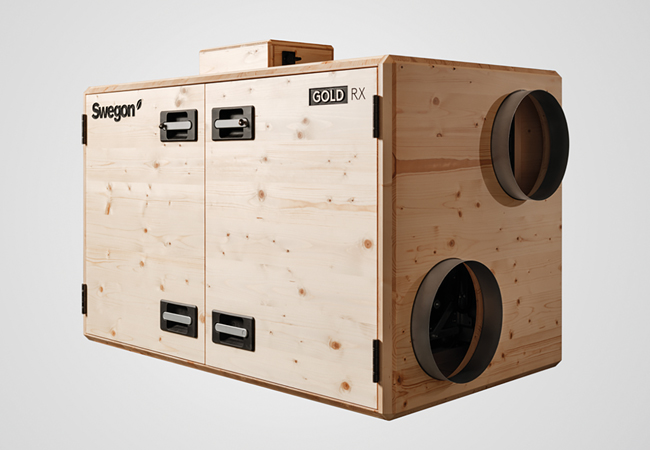
‘Going beyond conventional thinking in terms of low carbon and circular product design’ is what impressed the judges with Swegon’s winning entry.
They said the indoor environment specialist demonstrated ‘the huge potential for embodied carbon reductions in building equipment/systems through the replacement of conventional materials’.
Swegon’s combination of supply chain engagement, factory process changes and consistent measurement discipline has helped reduce embodied carbon in its range of products.
Highly commended: GlasCurtain
CIBSE Embodied Carbon Award – Services and Projects: for Consultants
Winner: Buro Happold
Recognising the lack of detailed information in embodied carbon assessments at early design stages, Buro Happold developed a bespoke ‘Rapid Scheduler’ to estimate quantities for 200-plus building services items. This allows it to report whole-building embodied carbon with sufficient buffer, avoiding unrealistic targets for clients. Judges were impressed by the consistent way embodied carbon was addressed in Buro Happold’s projects, and by the engagement activities raising awareness of its impact.
Highly commended: SCS and Introba Consulting
Sponsor: CMR
Product or Innovation of the Year – Air Quality and Product or Innovation of the Year – Wellbeing
Winner: AirDoor – VES
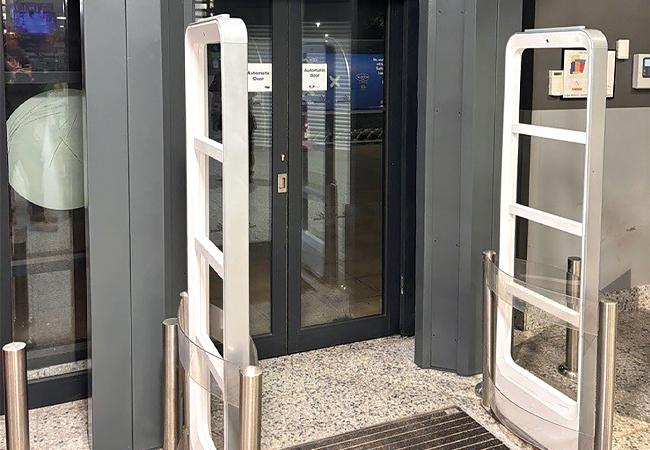
VES won two Building Performance Awards with AirDoor, a bespoke freestanding unit developed to address a widespread problem in commercial buildings: uncontrolled air infiltration through open doorways.
AirDoor is engineered with advanced aerodynamic features, developed through computational fluid dynamics, to control and direct airflow precisely. The technology’s versatility is particularly impressive, said the judges, being equally effective in heating and cooling.
The system counters fluctuating wind pressures and minimises thermal exchange at doorways, ensuring consistent indoor temperatures. This reduces reliance on additional heating or cooling systems.
An intelligent control system, supported by multiple sensors, continuously monitors airflow conditions, inside and out, and a variable-speed fan array dynamically adjusts to create a stabilised air barrier. This real-time modulation prevents unconditioned external air from entering and reduces unnecessary energy loss.
More than 200 AirDoors have now been installed. As well as continued rollouts with John Lewis Partnership and Sainsbury’s, VES has ambitious plans to secure new partnerships and large-scale deployments with major retailers worldwide.
Judges said: ‘Many buildings, for commercial reasons, prefer to have open entrances, or there are reception lobbies with near-constant traffic through the doors. The AirDoor product provides improved comfort and performance with lower heat loss.’
Product or Innovation of the Year – Building Performance Evaluation
Winner: WISE – Swegon
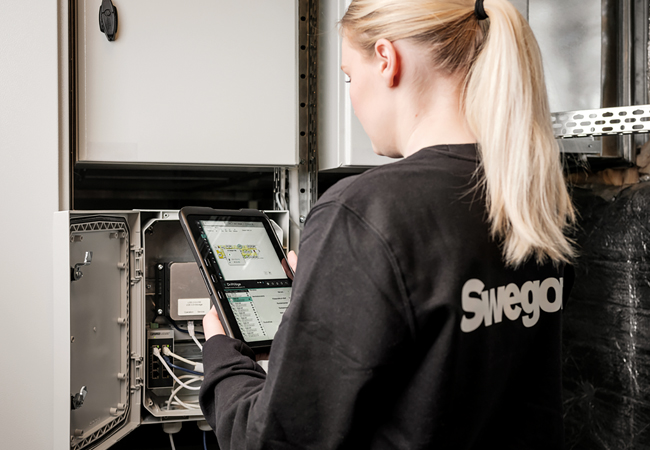
Adaptable to buildings of all sizes, WISE is a smart solution for demand-controlled spaces, where optimal comfort is combined with flexibility and energy efficiency.
The system continuously analyses building performance and directly optimises connected services. It adjusts chiller and heat pump water temperatures to reduce thermal losses, lowers system air pressures to save fan power, and adapts primary air temperatures based on room-level loads.
‘The product demonstrates measurable, repeatable and evidence-based performance improvement from evaluation of building performance data,’ said the judges.
Highly commended: IES Live 2025 – IES
Product or Innovation of the Year – Thermal Comfort
Winner: Cosysense
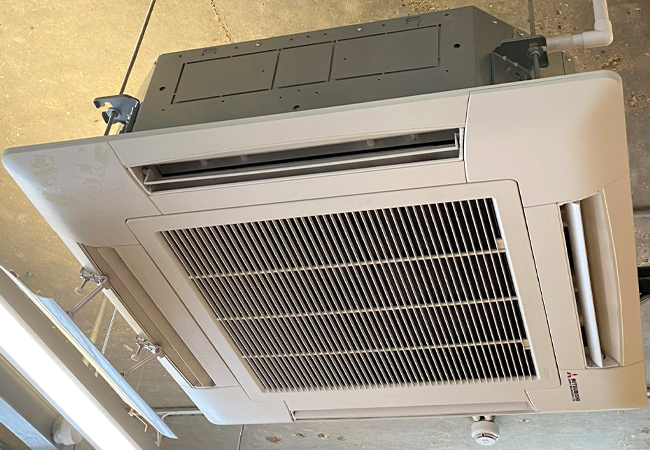
Cosysense is a retrofit control system that personalises thermal comfort while reducing HVAC energy use.
The system was tested in a zone with no existing smart control, and tests confirmed substantial efficiency gains, with peak reductions of 82% during spring and average seasonal savings of 34% in HVAC energy use.
The product uses AI to leverage performance and can be deployed in new and retrofit applications.
Judges said: ‘Cosysense stood out for its ease of application, energy-saving potential, cost savings and overall positive effect on the thermal comfort of the spaces in which it is deployed.’
Sponsor: Lochinvar
Best Digital Innovation – Organisational Strategy
Winner: Engentica – EMSD, Government of Hong Kong
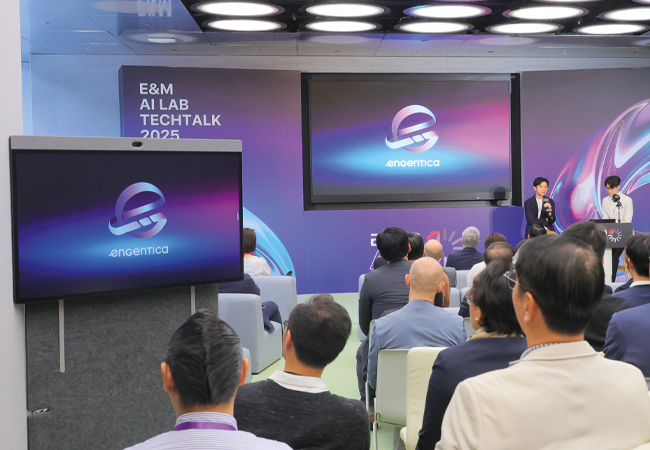
The judges said Engentica demonstrated ‘true organisational change’, with positive impacts on the performance of all building types.
The Engentica platform integrates a unified digital operations and management system with agentic AI, enabling predictive analytics, energy optimisation and fault diagnosis.
The platform provides a structured, machine-readable representation of electrical and mechanical systems and their interrelationships. This allows frontline staff to quickly identify affected systems and locations.
Best Digital Innovation – Project Delivery
Winner: CarbonMe – Hilson Moran
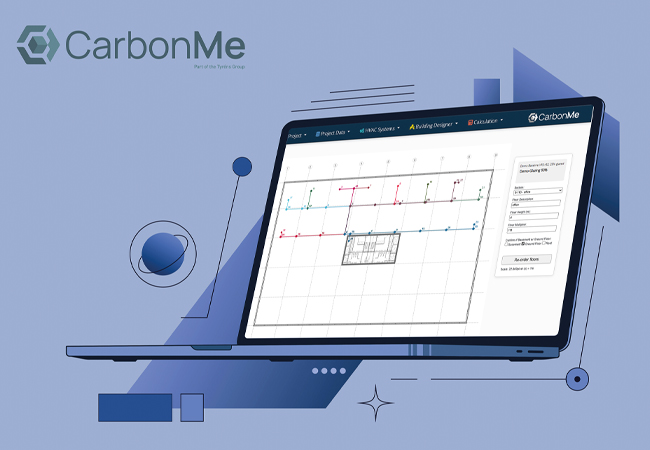
CarbonMe is a web-based application with a graphical interface, designed to transform how MEP engineers estimate embodied carbon from the earliest design stages. Judges said ‘the extent of the innovation is excellent, simplifying the communication of the impact of decisions on embodied carbon across project life-cycle’.
Clear graphical and numerical outputs let design teams see the impact of each option and adjust system selection or key parameters in real time. Enabling early inclusion of carbon data allows for informed decision-making and, ultimately, lowers environmental impacts.
‘Everyone involved can understand the outcomes, no matter their background or expertise,’ the judges added.