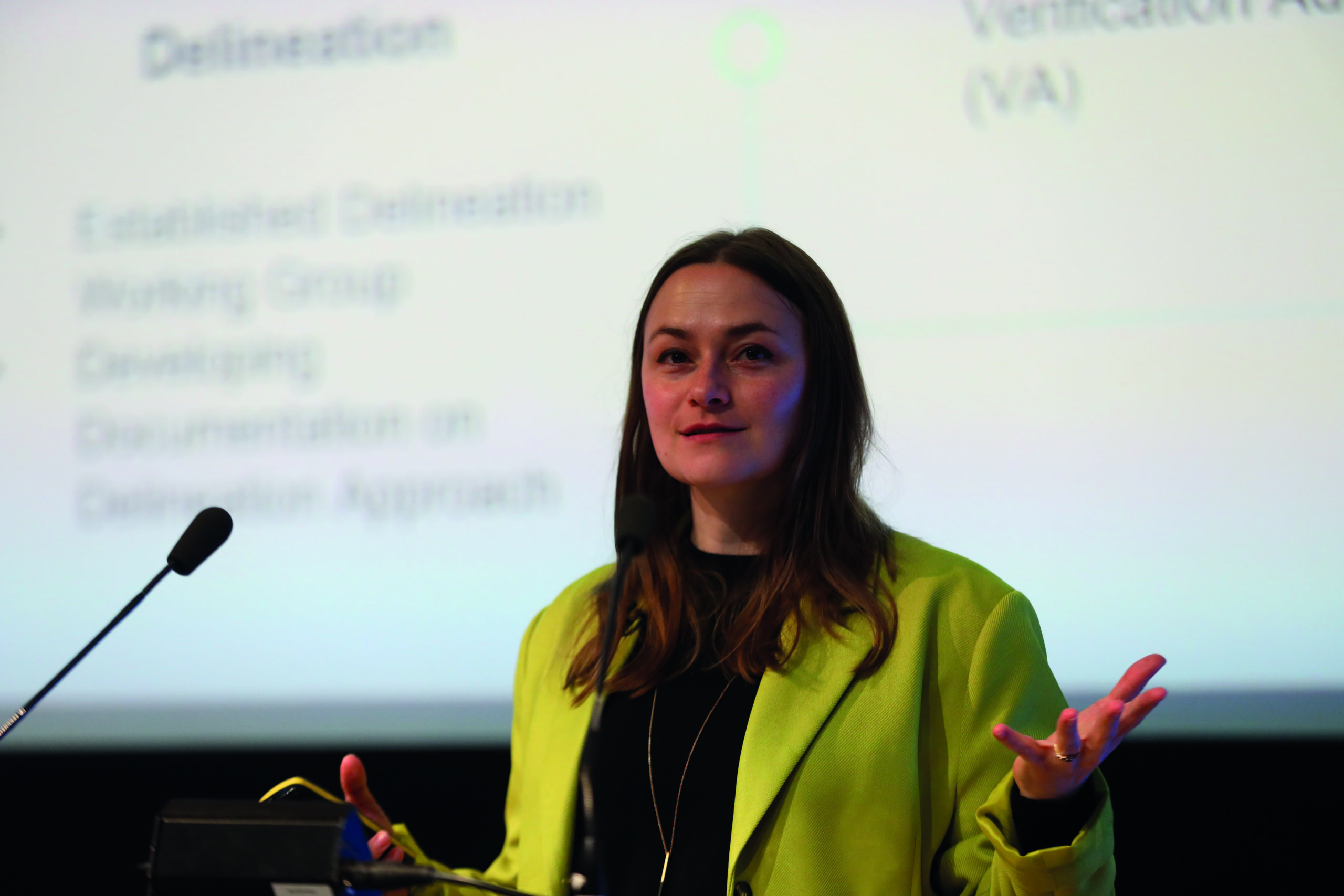
Turning net zero ambition into action, and how technology can play its part, were the topics that took centre stage at recent conferences hosted by CIBSE.
AI, digital engineering, and intelligent building systems and their influence on how buildings are designed, delivered and operated were the focus of the Technology and Innovation Conference, held at CIBSE’s HQ in London, and sponsored by Autodesk, Mitsubishi Electric, Trimble, EDSL and IES. Leading voices from across the building engineering profession shared how technology and research are shaping a more sustainable built environment.
Speakers highlighted the opportunity and challenge facing the sector: while innovation is accelerating, many practitioners are still navigating how to adopt new tools safely, effectively and in line with an increasingly complex regulatory landscape.
Presentations and discussions explored how AI and machine learning are applied in real engineering workflows, from generative design and predictive simulation to automated compliance checking and AI-enabled building operation. Sessions examined the importance of data governance, ethics, and responsibilities around AI.
Other discussions focused on: digital tools and platforms supporting modern engineering practice, including modelling and automation solutions; carbon accounting workflows, such as CIBSE TM65; energy benchmarking dashboards; and emerging cloud-based commissioning and diagnostics technologies.
A key theme was decarbonisation, and how innovations such as HVAC and controls optimisation, renewable technologies, and scalable retrofit approaches are accelerating the UK’s progress towards net zero.
The event also addressed the future skills agenda, exploring professional development pathways, cross-disciplinary collaboration, and the role of universities, start-ups and research and development in shaping the next generation of engineers.
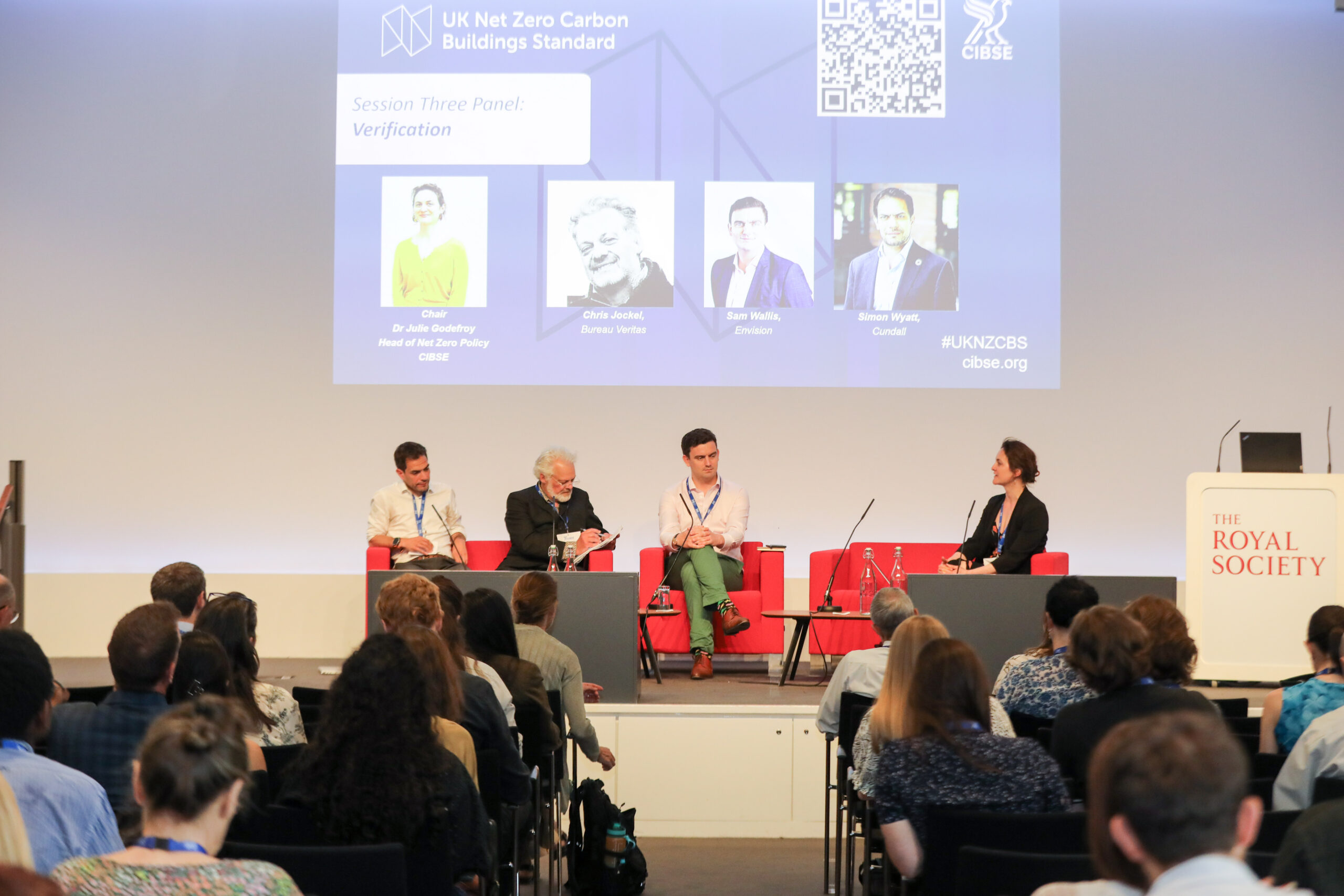
A week later, the Royal Society in London hosted the UK Net Zero Carbon Buildings Standard (UK NZCBS) Conference, where industry leaders, practitioners and stakeholders shared early experiences of implementing the first cross-industry benchmark defining what constitutes a net zero carbon building in the UK. Collaboration is key, said Dr Julie Godefroy, CIBSE’s head of net zero policy, opening the event, which explored how the standard can be used in projects, portfolios and categories.
Standard bearing
In his keynote, UK NZCBS chair David Partridge reflected on the standard’s role in providing greater clarity and consistency for the industry, before CEO Katie Clemence-Jackson provided an update on the latest developments.
The conference, sponsored by Mitsubishi Electric, Qvantum, Rinnai and Optimise AI and Strebel and Swegon, explored areas that will determine UK NZCBS’s success.
Amrita Dasgupta, head of ESG and net zero at Greengage, led a session exploring how the standard aligned with existing standards and initiatives. It featured contributions from: Fabrizio Varriale, place and space analyst at RICS; Will South, director at Etude; and Jess Hrivnak, practice technical adviser (sustainability) at RIBA.
A segment on verification discussed how confidence in net zero claims can be strengthened through robust processes, reliable data and transparent evaluation. The session – including input from Chris Jockel, associate director at Bureau Veritas, Sam Wallis, director of energy and net zero strategy at Envision, and Simon Wyatt, partner at Cundall – highlighted the importance of evidencing net zero performance via real-world outcomes.
In the final session, chaired by Partridge, contributors – including Ruth Marsh, head of sustainability (South) at Waterman Group, and Ellie Burkill, senior sustainability consultant at XCO2 – discussed the standard’s adoption, reinforcing that everyone has a part to play, from designers and engineers to clients, contractors and operators.
Upcoming conferences:
- CIBSE Skills and future workforce conference – 24 September, London.
The CIBSE Skills and Future Workforce Conference 2026 will bring together policy makers and stakeholders to discuss priorities for delivering the skills and future workforce required in the transition to a safer, sustainable built environment. It will focus on steps taken to bridge the skills gap, with a focus on renewables, digital tools, and sustainability, along with skills related to technical knowledge, collaboration, problem-solving, and communication.
- CIBSE Health, wellbeing and IEQ conference – 30 September, London
CIBSE’s Health, Wellbeing and IEQ Conference will explore the latest evidence, guidance, and innovations shaping healthier buildings. From indoor air quality, thermal comfort, humidity, and acoustics to inclusive design, neurodiversity, and the latest developments in CIBSE TM40 and the forthcoming CIBSE EDI Design Guide, the conference provides practical insight into the challenges and opportunities facing the profession.
- Climate adaptation and resilience conference – 21 October
As climate risks intensify, the built environment must rapidly adapt to ensure resilience, safeguard occupants, and maintain long-term performance. This conference will explore practical approaches to climate adaptation—focusing on real-world implementation, cross-industry collaboration, policy and market drivers, and the strategies needed to future-proof buildings and infrastructure.
- CIBSE MENA Decarbonisation conference – 27 October, Dubai, UAE
The conference brings together engineers, industry leaders, sustainability professionals and key stakeholders to explore the challenges and opportunities of decarbonising the built environment across the region. The conference provides a platform for meaningful discussions, knowledge exchange and collaboration around the transition to a lower-carbon future.
- CIBSE MENA Retrofit conference – 25 November, Dubai, UAE
The conference explore how existing buildings can be transformed for a net-zero future.
Under the theme ‘Transforming existing buildings for a net zero MENA’, this one-day, high-impact conference will explore the pathways, challenges and opportunities involved in decarbonising the region’s existing building stock.