
Credit: iStock – Ben Gingell
An On the wire story
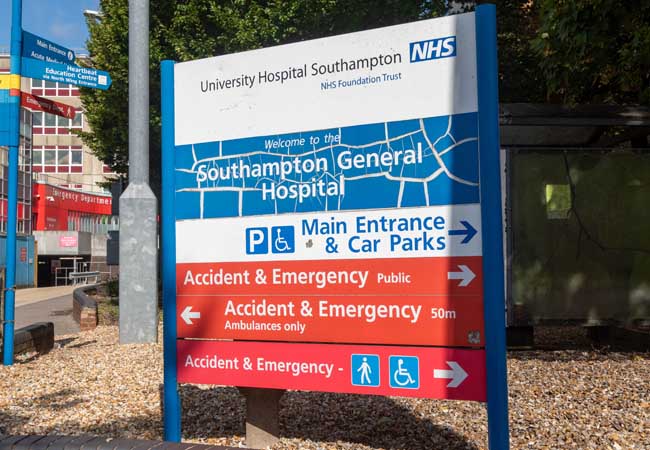
Patients and staff at Southampton General Hospital endured sweltering conditions during the prolonged hot spell in late June and early July, with temperatures on some wards climbing into the high 30s, according to University Hospital Southampton.
The trust’s board was told that the problem was not the cost or availability of portable cooling units, but the strain placed on an ageing electrical system that could not comfortably absorb the extra load.
Chief executive David French said staff had repeatedly asked why portable air conditioners were not simply brought in, but explained that the east wing in particular was operating under tight power constraints.
He said fans were moving hot air rather than lowering temperatures, and that every additional kilowatt had to be carefully managed because the site’s infrastructure could not support unrestricted use of power-hungry equipment.
The pressure on the hospital became severe enough for University Hospital Southampton to declare a critical incident from 25 June to 2 July, first because of infrastructure failures and then because of a surge in patients with heat-related illnesses.
ITV News reported at the time that emergency departments were under exceptional strain, with waiting times reaching up to 12 hours, while the hospital also cancelled some planned operations and appointments as it tried to preserve capacity for the most urgent cases.
Mr French said the heat affected the whole building over several days, with overnight temperatures staying above 20C and wards becoming hotter the higher up the building one went, peaking on G level, where elderly care and children’s services are based.
The trust said the episode had also exposed wider resilience problems, including temporary reductions in theatre activity to protect chillers and automatic shutdowns in some MRI machines when heat or humidity thresholds were exceeded.
The Department of Health and Social Care has since announced more than £1.5 billion for NHS estate safety, with UHS due to receive £10 million, although the trust said that sum would only go a small way towards tackling a backlog of repairs and adaptation work.
The board was also told that the site is already on notice about its power limits, with chief financial officer Ian Howard saying the trust has a plan with SSEN but is not due to receive additional power until 2031.
He said that constrained capacity will limit how many new systems, including extra air conditioning and imaging equipment, can be installed in the meantime.
Mr French said the experience underlined the need for faster investment, warning that heatwaves are likely to become more common and that even modest improvements in ward temperatures could make a meaningful difference to patient care.
References
Main source: Daily Echo [1]
• This On the wire article was created using Noahwire AI and reviewed by CIBSE Journal’s editorial team