The study created a dynamic thermal model of a care home to assess future overheaing risks
Balancing thermal comfort and carbon emissions reduction is becoming one of the most pressing challenges in the built environment. Residential buildings in the UK have historically been designed to retain heat. As heatwaves become more frequent and intense, indoor overheating risks, including heat-related mortality, are increasing.
Recent research at a specialist epilepsy care home found that overheating already exceeds 26°C for around one-third of occupied time and could rise to almost 40% of occupied hours by the 2080s. The study also found that passive measures alone are unlikely to provide sufficient protection under future climate scenarios.
In care settings, overheating risks extend well beyond discomfort, as residents are especially susceptible to heat because of underlying health conditions and limited mobility. For people with epilepsy, elevated temperatures have been linked to increased seizure activity, fatigue and sleep disruption. Maintaining safe indoor conditions is therefore closely linked to resident wellbeing and the effective delivery of care.
At the same time, the sector faces pressures to reduce energy consumption and carbon emissions. Global cooling demands are expected to rise substantially under climate change, creating tension between thermal resilience and decarbonisation.
Conducted in collaboration with the Bartlett School of Environment, Energy and Resources, the Queen Square Institute of Neurology and the Epilepsy Society, this study examined current and future overheating risks in a case study care home, and evaluated the performance of passive and hybrid cooling strategies.
In doing so, it addressed gaps in technical performance research and user-informed retrofit design for specialist care settings, providing timely insights for the industry, alongside findings transferable to similar care facilities across the UK.
The findings suggest that the success of cooling strategies may depend as much on usability and control as on technical performance.
Case study care home
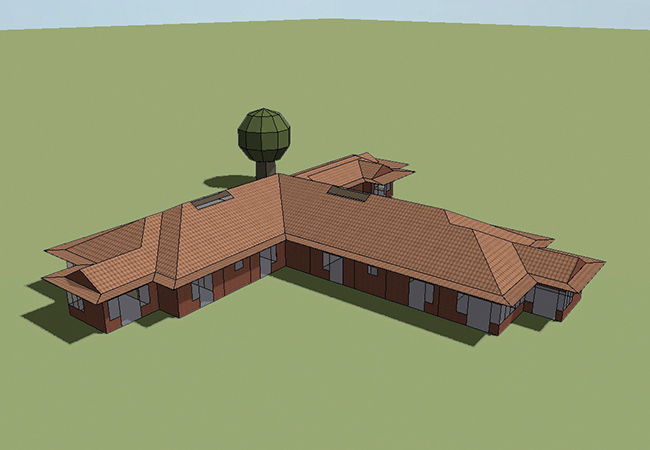
The single-storey care home accommodates eight adults with severe epilepsy and additional health conditions. The building relies primarily on natural ventilation for cooling, supplemented by bedroom fans and portable air conditioning units in communal lounges. As residents have limited ability to adapt their environment independently, caretakers are responsible for managing indoor temperatures while balancing clinical and safeguarding priorities, adding to staff workloads.
Monitoring during summer conditions confirmed that overheating is already a persistent issue, with indoor temperatures exceeding 26°C for one-third of the monitored period, aligning with staff reports of discomfort.
Dynamic thermal modelling was then used to assess the baseline future overheating risks under projected high-emissions climate scenarios. Under current conditions, 9-14% of occupied hours exceeded 26°C. In the 2050s, overheating hours more than doubled, while rooms were overheating for up to 38% of occupied hours by the 2080s. Bedrooms emerged as the most thermally stressed spaces, as they consistently failed comfort criteria. For vulnerable residents, poor night-time conditions can affect recovery, sleep quality and overall health outcomes, making bedrooms a critical focus for overheating mitigation.
Passive measures remain essential, but have limits
The research evaluated various passive interventions, including enhanced natural ventilation, external shading and increased thermal mass. Under current conditions, these strategies provided meaningful improvements. External shutters combined with night ventilation were particularly effective, reducing overheating significantly, to approximately 2%. However, limitations to passive-only approaches became apparent under future climate extremes.
Night ventilation became less effective as elevated nocturnal temperatures reduced cooling potential and, in some cases, even increased overheating, while additional thermal mass offered limited benefit in the already heavyweight construction. By the 2080s, passive measures alone were unable to maintain acceptable indoor temperatures.
Nevertheless, passive design remains fundamental to overheating mitigation. Passive heat-reduction measures, including solar control and effective ventilation, are essential in reducing baseline cooling demand before implementing active cooling.
Integrating hybrid cooling systems
Hybrid cooling strategies combining passive measures with active systems were then assessed.
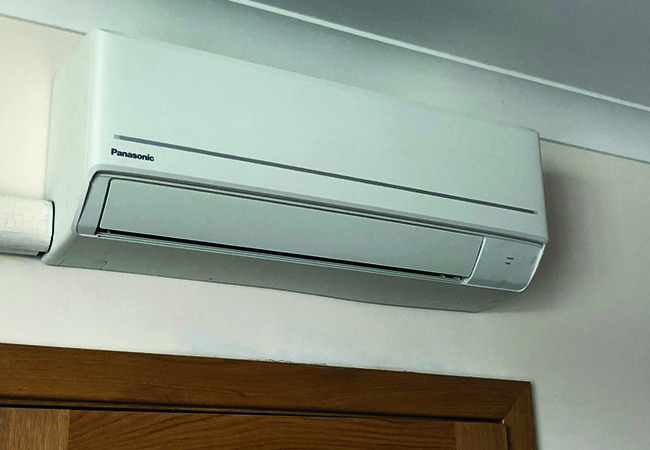
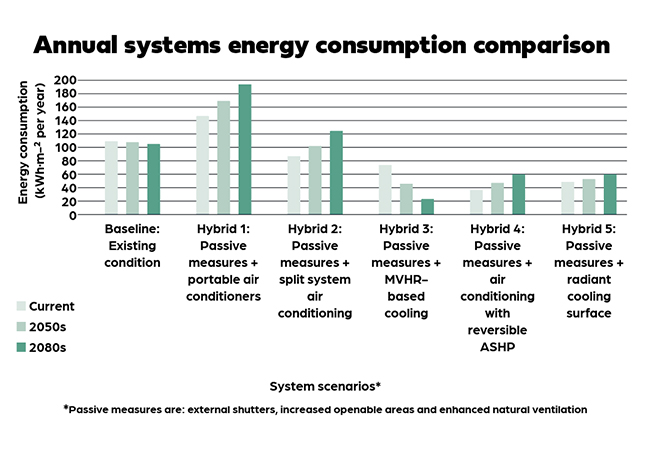
Portable air conditioning units, despite their widespread use in care environments, performed poorly overall. While they offered short-term local relief, they increased energy consumption significantly and proved an inefficient long-term solution. Mechanical ventilation systems with cooling coils reduced energy use compared with portable units, but struggled to maintain acceptable indoor conditions in the long term.
The strongest performance came from systems based on reversible air source heat pumps (ASHPs). When integrated with passive measures, these systems maintained comfort across all climate scenarios while substantially reducing energy use and carbon emissions compared with the baseline.
Under current conditions, energy savings of up to 66% were achieved compared with the existing cooling approaches. These findings confirm heat pumps as a promising, integrated solution to climate resilience, providing low carbon heating and cooling while supporting industry moves towards electrification (see Figure 1).
Operational challenges
Insights gained from discussions with care staff revealed that overheating management was heavily influenced by operational realities rather than purely technical limitations.
Cooling solutions were often used inconsistently because of conflicting thermal preferences among staff and limited technical understanding, alongside daily care duties. Staff expressed strong preferences for systems that were automated, intuitive and low maintenance, minimising the need for manual intervention and thereby reducing operational burdens.
Implications for future design
This has noteworthy implications for new-build and retrofit designs, suggesting a shift in how overheating mitigation should be approached in care environments. Even technically effective systems can underperform if controls are overly complex or if operation depends heavily on user behaviour. In care settings especially, usability must be considered alongside energy and thermal performance.
Simplified controls, sensor-driven operation and integrated automation are likely to become increasingly important features of overheating mitigation strategies. The findings also reinforce the value of engaging primary stakeholders early in retrofit projects, as understanding how buildings are used and perceived is crucial to properly addressing real challenges and aligning with occupant priorities.
While the case study involved an epilepsy care home, many of the findings are likely to be relevant to other care settings.
The study highlights several lessons for practitioners working in care environments. First, overheating must be treated as a core health and operational issue. Second, passive-first design remains essential, particularly solar control and night ventilation, although designers should consider their limitations under extreme future climate scenarios.
Finally, the research suggests that hybrid cooling systems based on reversible heat pumps may offer one of the most robust pathways for balancing thermal comfort, resilience and decarbonisation in care homes.
However, successful implementation will depend not only on technical performance, but also on affordability, operational simplicity and integration with day-to-day care activities. Systems must be designed around the realities of building operation and occupant needs.
As climate risks intensify, the role of building services engineers in care settings is expanding beyond energy efficiency. Designing resilient environments increasingly requires holistic consideration of health, wellbeing and operational continuity alongside carbon-reduction targets. In specialised care settings, thermal resilience is fundamental to delivering safe and sustainable care. l
About the author
Serra Ardor is a junior building physics and sustainability consultant at HTA Design. She was a runner-up in the 2026 Rehva student competition and for the 2025 CIBSE Undergraduate of the Year award