
The publication of the Future Homes Standard marks an important shift for the UK housing sector. While much of the focus has understandably been on improved fabric performance, airtightness and low-carbon heating, its success will depend just as much on how effectively ventilation is designed, coordinated, installed, commissioned and verified.
For building services engineers, this is a critical point. As new homes become more airtight and heat loss is reduced, ventilation can no longer be treated as a secondary compliance item. It is central to building performance, indoor air quality, moisture management, occupant comfort and long-term asset resilience.
The direction of travel is encouraging. The Future Homes Standard recognises, at least in principle, that ventilation must work as part of a whole-house strategy, rather than as an isolated system added late in the design process.
However, while the Standard is a step forward, it is not a complete solution. Without stronger verification, clearer competency requirements and better coordination across the design and construction process, the industry risks carrying familiar performance gaps into a new regulatory era.

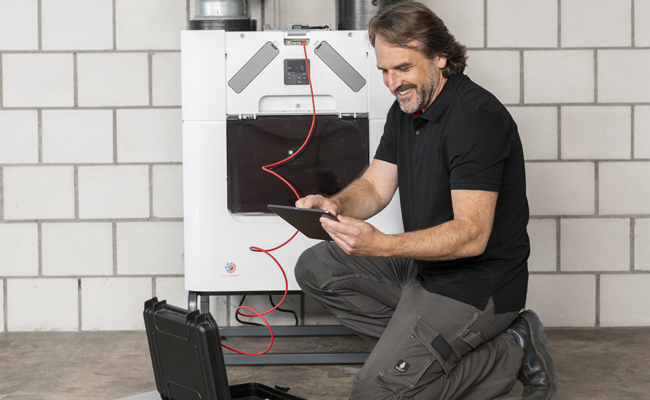
Zehnder EVO MVHR installed in an apartment
One of the most positive developments is the move away from flexible ductwork in favour of more robust ducting strategies. Building services engineers know that the performance of a ventilation system is often determined long before commissioning.
Poorly routed ductwork, excessive bends, constrained service zones, long runs and inadequate coordination with structure or other services can all increase pressure losses and reduce airflow.
Flexible ductwork, where poorly specified or installed, can compound these issues. Kinking, compression and unsupported lengths can significantly restrict airflow, undermining the assumptions made at design stage.
The result is a system that may appear compliant on paper but struggles to deliver the required extract or supply rates in practice.
The consequences are not simply technical. Inadequate airflow can contribute to condensation, mould growth and poor indoor air quality. In highly insulated and airtight homes, moisture generated by cooking, bathing, drying clothes and everyday occupancy needs a clear route out of the building. If ventilation is underperforming, moisture can accumulate, damaging building fabric and increasing health risks for occupants, particularly those with respiratory vulnerabilities.
By encouraging better ductwork design and installation practice, the Future Homes Standard gives ventilation systems a stronger chance of achieving long-term performance. However, this depends on early-stage design decisions being carried through into buildable, coordinated and commissionable solutions.
The introduction of pressure-drop calculations at design stage is therefore a welcome development. It reinforces the need to consider airflow resistance, duct routes, terminal positions, fan performance and system configuration as part of the engineering design, rather than leaving these issues to be resolved on site. This is particularly important where MVHR is being specified.
For M&E consultants and designers, this places greater emphasis on practical coordination. Ventilation strategies must be developed alongside the architectural layout, structural design, fire strategy, acoustic requirements and wider building services.
Stronger commissioning expectations also signal a shift towards a more performance-led culture. Handover should not be treated as a tick-box exercise. Accurate measurement, balancing and documentation are essential if systems are to be shown to perform as designed – and this is where the current framework still needs strengthening.
A key concern is the lack of mandatory independent verification at commissioning. Without consistent third-party checks, there remains a risk that systems are effectively signed off by those responsible for delivering them. While many professionals work to high standards, the absence of universal verification creates an uneven playing field and allows poor practice to persist.

Filter being changed on a MVHR system
Spot checks alone are unlikely to close this gap. A clearer and more consistent verification process would provide greater confidence for clients, developers, designers, installers and occupants. It would also support responsible contractors by ensuring that all systems are assessed against the same performance criteria.
There is also a need for a unified national competency framework. As ventilation becomes more central to the performance of low-carbon homes, the industry needs clarity on the skills, qualifications and evidence required across design, installation, commissioning and maintenance. Without this, competence remains open to interpretation, creating inconsistency across projects and supply chains.
For building services engineers, the Future Homes Standard should therefore be seen not only as a compliance requirement, but as a design integration challenge. Ventilation must be considered from the outset, with sufficient space, access and coordination built into the scheme. Systems must be designed not just to satisfy calculations, but to be installed, commissioned, maintained and operated effectively over the life of the building.
This also means recognising the importance of maintenance access. Filters, fans, ductwork and controls must be accessible if systems are to continue performing beyond handover. A ventilation strategy that cannot be maintained is unlikely to deliver sustained indoor air quality or energy performance.
Looking ahead, government and industry both have a role to play. Clearer standards, stronger verification and a single enforceable definition of competence would provide a more robust framework for delivery. At the same time, designers, consultants and contractors have an opportunity to raise expectations by embedding performance, coordination and accountability earlier in the process.
The Future Homes Standard is a positive step, but its impact will depend on implementation. If not, the risk is that the same ventilation performance gaps will remain, only under a new regulatory framework.
About the author
Rupert Kazlauciunas is solution team leader at Zehnder Group UK
For more information on Zehnder visit: www.zehnder.co.uk