In the early design stages (RIBA0-2) of large and complex construction projects, architects are often required to make rapid decisions about building form and spatial arrangement. These decisions are typically made with limited technical input on environmental performance, even though these decisions have long-term implications for energy use, occupant comfort, and carbon emissions.
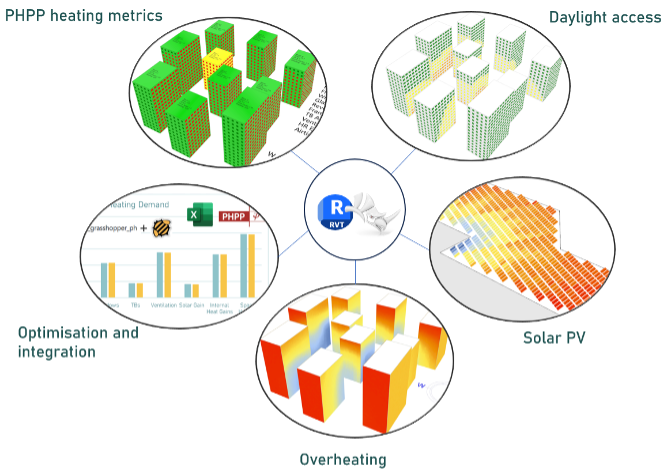
A new generation of simulation technology aims to address this gap by enabling rapid, integrated analysis of Passivhaus performance, daylighting, and overheating risk -within a single digital workflow.
The challenge of early-stage environmental design
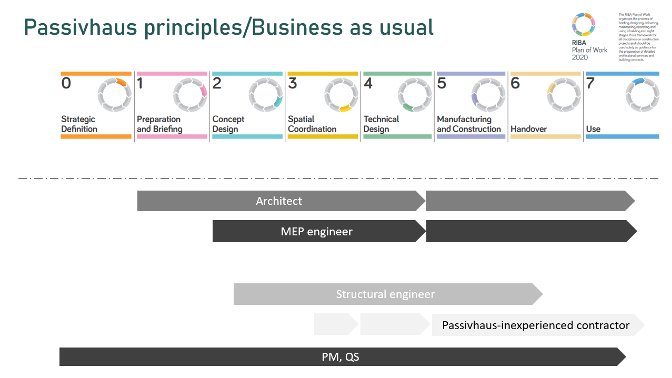
Environmental consultants, when appointed, are frequently siloed into separate domains, or are appointed to verify an existing design approaching a planning application, rather than shape an emerging one to optimise the building(s). (See Table 1)
Interdependence
[Suggested Diagram: Interdependence of daylighting, solar gain, heating demand, and cooling demand]
The need for integrated, real-time simulation
To achieve optimal environmental outcomes, a new generation of tools is needed – tools that can simultaneously assess daylight, overheating, heating and cooling, and at a speed that allows real-time guidance for evolving architectural proposals. Where relevant, these tools need to align with regulation but not be restricted by it.
At the same time, advanced standards such as Passivhaus need to be supported for large and complex projects. While many excellent tools exist, they are currently are either siloed, too slow, or do not include Passivhaus. This gap in the market has led to the development of a novel software platform by Beyond Carbon that integrates these analyses into a single workflow.
Project goals and performance targets
The target was to enable a meaningful response to an architectural proposal across all key disciplines in less than three working days. Achieving this would be a significant leap forward in design capability, allowing for rapid iteration and informed decision-making at the earliest stages of design.
Technical barriers and solutions
Currently, Passivhaus calculations are performed in Excel using PHPP having generally extracted geometry and window shading from a SketchUp plug-in called DesignPH. PHPP is complex, with interdependent variables and third-party inputs. To circumvent this bottleneck in rapid prototyping we rebuilt the PHPP logic for heat demand and heat load within the Grasshopper/Ladybug ecosystem and then validated the outputs against PHPP with a tolerance of ±2%. (For more information see panel ‘The Grasshopper/Ladybug ecosystem’)
At the same time we developed a custom algorithm within Ladybug Tools to calculate solar shading factors dynamically. Validation against DesignPH showed agreement within ±3%, using real project geometries. This breakthrough enables live interaction with 3D models, allowing designers to see the impact of shading changes in near-real time.
At present, these tools are only useful in the early stages of work and must still be confirmed separately at a later point by exporting to Passivhaus Institute-approved tools. The team is working towards certification of this new tool by the Passivhaus Institute, which would allow it to be used by other consultants and projects globally at any design stage, and as a route to formal Passivhaus certification.
Overheating and Part O compliance
UK Building Regulations Part O, introduced in 2022, sets limits on solar gains and internal temperatures in residential buildings. However, it is not widely supported outside the UK and is rarely integrated with other performance metrics in a single building model at concept stage. To provide full integration with Passivhaus, Part O requirements were codified into an existing overheating engine, EnergyPlus, incorporating occupant profiles, window-opening schedules and internal gains.
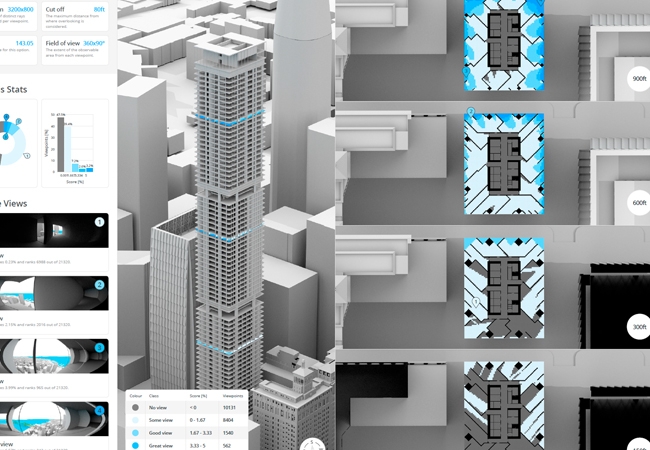
Outputs were benchmarked against IES Virtual Environment, achieving agreement within ±5%. As a result, from a single source of design information, the software can run Passivhaus, overheating and daylight results (the latter from existing scripts) in short order.
Industry implications and future development
This integrated approach offers several benefits:
- Faster design iteration: architects can test multiple options without waiting for separate consultant reports.
- Better outcomes: designs are optimised across all key metrics, not just one.
- Lower carbon: by reducing heating and cooling loads, buildings can achieve net-zero targets more easily.
Towards truly holistic design
The development of integrated simulation tools helps accelerate sustainable building design. By unifying daylighting, overheating and energy demand analysis, engineers and architects can make better-informed decisions earlier in the design process.
This approach aligns with the goals of CIBSE, RIBA and the UK Green Building Council in promoting low carbon, high-performance buildings, and closely dovetails with the objectives of the London Plan from the Greater London Authority. The tool has been tested extensively on complex London sites with multiple buildings.
As the industry moves towards – and, eventually, beyond – net zero carbon and climate resilience, tools such as this will be essential in enabling genuine collaboration and best outcomes.
About the author:
Joel Callow is founding director at Beyond Carbon Associates